Why Proper Drainage for Garden Spaces Matters More Than You Think
Getting drainage for garden landscapes right is one of the most important — and most overlooked — parts of owning a home in Massachusetts.
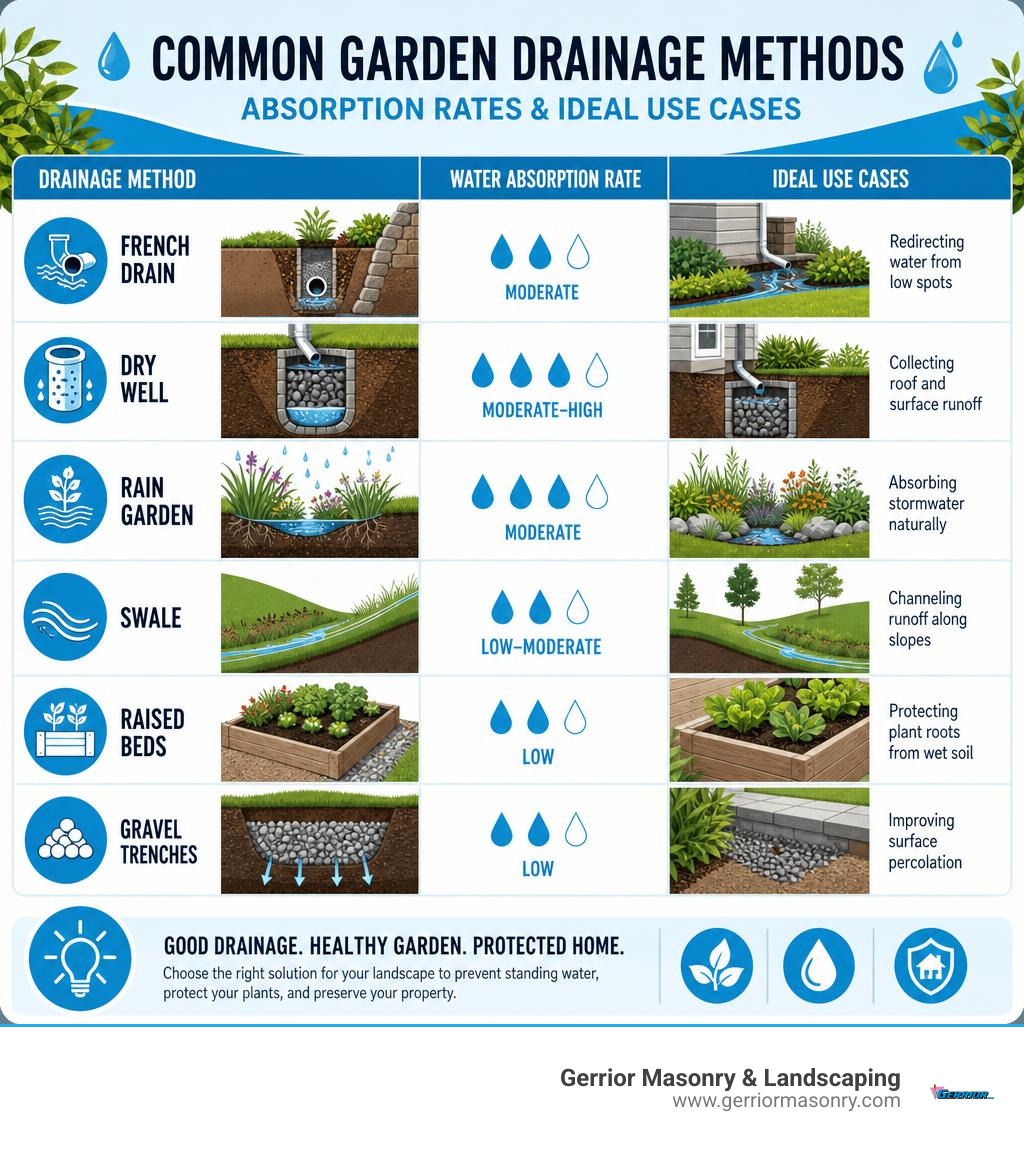
Here’s a quick look at the most common garden drainage options:
Drainage Method
Best For
Complexity
French drain
Redirecting water from low spots
Moderate
Dry well
Collecting roof and surface runoff
Moderate–High
Rain garden
Absorbing stormwater naturally
Low–Moderate
Swale
Channeling runoff along slopes
Low–Moderate
Raised beds
Protecting plant roots from wet soil
Low
Gravel trenches
Improving surface percolation
Low
Poor drainage doesn’t just kill your plants. It can cause:
Root rot from waterlogged soil
Soil compaction that blocks air and nutrients
Erosion that strips topsoil away
Foundation damage from water pooling near your home
The good news? There are proven solutions for every yard, soil type, and budget.
Massachusetts homeowners in towns like Woburn, Burlington, and Andover deal with heavy clay soils and wet spring seasons that make drainage a recurring challenge. Left unaddressed, standing water can damage your landscape investment and your home’s foundation.
A properly designed drainage system doesn’t just solve a problem — it protects your property value for decades.
I’m Joe Gerrior, owner of Gerrior Masonry & Landscaping, and over my 34+ years working on drainage for garden and landscape projects across Massachusetts, I’ve seen how the right system transforms a soggy, struggling yard into a healthy, beautiful outdoor space. In this guide, I’ll walk you through every major drainage option so you can make the smartest choice for your property. If you need professional assistance, you can reach our team at +781-713-1225.
Essential Methods of Drainage for Garden Landscapes
When it comes to managing water, we have several highly effective tools at our disposal. The right choice depends on where the water is coming from and where we want it to go.
French Drains: This classic solution relies on a sloped trench containing a perforated pipe surrounded by gravel. It intercepts water flowing through the soil and channels it safely away.
Dry Wells: An underground basin that collects large volumes of runoff—like downspout water—and allows it to slowly filter back into the surrounding soil.
Raised Beds: An elegant way to lift plant roots completely out of waterlogged soil. By constructing raised beds, we can fill them with a custom, fast-draining soil mix.
Gravel Trenches and Stone Pathways: These serve a dual purpose. They act as beautiful hardscaping features while providing a highly permeable pathway for surface water to sink into the ground.
For sloped landscapes where we want to slow down and disperse surface runoff naturally, we often design vegetated channels. You can explore the mechanics of this approach in the guide on Swales: Water Management in Gardens | RHS Advice.
Identifying Poor Drainage for Garden Health
Before choosing a solution, we must diagnose the problem. Poor drainage exhibits several clear warning signs:
Persistent Pooling: Water that remains on the surface for more than 24 hours after a rainstorm.
Spongy Turf: Lawn areas that feel squishy or muddy long after the rain has stopped.
Dying Plants: Yellowing leaves, stunted growth, or plants lifting easily out of the ground due to decayed, rotted roots.
Foundation Dampness: Musty smells in your basement or white, powdery mineral deposits (efflorescence) on your foundation walls.
To plan your drainage system scientifically, we recommend performing a simple soil percolation test. This test measures how quickly your soil absorbs water.
Dig a hole approximately 12 inches deep and 12 inches wide in the area you wish to test.
Fill the hole with water and let it drain completely to saturate the surrounding soil.
Fill the hole a second time and measure the water level.
Check the hole hourly to see how many inches of water drain per hour.
An ideal soil drainage rate is 1 to 3 inches per hour. If your soil drains less than 1 inch per hour, you likely have heavy clay or severely compacted soil.
Fortunately, you do not have to settle for poor soil structure. Incorporating organic matter soil amendments, such as high-quality compost, can improve soil aggregation and increase water absorption by up to 60%, giving plant roots the oxygen they need to thrive.
Designing Rain Gardens and Swales
For homeowners looking for an eco-friendly and visually stunning solution, rain gardens and swales are excellent options. Unlike traditional drains that hide water underground, these features embrace stormwater as a design asset.
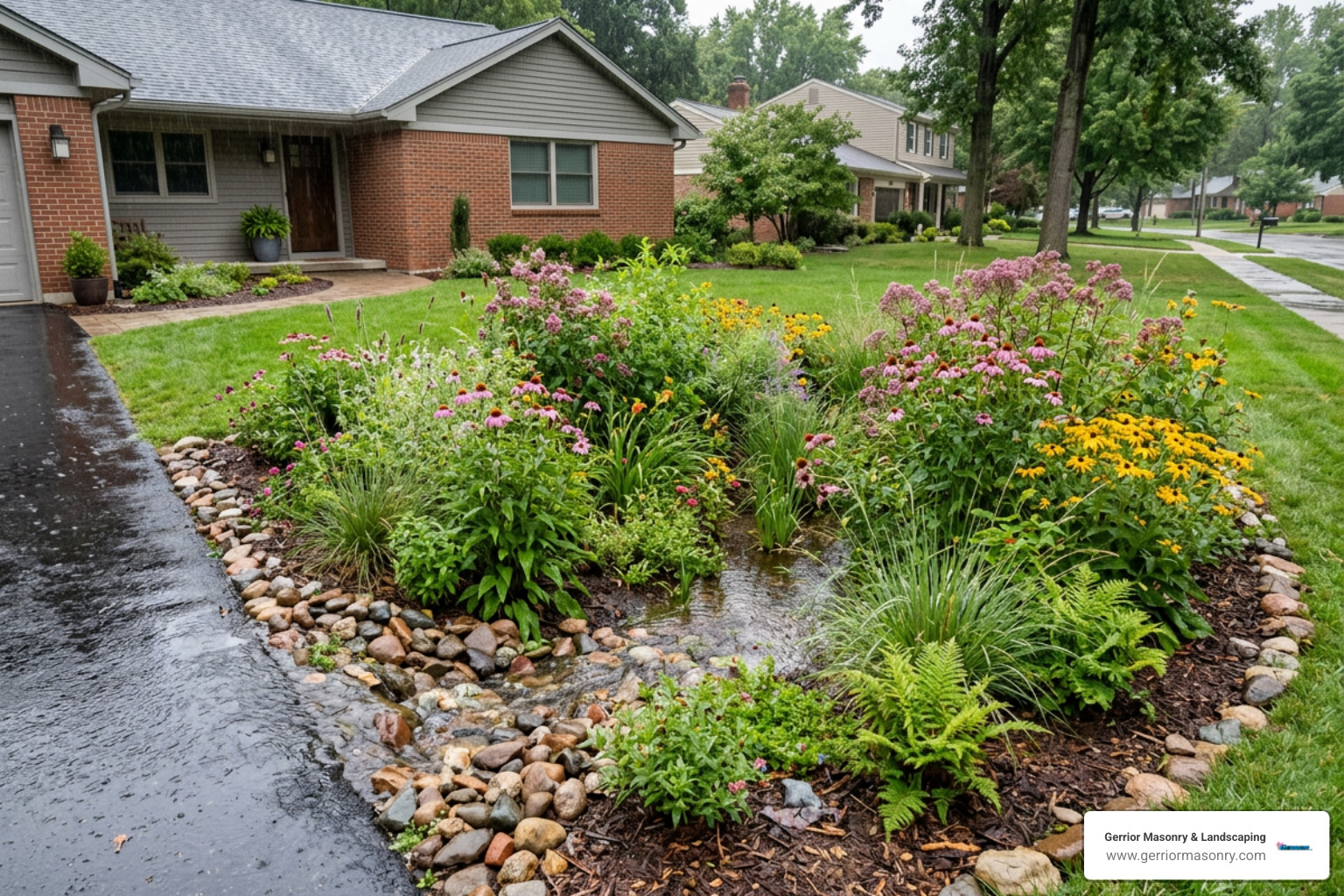
A rain garden is a shallow, saucer-shaped depression designed to capture, filter, and naturally infiltrate stormwater runoff from roofs, driveways, and lawns. Because they are engineered with permeable soil mixes and deep-rooted plants, rain gardens can absorb up to 30% more water than conventional lawns, preventing sediment and pollutants from entering local waterways.
When designing these features, we follow strict guidelines:
Location: Position the rain garden at least 10 feet away from your home’s foundation to protect crawl spaces and basements.
Sizing: Typically, a rain garden should be sized to about 10% to 20% of the impervious surface area (like your roof) draining into it.
Slope: They work best on gentle slopes of less than 12%.
The secret to a successful rain garden or wet-area landscape is choosing the right plants. We select native species that feature deep, robust root systems. These plants must be uniquely adapted to handle “wet feet” (temporary flooding) while also tolerating dry spells between rain events.
Excellent plant choices for Massachusetts rain gardens include:
Perennials: Joe-Pye Weed, Swamp Milkweed, Blue Flag Iris, and Siberian Iris.
Shrubs: Red Osier Dogwood, Winterberry, and Buttonbush.
While minor grading or planting a small rain garden can sometimes be tackled by dedicated homeowners, major drainage systems require heavy machinery, precise transit levels, and deep structural expertise.
At Gerrior Masonry & Landscaping, we bring over 30 years of experience to homeowners in Woburn, Winchester, Burlington, Lexington, and Andover. We handle everything from complex excavation to seamless hardscape integration, ensuring your drainage system is built to last.
To help you plan, we have gathered average cost ranges based on public online data. Please note: these figures represent broad industry averages and do not reflect the actual pricing of Gerrior Corp, as every project is custom-designed based on site conditions.
Professional Dry Well Installation: Typically ranges from $3,000 to $15,000 depending on the depth, excavation complexity, and catchment volume.
French Drain Installation: Typically ranges from $20 to $500 per linear foot, influenced by trench depth, utility locations, and surface restoration (such as replacing lawns or rebuilding stone walkways).
Rain Garden Materials: Typically ranges from $10 to $25 per square foot for professional-grade soils, stone borders, and native plantings.
Water behaves according to the laws of gravity and physics. If a trench is sloped incorrectly by even a fraction of an inch, water will back up, potentially worsening your flooding issues or directing water onto your neighbor’s property—which can violate Massachusetts building codes and municipal bylaws.
We highly recommend hiring a professional drainage contractor if your project requires:
Digging near underground gas, water, or electric lines (always call 811 first!).
Operating heavy excavation machinery that can compact and damage pristine lawn areas.
Major regrading or altering the natural slope of your property.
Cutting through existing asphalt driveways or stone patios to install channel drains.
If you live in Woburn, Winchester, Burlington, Lexington, or Andover and want to protect your property from water damage, we are here to help.
Finding a Reliable Concrete Contractor Near Me in Massachusetts
A concrete contractor near me can handle everything from driveway installation and patio construction to foundation repair and decorative finishes. Here’s a quick overview of what to look for:
Check credentials – Licensed, insured, and BBB-accredited contractors only
Review their portfolio – Look for experience with both residential and commercial projects
Get multiple quotes – Costs vary widely; always compare at least 3 estimates
Ask about materials – Quality mixes (4,000+ PSI), proper reinforcement, and sealing matter
Read local reviews – Prioritize contractors with a strong reputation in your area
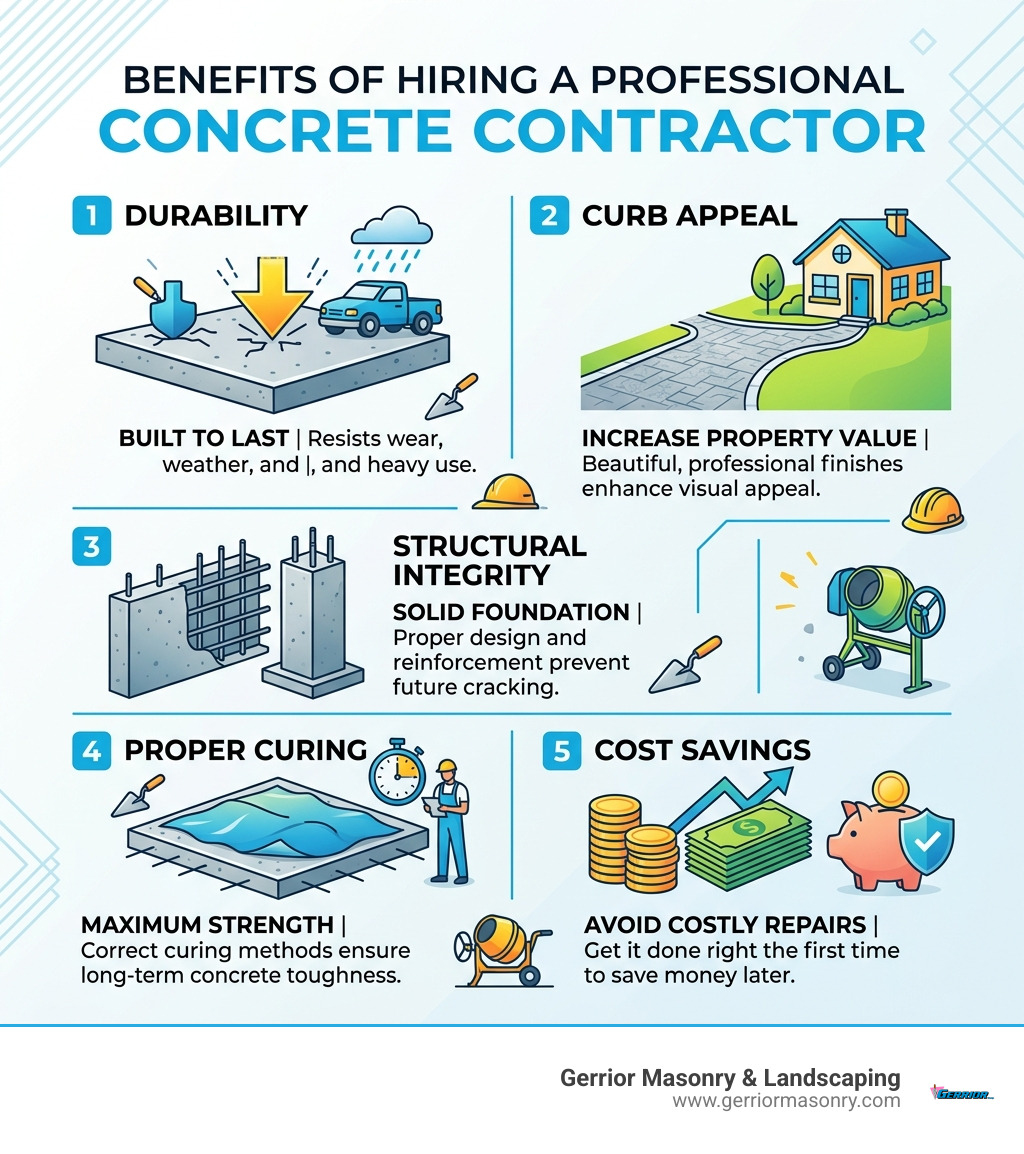
Concrete work is one of the most visible — and permanent — investments you can make in your property. A cracked driveway, uneven patio, or failing foundation doesn’t just look bad. It can lower your home’s value, create safety hazards, and cost far more to fix later than it would have to get right the first time.
Whether you’re replacing an old driveway, adding a stamped patio, or dealing with foundation cracks, the contractor you choose makes all the difference. The right professional brings the right equipment, materials, and technique to ensure your concrete lasts for decades.
I’m Joe Gerrior, owner of Gerrior Masonry & Landscape Construction Corp., a family business with over 34 years of experience helping Massachusetts homeowners and businesses find the right concrete contractor near me for projects of every size. In this guide, I’ll walk you through everything you need to know — from choosing a contractor to understanding costs and what to expect on the job.
Essential Services and Choosing a Concrete Contractor Near Me
When you start searching for a concrete contractor near me, you’ll quickly realize that the scope of concrete work goes far beyond just pouring a grey slab. In April 2026, modern concrete technology allows us to create surfaces that look like natural stone, withstand the brutal Massachusetts freeze-thaw cycles, and provide the structural backbone for entire commercial complexes.
From the historic streets of Salem to the new developments in Burlington, homeowners and business owners require versatile solutions. Whether it’s concrete patio construction to create a summer retreat or a heavy-duty commercial foundation, the expertise required is significant.
Residential and Commercial Concrete Services
A full-service concrete contractor near me should be equipped to handle both the delicate aesthetic needs of a home and the rigorous structural demands of a business.
Residential Concrete Projects: For homeowners, concrete is often about “curb appeal” and longevity. We specialize in:
Driveway Installation: Replacing old, crumbling asphalt with durable concrete or concrete driveway pavers.
Walkways and Steps: Creating safe, slip-resistant paths that lead to your front door.
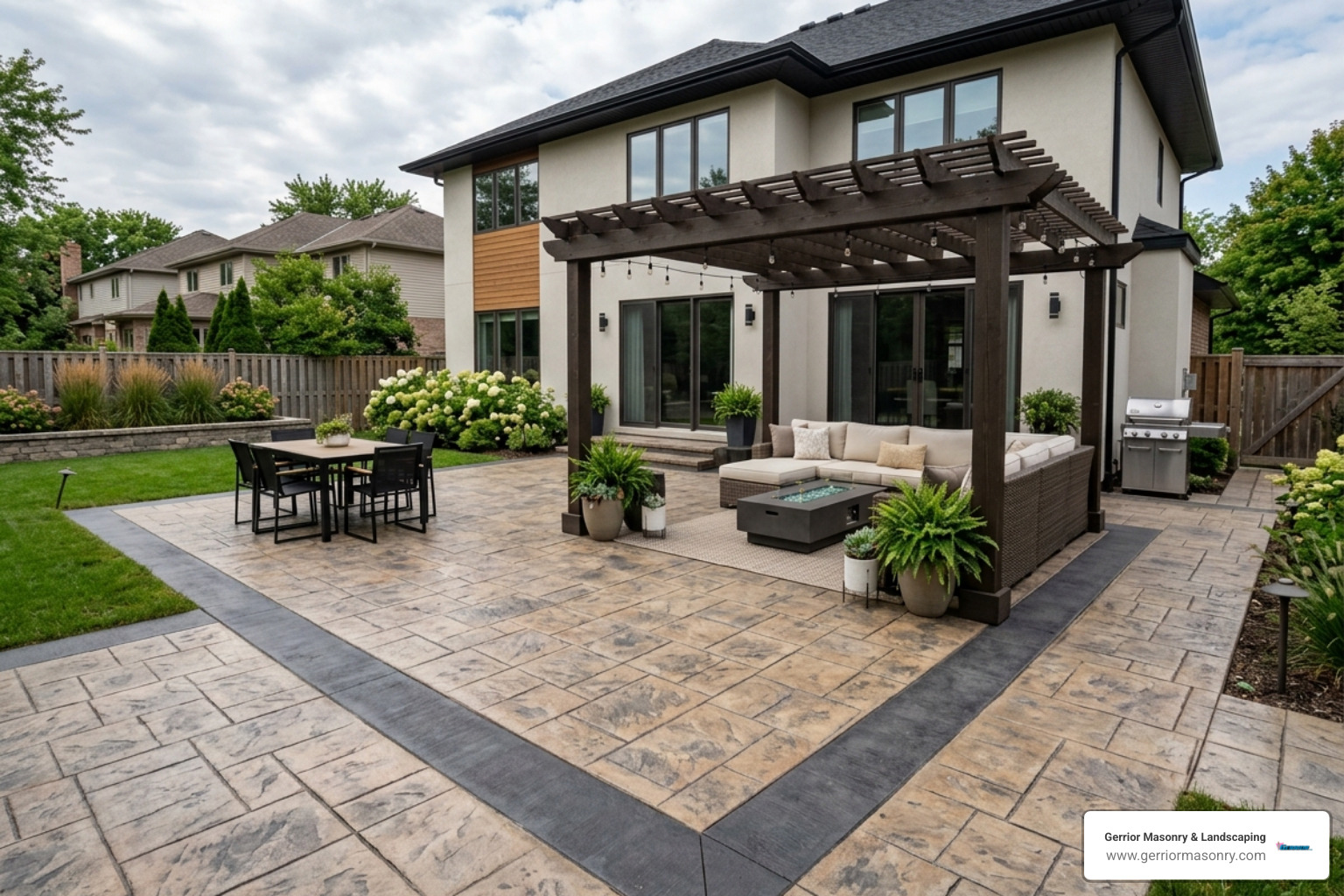
Patios and Pool Decks: Designing outdoor living spaces that handle rain, sun, and heavy patio furniture.
Bulkheads and Foundations: Installing bulkheads concrete structures to protect basement entries and performing critical foundation work.
Walls: Building a cinder block wall for structural support or privacy.
Commercial Concrete Projects: Commercial work requires a different level of engineering. Businesses in areas like Woburn and Lexington often need:
Parking Lots and Loading Docks: Surfaces designed to support the weight of delivery trucks and high-volume traffic.
Industrial Flooring: Reinforced slabs for warehouses or retail spaces.
ADA Ramps: Ensuring your business is accessible and compliant with local Massachusetts codes.
Commercial Snow Management: In Massachusetts, concrete maintenance doesn’t stop when the temperature drops. We provide comprehensive commercial snow removal to keep your business running safely during our legendary nor’easters.
Why You Need a Professional Concrete Contractor Near Me
It can be tempting to look at a bag of pre-mix at the hardware store and think, “I can do this myself.” However, concrete is an unforgiving mistress. Unlike painting a room, where a mistake just requires another coat, a concrete mistake is literally set in stone.
The Risks of DIY Concrete:
Structural Failure: Without proper site evaluation and compacted base rock, your concrete will settle, tilt, and crack within a year.
Specialized Equipment: Professionals use power floats, mixers, and laser-guided levels that the average homeowner simply doesn’t have in their garage.
Proper Curing: This is the most misunderstood part of concrete work. Concrete doesn’t just “dry”; it undergoes a chemical reaction. If it cures too fast or too slow, it loses its tensile strength.
Foundation Hazards: Messing with your home’s foundation without expert knowledge can lead to catastrophic structural issues. If you notice cracks, it’s time for professional foundation repair rather than a DIY patch job.
When we manage a project, we ensure that the rebar is tied correctly for reinforcement and that the mix design is tailored for the specific humidity and temperature of the day.
Key Factors for Selecting a High-Quality Concrete Contractor Near Me
Not all contractors are created equal. To ensure you aren’t hiring “a guy with a truck and a shovel,” we recommend a rigorous vetting process.
Licensing and Insurance: Never hire a contractor who cannot provide proof of workers’ compensation and liability insurance. This protects you if an accident occurs on your property in Andover or Medford.
Years of Experience: There is no substitute for time on the job. We have over 30 years of experience navigating the unique soil conditions of Middlesex and Essex County.
Portfolio Review: Ask to see photos of recent work. A reputable contractor will be proud to show off their portfolio of stamped and decorative concrete services or their specialized foundation work.
Local Reputation: Ask your neighbors in Winchester or Reading who they used. A contractor who has been in business for decades in the same area relies on their reputation to survive.
Project Costs, Processes, and Expert Solutions
Understanding the financial side of a concrete project is crucial for planning. While everyone wants a “free estimate,” it’s important to know what goes into that number.
Understanding Concrete Project Costs and Estimates
Pricing for concrete work in Massachusetts varies based on the complexity of the site, the type of finish, and the current cost of materials. In April 2026, we see a wide range of pricing based on internet data for the New England region.
Please note: The following figures are average market costs for Massachusetts and do not represent the specific pricing of Gerrior Masonry.
When you receive a concrete paver driveway estimate, ensure it includes demolition of the old surface, grading, and the installation of a compacted gravel base. A “cheap” quote often skips the base preparation, which is the most important part of the job!
From Consultation to Completion: The Concrete Project Process
What should you expect once you’ve hired a concrete contractor near me? A professional project follows a systematic 5-step protocol:
Initial Consultation: We visit your property in towns like Bedford or Billerica to assess soil conditions, drainage, and your aesthetic goals.
Site Preparation: This involves pulling permits, excavating the old surface, and grading the land. Proper drainage is engineered here to ensure water flows away from your home.
Forming and Reinforcement: We build the wooden “mold” for your concrete and install steel rebar or mesh to give the slab its strength.
The Pour: We coordinate with a ready-mix concrete delivery service to ensure the concrete arrives at the perfect consistency. We then pour, level, and finish the surface.
Curing and Clean-Up: The concrete must be protected while it reaches its initial strength. We then remove the forms and perform a thorough site clean-up.
For more complex projects involving stone or brick, you might want to look into broader masonry services.
Addressing Common Concrete Problems and Finishes
Even the best concrete can face challenges over time. The key is addressing them before they become structural failures.
Common Problems:
Cracks: Minor hair-line cracks are common due to shrinkage, but deep cracks suggest a base failure.
Settling: If one side of your patio is sinking, it may need leveling or foundation repointing to stabilize the area.
Spalling: This is when the top layer of concrete flakes off, often caused by the heavy use of de-icing salts in Massachusetts winters.
Modern Finishes: Today’s concrete contractor near me can offer incredible variety in finishes:
Stamped Concrete: Can mimic the look of slate, brick, or even wood. Check out stamped concrete examples for inspiration.
Epoxy Coatings: Perfect for garage floors in Melrose or Malden, providing a glossy, chemical-resistant surface.
Exposed Aggregate: A rugged, slip-resistant finish that looks great on walkways.
Polished Concrete: A high-end interior look for modern homes and commercial spaces.
Gerrior Masonry & Landscape Construction is based in Woburn, MA, and services Middlesex and Essex County, Massachusetts, including Acton, Andover, Arlington, Belmont, Beverly, Burlington, Concord, Danvers, Lexington, Lynnfield, Medford, Newton, Peabody, Reading, Stoneham, Wakefield, Waltham, Watertown, Wilmington, and Winchester.
Why Fireplace Concrete is the Smart Choice for Modern Homes
Fireplace concrete is the go-to material for homeowners wanting a blend of style, durability, and value. From pre-cast surrounds to custom designs, here’s what you need to know.
Concrete Overlays: DIY-friendly systems for updating existing brick.
Custom Poured-in-Place: Site-built designs with unlimited possibilities.
Pre-Cast Modular Systems: Quick-install kits for fast project completion.
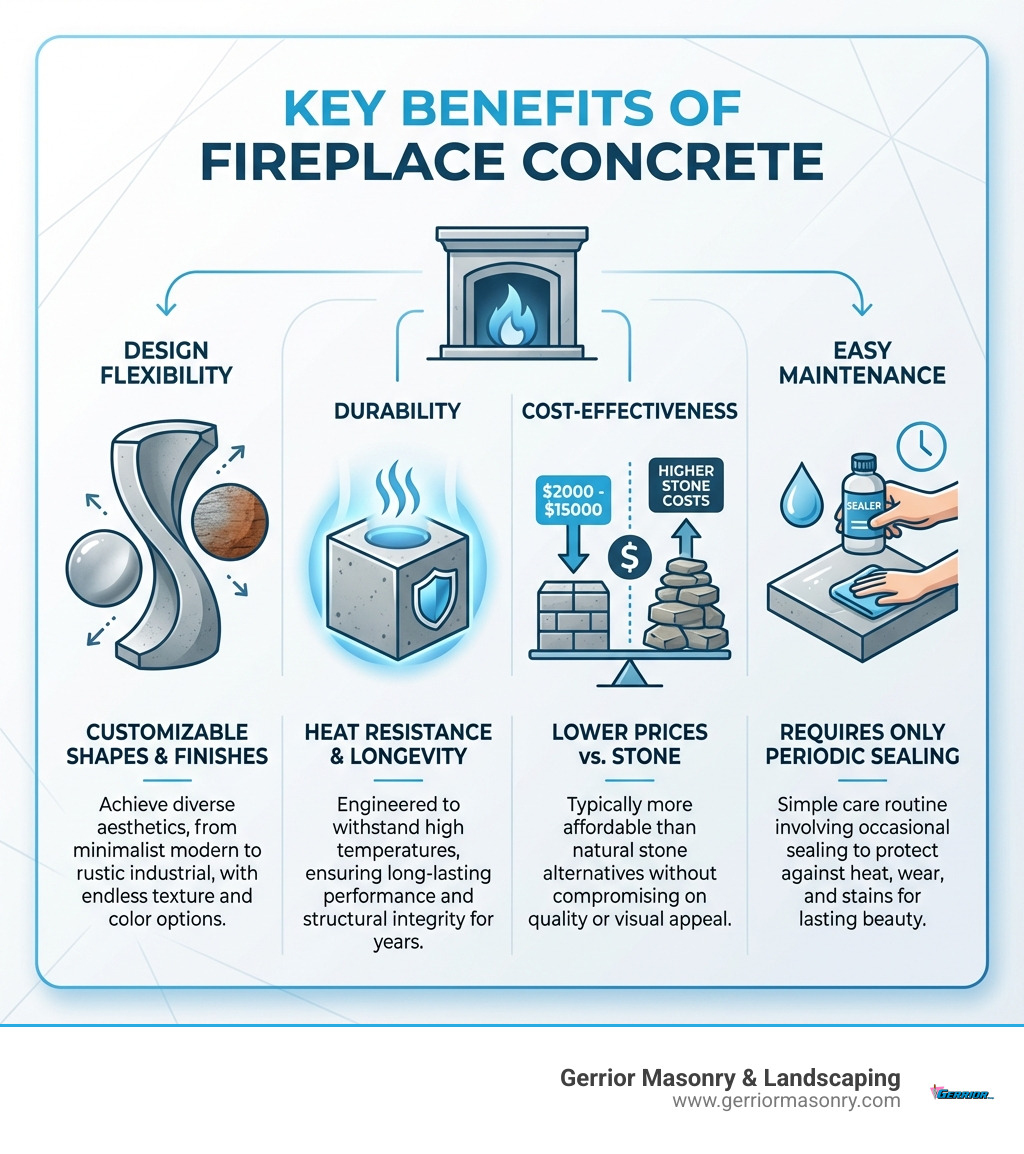
Concrete fireplaces offer best versatility in design, from minimalist to industrial. They are heat-resistant, durable, and can be customized with various colors and textures. Unlike stone or brick, concrete can be cast into seamless, contemporary shapes while ensuring a safe, long-lasting hearth. The material is also typically more affordable than natural stone and easier to maintain than brick. Whether you’re working with a pro or tackling a DIY project, concrete delivers impressive results.
I’m Joe Gerrior, owner of Gerrior Masonry & Landscape Construction Corp. With over 34 years of experience in Massachusetts, I’ve helped countless homeowners with custom masonry, including fireplace concrete installations that combine safety, beauty, and value.
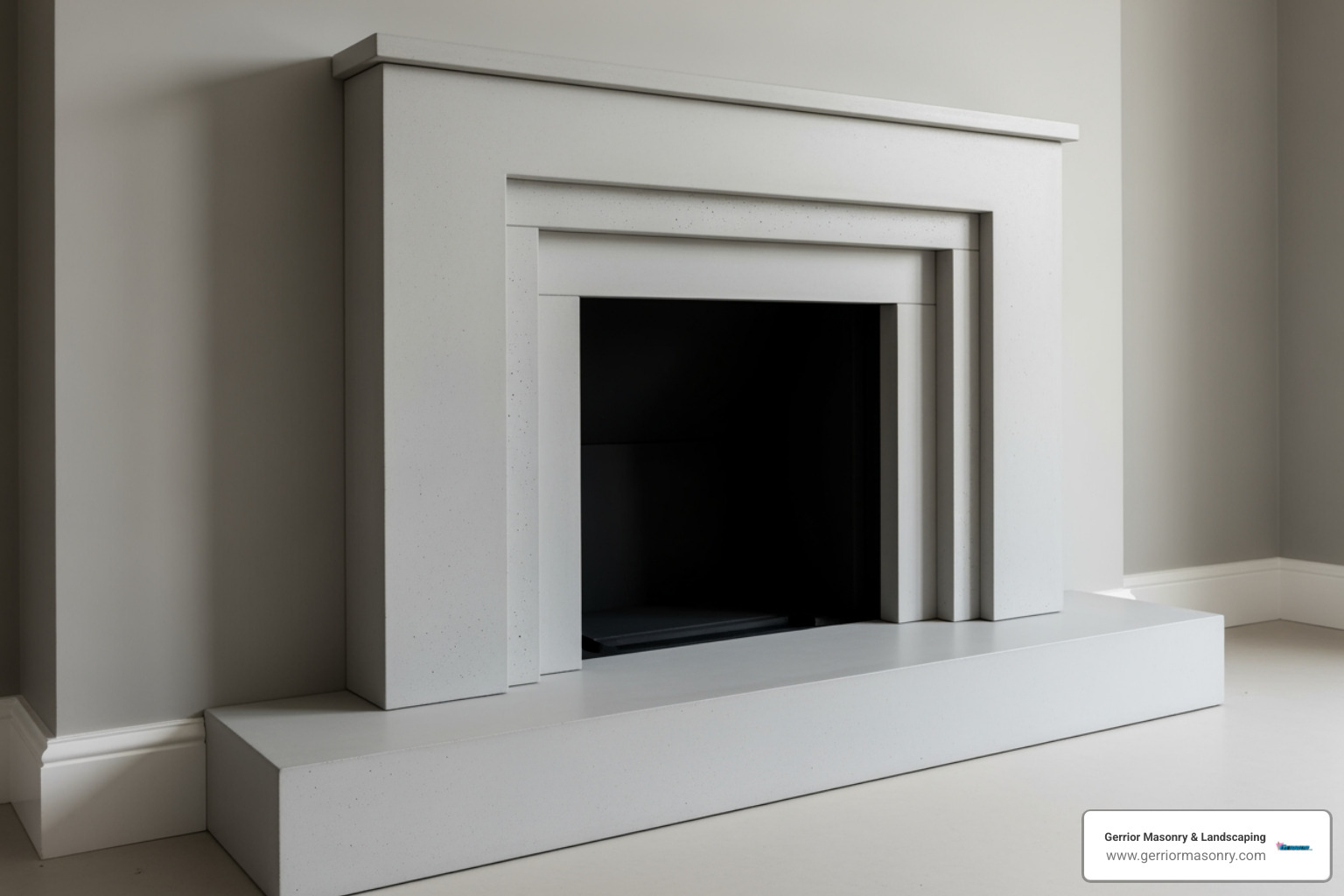
The modern appeal of fireplace concrete is undeniable, driven by the industrial-chic aesthetic that favors raw, refined textures. Concrete makes a bold architectural statement that is both modern and timeless.
Beyond trends, it offers incredible versatility. It can be molded into any shape, from sleek and minimalist surrounds to grand, sculptural forms, suiting styles from urban lofts to modern farmhouses.
Durability is another key factor. Concrete is a robust material that resists heat and wear. When properly installed and sealed, a fireplace concrete surround will last for decades with minimal maintenance, making it a smart choice for any hearth.
A Comprehensive Guide to Selecting Your Fireplace Concrete
Choosing the right fireplace concrete for your home means understanding the available types and their unique benefits. Here’s a breakdown of the primary options.
Choosing Your Type: Pre-Cast vs. Custom vs. Overlay
You generally have three main approaches for a fireplace concrete project: pre-cast, custom poured-in-place, and concrete overlays. Each offers distinct advantages.
Pre-Cast Concrete Surrounds: These are manufactured in a controlled factory environment, ensuring consistent quality and precision. A popular choice is Glass Fiber Reinforced Concrete (GFRC), which incorporates alkali-resistant glass fibers into the concrete mix. This reinforcement allows for thinner, lighter panels without sacrificing strength, making it ideal for upper-floor installations or homes where structural load is a concern. Some pre-cast modular systems are up to 50% lighter and less expensive than hand-built masonry and can be installed by a professional team in as little as two hours, minimizing disruption to your home.
Custom Poured-in-Place: This on-site method offers unparalleled creative freedom. It involves building custom forms or molds directly around your fireplace, into which the concrete is poured. This allows for unique shapes, massive sizes, and the seamless integration of elements like hearths, benches, or wood storage cubbies. It’s the ultimate choice for a one-of-a-kind architectural feature, but it is a labor-intensive process that requires significant expertise in form-building, concrete mixing, and finishing to avoid cracks and ensure a perfect result.
Concrete Overlays: An excellent DIY-friendly option for refreshing an existing fireplace without a messy demolition. Products like Flex-C-Ment or other cementitious coatings are designed to be applied in thin layers directly over old brick, tile, or stone. This method can create a modern concrete finish, cover imperfections, and completely update a dated look with minimal cost and effort compared to a full replacement.
Here’s a quick comparison:
Speed of Installation: Pre-cast modular systems are fastest. Overlays are also quick. Custom poured-in-place is the most time-intensive.
Customization Level: Custom poured-in-place offers maximum freedom. Pre-cast offers good options. Overlays allow for surface-level changes.
Cost Implications: Lightweight pre-cast systems and overlays are often the most budget-friendly. Custom work varies widely.
Once you’ve chosen a type of fireplace concrete, these features will influence the final look.
Material Composition (GFRC vs. Traditional): GFRC contains glass fibers for strength, allowing for thinner, lighter designs ideal for pre-cast surrounds. Traditional concrete is heavier but perfect for robust, custom poured-in-place applications.
Finish (Polished, Textured, Raw): The finish defines the aesthetic and tactile quality of your fireplace. A Polished finish is achieved by grinding the surface with progressively finer diamond pads to create a smooth, reflective look that highlights the aggregate within. A Textured finish can be created using form liners to mimic materials like wood (board-form), stone, or fabric. It can also be hand-troweled for a more organic, plaster-like appearance. A Raw or “as-cast” finish celebrates the material’s natural, industrial character, often leaving behind the subtle imperfections and air pockets (bug holes) from the pouring process for an authentic look.
Color Options:Fireplace concrete isn’t just gray. Integral pigments are powders mixed into the concrete before pouring, ensuring the color is consistent all the way through the slab. This means any future chips or scratches will be less noticeable. Alternatively, the surface can be treated with acid stains or water-based dyes after curing to create variegated, translucent tones that mimic natural stone. For the most precise color matching, the cured and sealed concrete can be painted with a high-quality, heat-resistant paint.
Sealing for Longevity: Proper sealing is crucial. A quality sealer protects the surface from stains and wear, ensuring longevity.
Size and Scale: Consider the proportions of your room and firebox. Pre-cast surrounds come in standard sizes, while custom designs are limited only by structural constraints and your imagination.
Hearth Requirements: A concrete hearth can be poured as a solid slab or included in a pre-cast system. We can customize dimensions to meet code and complete your design.
Mantel Integration: A mantel can be seamlessly integrated as a floating shelf or a more substantial architectural element, either as part of a pre-cast kit or a custom design.
For more information on how we integrate these features into our projects, explore our services here: More info about masonry services.
Comparing Durability, Maintenance, and Cost
When evaluating fireplace concrete against other materials, consider these long-term factors.
Durability and Longevity: Concrete is exceptionally durable and heat-resistant. A properly installed and sealed concrete surround, especially GFRC, can last a lifetime, often outperforming brick or stone.
Maintenance Needs: Concrete is low-maintenance. A sealed surface is easy to clean, and periodic resealing every few years is all that’s needed. This is often less work than scrubbing grout on brick or stone.
Cost: The cost of a fireplace concrete project varies based on type, size, and complexity. Pre-cast systems and DIY overlays are often more budget-friendly than custom work. While national data suggests average project costs can range from $2,000 to over $15,000, this is a wide estimate. For an accurate quote, consult a professional.
Here’s a comparative overview:
Feature
Concrete
Brick
Stone
Average Cost
$2,000 – $15,000+
$3,000 – $20,000+
$5,000 – $30,000+
Maintenance
Low (periodic sealing, easy cleaning)
Medium (grout cleaning, occasional repointing)
Low to Medium (depends on type, sealing)
Design Flexibility
High (castable, textured, colored, custom shapes)
Medium (traditional, limited shapes/colors)
Medium (natural variations, cut to size)
Popular Design Styles for Your Fireplace Concrete Project
The versatility of fireplace concrete suits numerous design styles.
Minimalist: This style uses clean lines and simple forms. The smooth, monolithic look of concrete, especially in seamless GFRC surrounds, creates a serene and uncluttered focal point.
Industrial: This style accepts the raw beauty of concrete, often featuring an unpolished finish with natural variations in color and texture to create an urban, factory-inspired aesthetic.
Modern Farmhouse: Concrete can be softened for this style. A board-form texture that mimics wood grain or a warmer gray tone blends perfectly with natural wood elements for a cozy yet contemporary feel.
Key techniques include ensuring clean lines for modern designs, using board-form texture for rustic warmth, and adding integrated shelving or seating for a functional, cohesive look. For more inspiration, you might find valuable insights from this resource: Design inspiration for modern interiors.
The DIY Approach: Is a Concrete Overlay Right for You?
For the hands-on homeowner, a fireplace concrete overlay is a rewarding DIY project to update an old brick fireplace without a full demolition.
Is it for you? This project is suitable for those with basic home improvement skills. It’s a great way to cover dated brick, fill minor cracks, and achieve a modern look on a budget.
The Process in Brief: The project typically involves thoroughly cleaning and degreasing the existing surface, followed by applying a special bonding primer to ensure the overlay adheres properly. The overlay mix is then prepared according to the manufacturer’s instructions and applied with a trowel in one or more thin coats to build up the desired thickness and texture. After the concrete cures (which can take 24-72 hours), it should be lightly sanded if needed and then sealed with a matte or satin sealer for protection and a finished look. The entire application can often be completed in a weekend, with additional time for curing.
Materials Needed: Key materials include a concrete overlay mix, primer, a concrete sealer, and basic tools like a bucket, mixing drill attachment, and trowel.
Safety and Building Code Essentials for Fireplace Concrete
Safety is paramount with any fireplace project. Adhering to codes is critical for a safe and functional hearth.
Non-Combustible Materials: Concrete is non-combustible, a key safety advantage. Any other finishing materials used on the fireplace must also be non-combustible.
Clearances: It is critical to maintain proper clearance between the firebox opening and any combustible materials (like wood trim or walls), as specified by building codes.
Local Building Codes: Always consult your local building department in Middlesex and Essex County, Massachusetts, before starting. Codes for fireplace construction and clearances vary by location.
Hearth Dimensions: Codes mandate minimum hearth sizes to protect flooring from embers. Ensure your design complies.
Professional Installation: While overlays can be a DIY project, we strongly recommend professional installation for any structural fireplace concrete work. A trained technician ensures your fireplace is beautiful, safe, and up to code.
Partner with a Masonry Expert for a Flawless Finish
As we’ve explored, fireplace concrete offers a superb combination of style, durability, and value. From its design flexibility to its low maintenance, it’s a smart choice for any modern hearth.
However, achieving a flawless finish while ensuring structural integrity and safety requires professional expertise. Partnering with an experienced masonry contractor is the best way to guarantee a high-end result that adheres to all building codes. Our team understands the nuances of working with concrete and can handle everything from complex custom pours to precise pre-cast installations.
Ready to transform your living space with a stunning concrete fireplace? Our expert masons can bring your vision to life safely and beautifully. Explore our custom masonry and chimney services.
Gerrior Masonry & Landscape Construction is based in Woburn, MA, and proudly services communities throughout Middlesex and Essex County, Massachusetts.
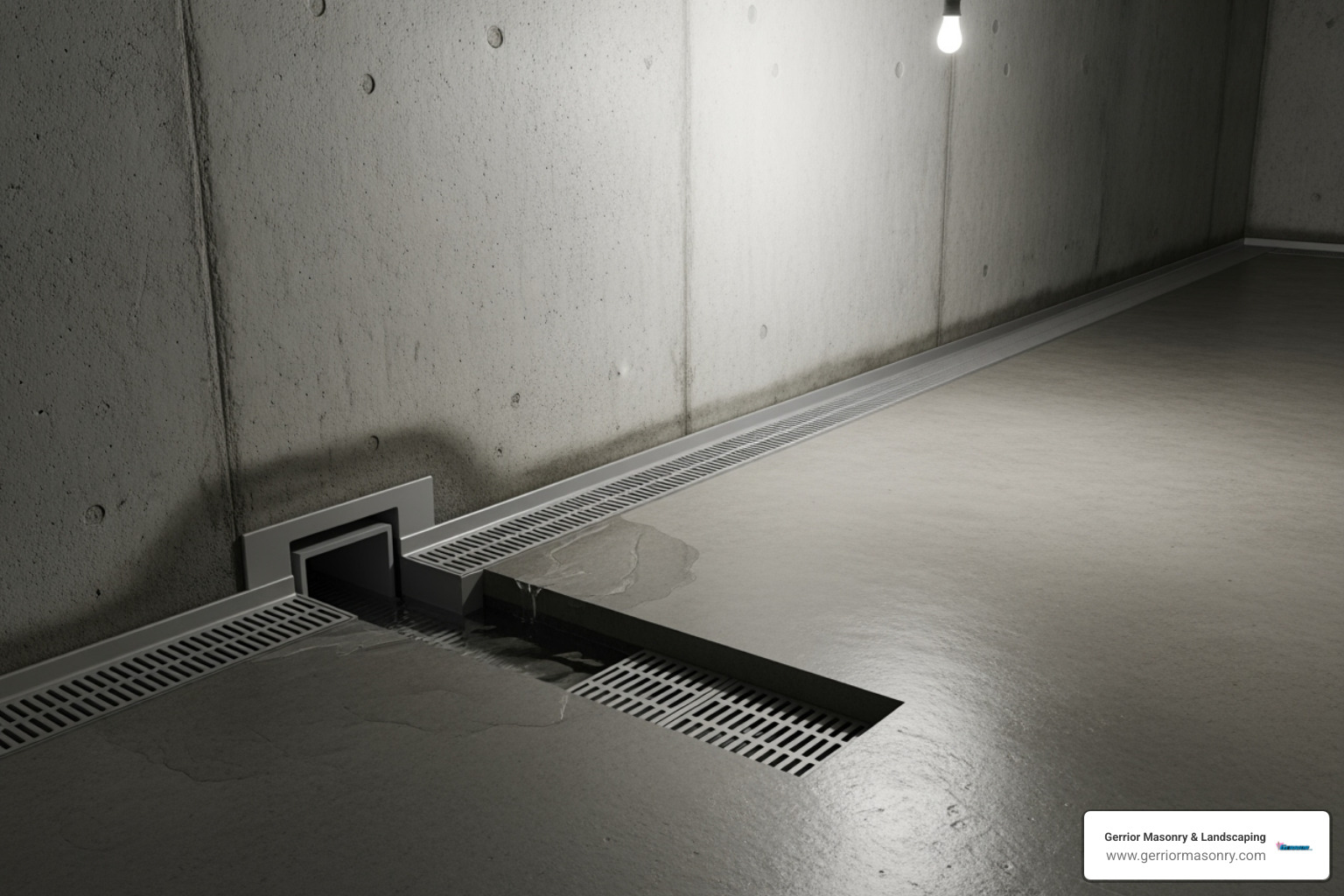
A basement wall drain channel is an interior waterproofing system installed along the perimeter of basement walls to collect and redirect water away from your foundation. Here’s what you need to know:
How Basement Wall Drain Channels Work:
Intercept water at the critical wall-floor joint where most leaks occur
Relieve hydrostatic pressure that pushes groundwater into your basement
Channel collected water to a sump pump system for removal
Sit above the foundation footing to prevent clogging with silt and debris
Create a capillary break to stop water’s natural movement through concrete
Cross-floor interceptor channels (for mid-floor water issues)
Finding water in your basement is a frustrating sign that hydrostatic pressure is forcing groundwater into your home, usually at the vulnerable joint where the walls meet the floor.
Interior drainage channels are the gold standard for solving this problem. Unlike exterior solutions that can clog within 10-15 years, a professionally installed interior system can last 20+ years. It works by creating a controlled path for water, relieving pressure and directing moisture safely away.
I’m Joe Gerrior, and with 34 years of experience in masonry and foundation work in Massachusetts, I’ve seen these systems consistently prove to be the most reliable long-term solution for changing damp basements into dry, usable spaces.
Your Comprehensive Guide to Basement Wall Drain Channel Systems
Finding water in your basement can damage your home’s value and create health concerns. A properly installed basement wall drain channel system solves the root cause of water problems, working around the clock to keep your basement dry.
Signs of Water Problems
Learning to read your basement’s warning signals can save you thousands in damage:
Water stains on walls: Discolored patches, especially near the floor, show where water has repeatedly intruded.
Damp, musty smell: This odor indicates mold and mildew growth from excess moisture, often appearing before you see visible water.
Efflorescence: White, chalky deposits on concrete or masonry, left behind as water seeps through and evaporates.
Puddles on the floor: The most obvious sign that hydrostatic pressure is overwhelming your foundation.
Peeling paint or wallpaper: Moisture trapped behind wall coverings causes them to bubble, crack, and detach.
When these signs appear, a basement wall drain channel is often the most effective long-term solution. For comprehensive issues, our basement waterproofing services can help, and if structural damage has occurred, our foundation repair expertise ensures your home is stable.
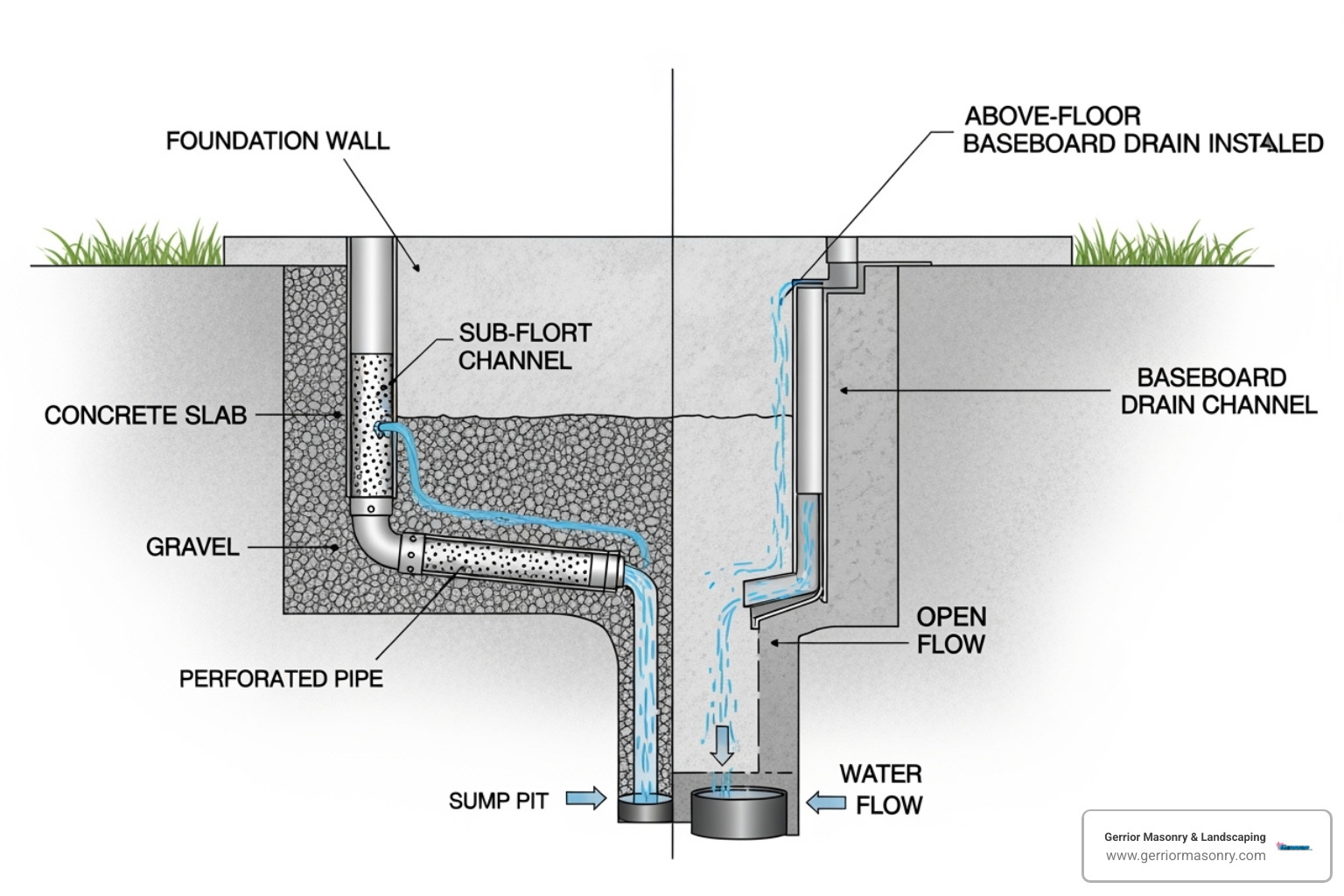
Understanding How a Basement Drainage Channel Works
A basement wall drain channel system’s power lies in its simple, smart design that works with natural forces.
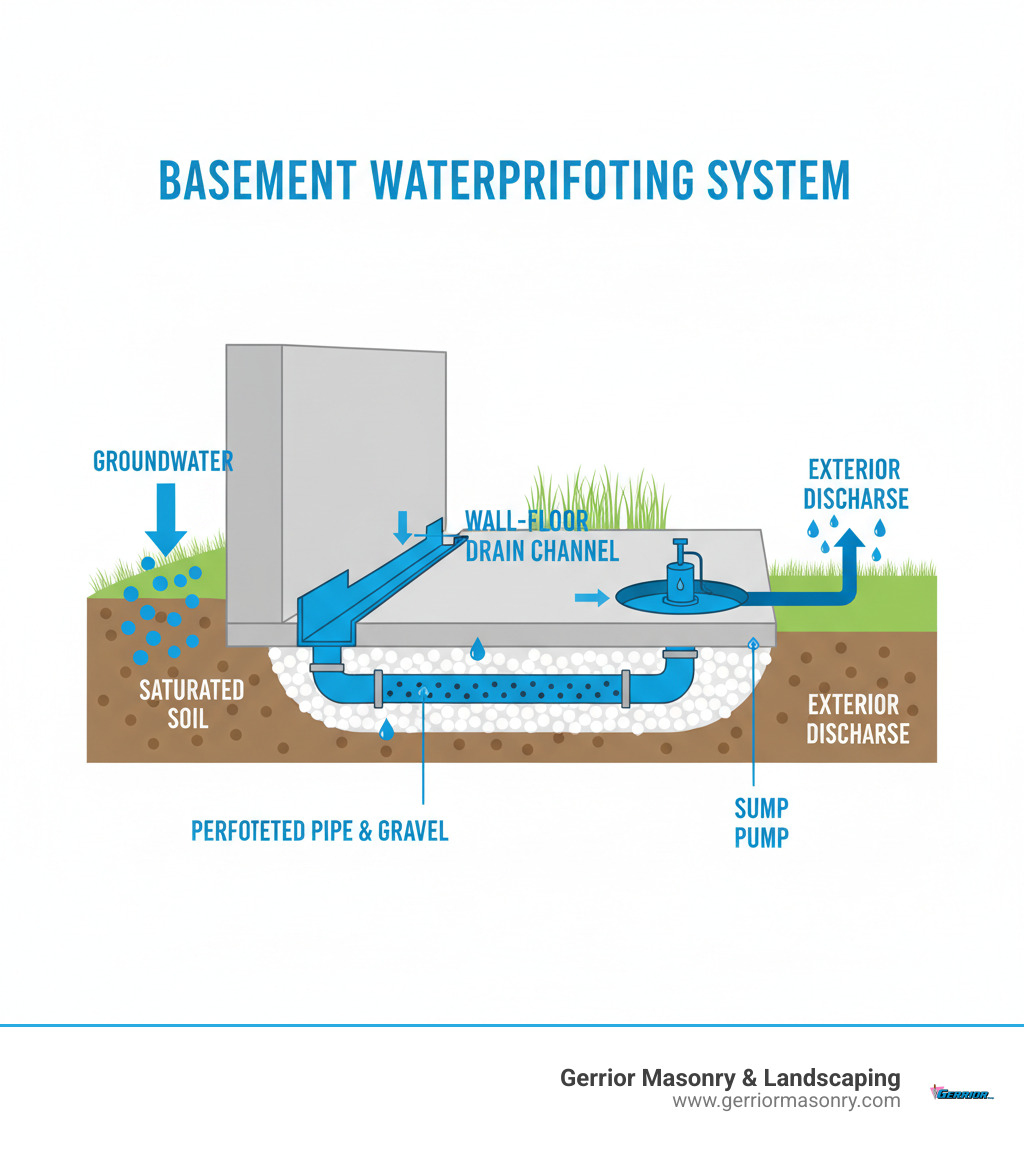
Perforated drain pipe: The system’s core, this engineered pipe allows water in while keeping debris out.
Clean gravel/stone backfill: Surrounds the pipe, acting as a natural filter to prevent clogging and ensure excellent water flow.
Vapor barrier or dimple board: Placed against the foundation wall, it creates an air gap for water to flow down to the channel and blocks moisture vapor from entering the basement air.
Sump pit and pump: The command center. The pump automatically activates to remove collected water through a discharge line, carrying it safely away from your home.
The system’s genius is in relieving hydrostatic pressure. It gives water an easy escape route before it can force its way through your foundation. By capturing water at the cove joint (where the floor meets the wall), it addresses the most common entry point. Its clog-resistant design, placed above the foundation footing and using clean stone, avoids the “mud zone,” ensuring long-term reliability. Our guide to sump pump systems provides more detail on this critical component.
Choosing the Right Type of Drainage Channel
Selecting the right basement wall drain channel depends on your basement’s construction and water issues.
Sub-floor perimeter channels: Considered the gold standard for most basements with poured concrete or block foundations. A trench is created around the interior perimeter, the system is installed below the floor level, and the floor is re-concreted. Pros: Completely hidden, highly effective at capturing water at the wall-floor joint, and directly relieves hydrostatic pressure. Cons: More labor-intensive installation and higher initial cost compared to above-floor options.
Above-floor baseboard systems: A practical solution for monolithic slabs (where the floor and footing are poured as a single piece), making a sub-floor system impossible. A hollow channel is epoxied to the top of the floor against the wall. Pros: Less disruptive and faster installation, lower cost. Cons: Visible in the basement, may be less effective at relieving sub-slab pressure, and can be an obstacle.
Thin-slab low-profile channels: Specifically engineered for basements with thin concrete floors (typically 2-3 inches), common in older homes. These systems require less depth than standard sub-floor channels. Pros: Allows for a sub-floor solution in challenging situations. Cons: May have slightly lower water volume capacity than full-sized channels.
Cross-floor interceptor channels: These are not for perimeter leaks but are used when water is seeping up through cracks in the middle of the basement floor. These channels are installed in trenches cut across the floor to intercept the water and direct it to the perimeter system or sump pit. Pros: Directly addresses mid-floor water problems. Cons: Adds to the complexity and cost of the overall system.
Surface trench drains: Primarily an exterior or entryway solution. These grate-covered channels are installed flush with the concrete surface at the entrance to a walkout basement or garage to catch surface water before it can flow inside. Pros: Excellent for preventing water from entering through doorways. Cons: Only addresses surface water, not hydrostatic pressure from below.
The Installation Process Step-by-Step
Our streamlined process minimizes disruption while ensuring lasting results.
Preparation: We protect your property by covering items and using plastic sheeting to control dust.
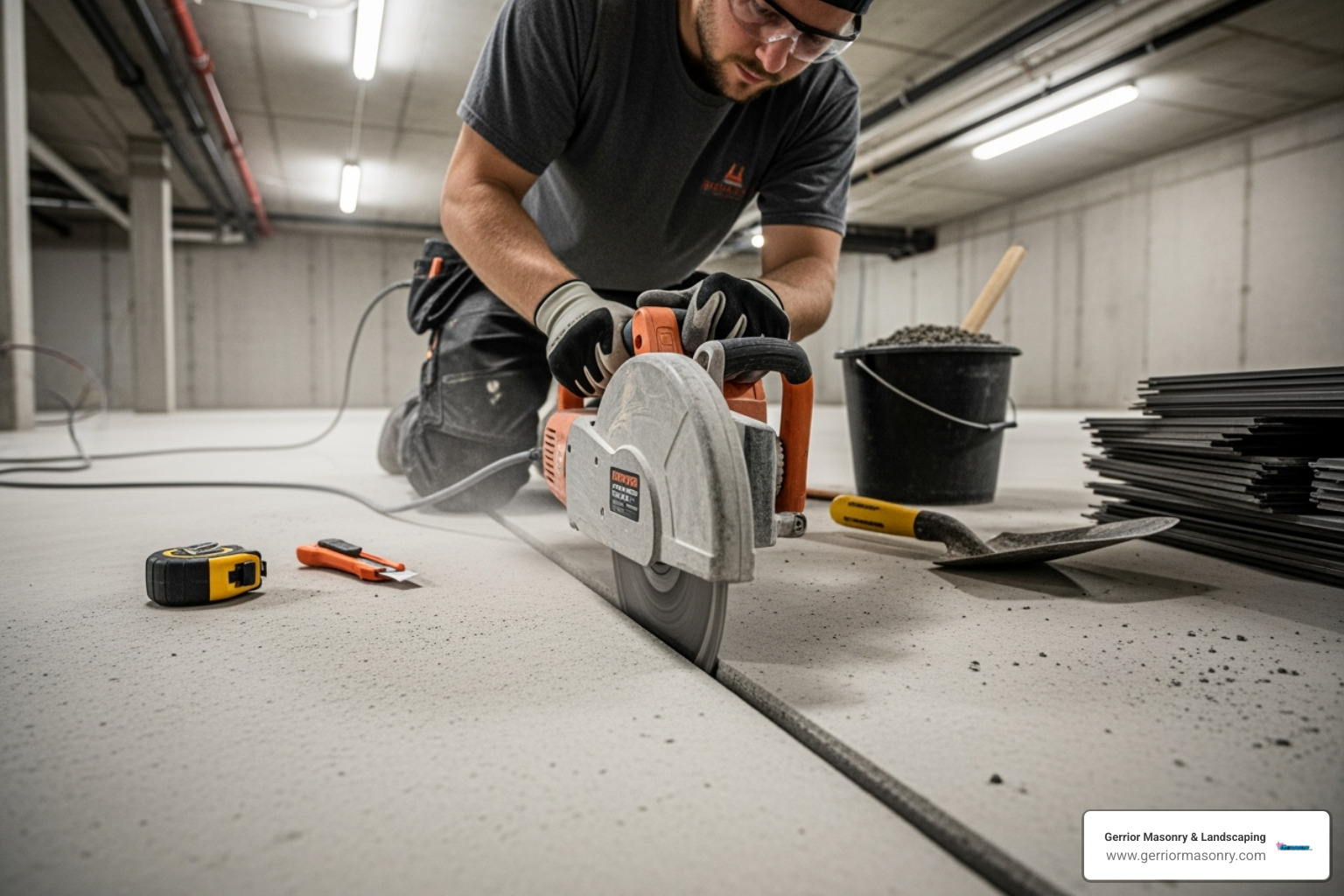
Trenching: Using specialized saws, we create a clean, precise trench along the interior perimeter.
Excavation: We dig out soil to the proper depth to expose the foundation footing.
Gravel Bed: A layer of clean drainage stone provides a stable, filtering base for the pipe.
Placing the Drain Channel: The perforated pipe is carefully positioned with the correct slope to guide water toward the sump pump.
Connecting to Sump Pump: We ensure a seamless connection with the proper slope for efficient gravity-fed drainage.
Backfilling with Gravel: More clean stone surrounds the pipe, promoting water flow and filtration.
Vapor Barrier Installation: If needed, a barrier is installed to direct wall seepage into the channel.
Pouring New Concrete: We restore the floor, matching the existing level for a professional finish that hides the system.
Proper slope is critical for the system to function correctly, preventing backups. This is where professional experience is invaluable.
Key Advantages Over Other Waterproofing Methods
When evaluating options, basement wall drain channel systems offer compelling advantages over exterior methods like the traditional French drain.
Feature
Interior Drain Channel System
Exterior French Drain System
Installation
Less invasive; minimal landscaping disruption. Often done in 1-2 days.
Highly invasive; requires major excavation. Can take days or weeks.
Longevity
Typically lasts 20+ years. Protected from exterior elements.
Often clogs in 10-15 years from silt, mud, and roots.
Clogging
Clog-resistant design sits above the “mud zone.”
Prone to clogging from soil and roots. Difficult to access.
Maintenance
Easy to access for sump pump checks and flushing.
Difficult and costly to maintain due to buried location.
Cost
More cost-effective long-term. Competitive initial investment.
Higher initial and long-term costs from excavation and repairs.
Hydrostatic Pressure
Directly relieves pressure at the vulnerable wall-floor joint.
Addresses soil water but doesn’t directly relieve pressure under the slab.
In summary, interior systems offer superior longevity and reliability because they are protected from outdoor elements that cause clogs. The installation is far less invasive, preserving your landscaping and making them more cost-effective over the life of the system.
Maintenance, Costs, and Long-Term Considerations for a Basement Wall Drain Channel
Investing in a basement wall drain channel is a long-term commitment to a dry basement. It benefits from proper care and has several cost factors to consider.
Maintenance:
Annual Sump Pump Testing: This is the most critical task. Before the wet season, pour water into the pit to ensure the pump and its battery backup activate correctly.
System Flushing: We recommend inspecting clean-out ports annually and flushing the system every 2-3 years to remove any sediment and ensure peak performance.
Warranty: Reputable installations come with comprehensive warranties. We stand behind our systems, giving you confidence that your investment is protected.
Cost Considerations: Costs vary based on system type, basement size, and complexity. The following are general market estimates based on internet research and not actual pricing for our services. We provide personalized quotes after a thorough evaluation.
Sub-floor perimeter channels: Average costs typically range from $4,000 to $24,000+.
Baseboard or above-floor systems: Generally range from $3,500 to $15,000+.
Thin-slab low-profile channels: Commonly cost between $4,000 and $18,000+.
Cross-floor interceptor channels: Typically range from $2,500 to $12,000+.
Surface trench drains: Generally cost between $1,500 and $9,000+.
Professional installation is invaluable due to the complexities of ensuring proper slope and material selection. A properly installed system strengthens your home’s water management and protects your property value.
Secure Your Foundation with Expert Drainage Solutions
Imagine a basement that smells fresh, where you can store items without worry or even create new living space. A professionally installed basement wall drain channel system transforms your relationship with your basement.
The benefits extend beyond just staying dry. By eliminating water intrusion, you protect your home’s structural integrity and preserve its value. A dry basement is valuable square footage; a wet one is a red flag for potential buyers.
Professional installation is critical. DIY attempts can go wrong with improper slope or connections, making problems worse and leading to costly repairs. At Gerrior Masonry & Landscaping, we have over 30 years of experience doing it right the first time, with owner oversight on every project.
A permanent solution brings peace of mind. No more worrying during storms or dealing with “that basement smell.” You get a dry, healthy, and usable space.
Gerrior Masonry & Landscaping is based in Woburn, MA, and proudly services Middlesex and Essex County, Massachusetts. We bring decades of experience and owner oversight to every project, ensuring your basement stays dry for years to come.
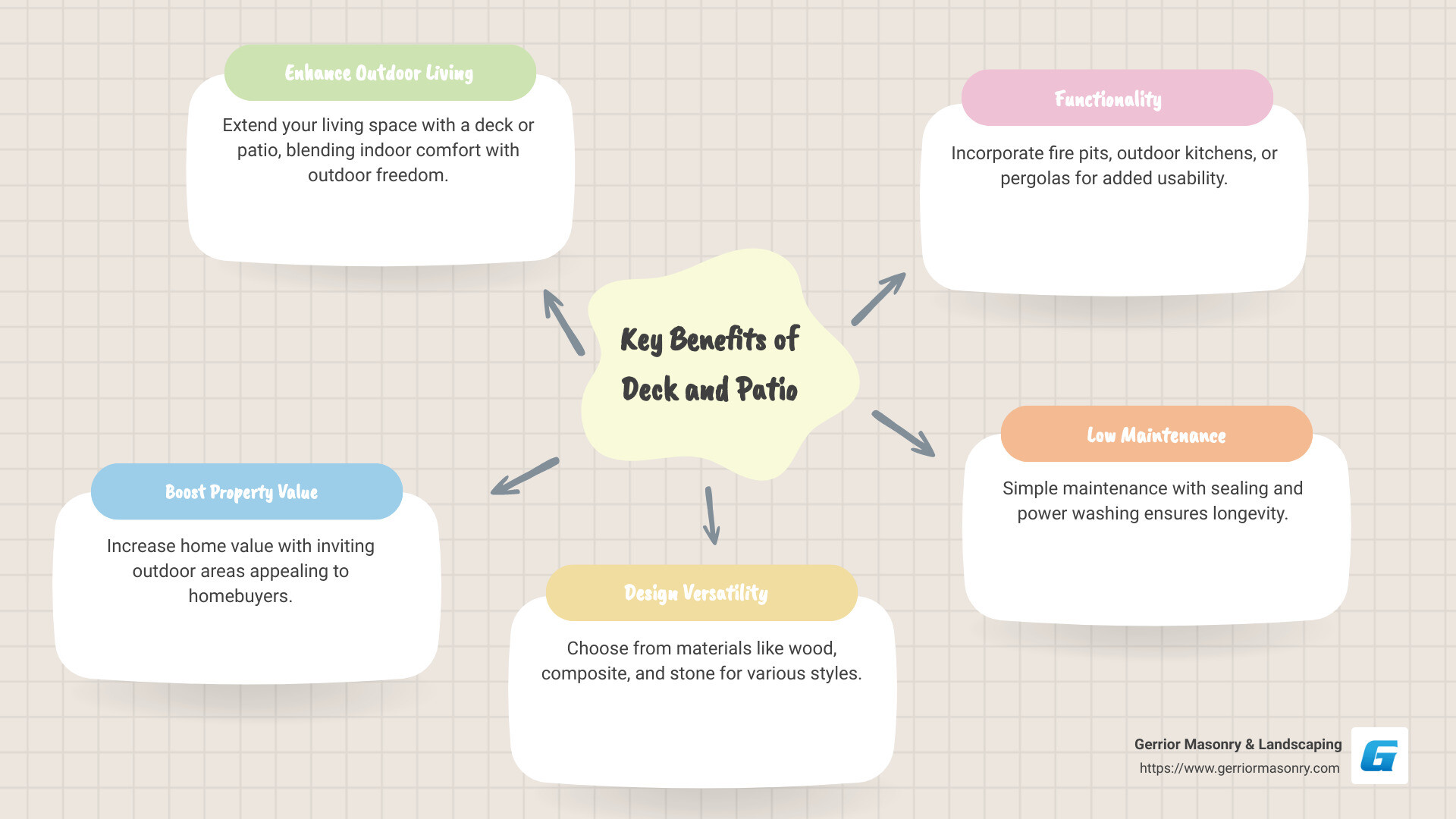
Deck and patio changes can turn any homeowner’s outdoor space into a stunning area for relaxation and entertainment. When considering such an upgrade, keep these essential points in mind:
Improve Outdoor Living: A well-designed deck or patio extends your living space, offering a seamless blend of indoor comfort and outdoor freedom.
Boost Property Value: Homebuyers often seek properties with inviting outdoor spaces, translating your investment into increased home value.
Design Versatility: Choose from materials like wood, composite, and stone, and adapt designs to suit various styles or preferences, from modern simplicity to classic elegance.
Creating your dream deck and patio lifts your home’s appeal and functionality, making it a worthwhile investment for any Massachusetts homeowner looking to combine aesthetics and practicality.
I’m Joe Gerrior. With over 34 years of experience in masonry and landscaping, I have guided countless projects focused on crafting resilient and beautiful deck and patio areas. As you start on this journey, know that my team’s expertise ensures you get a space that improves both your lifestyle and property value.
When it comes to enhancing your outdoor space, understanding the differences between a deck and patio is crucial. Each option has its unique materials, costs, and maintenance requirements. Let’s explore these aspects to help you make an informed decision.
Deck vs. Patio
Decks are typically liftd structures made from wood or composite materials. They are ideal for uneven terrain and can offer a stunning view of your surroundings. Patios, on the other hand, are usually ground-level and constructed using stone, concrete, or pavers. They blend seamlessly with the landscape and can be more versatile in design.
Materials
Wood Decks: Known for their natural beauty, wood decks require regular maintenance like sealing and staining to prevent rot and decay.
Composite Decks: Made from a blend of wood fibers and plastic, these decks are low-maintenance and durable, perfect for busy homeowners.
Stone Patios: Offer a luxurious and timeless look but can be costly and require skilled installation.
Concrete Patios: Cost-effective and durable, concrete can be stamped or colored for added aesthetic appeal.
Cost Analysis
The cost of building a deck or patio varies based on materials, labor, and long-term maintenance. Here’s a quick breakdown:
Labor Costs: Professional installation can be pricey but ensures quality and longevity. DIY projects reduce labor costs but require time and skill.
Material Costs: Wood and composite decks generally cost more per square foot than concrete patios, but the choice of material impacts durability and aesthetics.
Long-term Maintenance: Wood decks require regular upkeep, while composite decks and concrete patios are more maintenance-friendly.
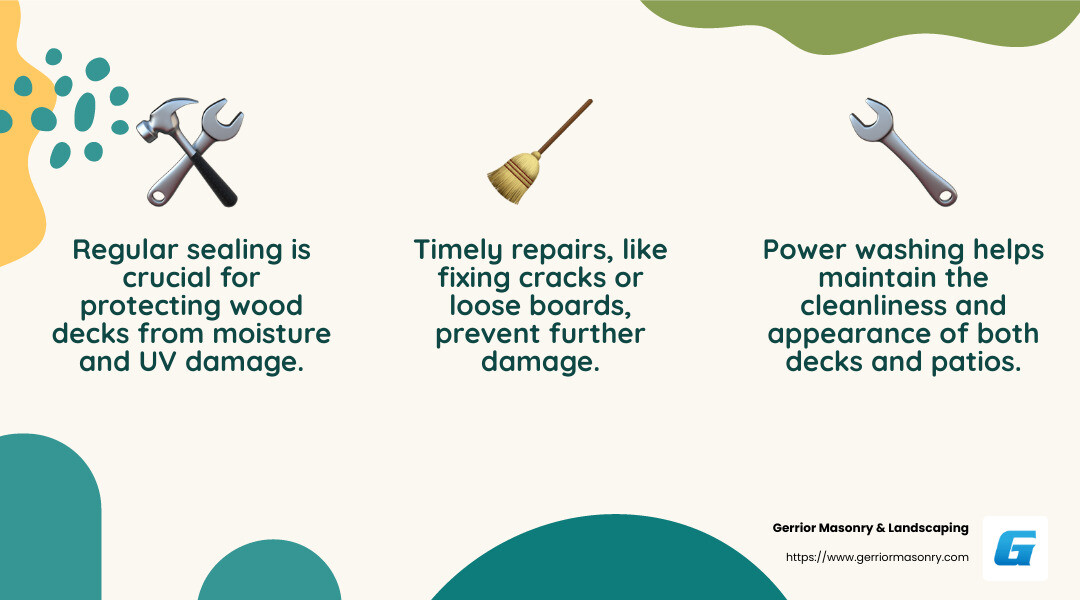
Maintenance Requirements
Keeping your deck or patio in top shape involves regular maintenance tasks:
Sealing: Essential for wood decks to protect against moisture and UV damage.
Power Washing: An effective way to clean both decks and patios, removing dirt and mildew.
Repairs: Cracks in concrete or loose boards in a deck need timely attention to prevent further damage.
By understanding these factors, you can choose the right option for your lifestyle and budget, ensuring that your outdoor space remains a beautiful and functional part of your home.
Designing Your Deck and Patio
Creating the perfect deck and patio involves more than picking materials. It’s about maximizing space, choosing the right style, and adding features that improve both functionality and beauty.
Space Utilization
When designing your outdoor area, consider how you will use the space. For small spaces, think vertical. Multi-level decks can add depth and make even a small backyard feel expansive. Rooftop decks offer a unique solution for urban homes, providing an liftd escape from city life.
Layout
Start by sketching your ideal layout. Consider pathways, seating areas, and focal points like a fire pit or water feature. Ensure there’s enough room for movement and that the layout complements your home’s architecture.
Style and Material Choices
The materials you choose will significantly impact the style and maintenance of your deck or patio.
Wood: Offers a classic and natural look, perfect for traditional homes. However, it requires regular maintenance.
Composite: Ideal for a modern, low-maintenance deck. It’s durable and comes in various colors and textures.
Stone: Provides a luxurious and timeless aesthetic, often used in patios for its durability and natural beauty.
Consider mixing materials for a unique look—like a stone patio with a wood deck extension.
Features and Additions
Adding features can transform your deck or patio into a multifunctional outdoor living space.
Pergolas: Provide shade and structure, making any outdoor area feel like an extension of your home.
Fire Pits: Extend the usability of your space into cooler months. They’re perfect for gatherings and add a cozy atmosphere.
Outdoor Kitchens: Ideal for those who love to entertain. They range from simple grills to full kitchens with countertops and sinks.
Privacy Screens: These can create an intimate setting and shield you from neighbors. They’re also a great opportunity to add a personal touch with design elements.
By thoughtfully considering these elements, you can design a deck and patio that not only looks great but also meets your needs and lifestyle.
Building Your Deck and Patio
Choosing the Right Builder
Selecting the right builder for your deck and patio project is crucial. A skilled builder can transform your vision into reality, ensuring quality and durability. When searching for a local builder, consider their expertise and reviews. Look for builders with years of experience and a portfolio that showcases their work. It’s essential to check online reviews and ask for references to understand their reliability and craftsmanship.
A good builder will also help steer the permit process. While patios typically don’t require permits, decks often do because they are liftd structures. A knowledgeable builder will be familiar with local regulations and ensure your project complies with all necessary codes.
DIY vs. Professional
Deciding between a DIY approach and hiring a professional for your deck and patio project depends on several factors.
DIY
If you have the time, tools, and skill level, a DIY project can be rewarding and cost-effective. However, be realistic about the scope of the work. Building a deck or patio involves more than just laying materials; it requires precise measurements, leveling, and sometimes complex construction techniques.
Consider the time investment as well. DIY projects can take significantly longer than professional installations, especially if you’re learning as you go. Make sure you have the time to dedicate to the project without cutting corners.
Professional Installation
Hiring a professional saves time and ensures a high-quality finish. Professionals have the necessary tools and experience to handle any challenges that arise during construction. They also bring expertise in material selection and design, which can improve the aesthetic and functionality of your space.
While professional installation is more expensive upfront, it often pays off in the long run with a durable and well-constructed deck and patio that adds value to your home.
In summary, whether you choose a DIY approach or hire a professional, the key is to align your choice with your capabilities, budget, and desired outcome. A well-planned and executed deck and patio project can transform your outdoor space into a beautiful and functional extension of your home.
Enhancing Home Value with Your Deck and Patio
Impact on Resale Value
Investing in a deck and patio can significantly boost your home’s resale value. A well-designed outdoor space not only improves your lifestyle but also attracts potential buyers. According to industry experts, adding a deck can offer a return on investment (ROI) of up to 75%, while a patio can return about 55% to 70% of its cost.
Current market trends indicate that homebuyers are increasingly valuing outdoor living spaces. Having a beautiful and functional deck and patio can set your home apart in a competitive market, making it more attractive to buyers looking for a space to relax and entertain.
Functional Additions
To maximize the attractiveness and usability of your deck and patio, consider adding functional features. These additions can not only improve your enjoyment but also increase the perceived value of your home.
Outdoor Kitchens: These are a popular addition, allowing homeowners to cook and dine al fresco. An outdoor kitchen can range from a simple grill setup to a fully equipped space with a sink, refrigerator, and pizza oven. This feature can make your home more appealing to buyers who love to entertain outdoors.
Fire Pits: A fire pit adds warmth and ambiance, extending the usability of your outdoor space into the cooler months. Whether it’s a built-in stone feature or a portable option, a fire pit can become a focal point for gatherings and a selling point for your home.
Lighting: Proper lighting is essential for safety and ambiance. Consider adding pathway lights, string lights, or even solar-powered options to improve the beauty and functionality of your deck and patio. Good lighting can make your outdoor space usable at night and add a touch of elegance.
By incorporating these functional additions, you can create an outdoor oasis that improves your home’s value and appeal. Whether you’re planning to sell soon or enjoy your space for years to come, investing in a deck and patio is a smart move for any homeowner.
Conclusion
At Gerrior Masonry & Landscaping, we believe that a well-designed deck and patio is more than just an extension of your home—it’s a long-term investment in your lifestyle and property value. Our commitment to quality craftsmanship ensures that your outdoor space is not only beautiful but also built to last.
Long-term Investment
Choosing to build a deck or patio with us means investing in a space that will improve your home’s value for years to come. Our decks and patios are designed with durability in mind, using high-quality materials that withstand the elements and require minimal maintenance. This longevity translates into a higher return on investment, as a well-maintained outdoor space can significantly increase your home’s resale value.
Lifestyle Improvement
A thoughtfully crafted deck or patio can transform your outdoor area into a personal retreat or an entertainment hub. Imagine enjoying morning coffee surrounded by nature or hosting memorable gatherings with family and friends. With features like outdoor kitchens, fire pits, and pergolas, your deck or patio can be custom to fit your unique lifestyle needs.
By partnering with Gerrior Masonry & Landscaping, you’re not just building an outdoor space—you’re enhancing your way of life. Our team works closely with you to bring your vision to life, ensuring that every detail aligns with your preferences and improves your home’s aesthetic.
Whether you’re looking to increase your property’s value or create a space for relaxation and enjoyment, investing in a deck and patio with us is a decision that offers lasting benefits.
Frequently Asked Questions about Deck and Patio
Is it cheaper to build a deck or patio?
The cost of building a deck or patio can vary widely based on materials, design complexity, and labor. Generally, patios tend to be less expensive than decks. This is because patios are built directly on the ground and often use materials like concrete or pavers, which are typically cheaper than the wood or composite materials used for decks. According to our research, a basic paver patio might range from $2,400 to $7,000, whereas wood decks can cost $25 to $35 per square foot.
However, it’s important to consider long-term maintenance costs. Decks usually require more upkeep, such as sealing and repairs, which can add to the overall expense over time. When planning your project, consider not just the initial cost but also the long-term investment.
What’s the difference between a deck and a patio?
A deck is typically a raised platform made of wood or composite materials, providing a flat surface for outdoor activities. Decks are often attached to the house and can offer great views if liftd. They can be built on uneven terrain, making them versatile for various landscapes.
In contrast, a patio is a ground-level outdoor space, usually made of concrete, stone, or pavers. Patios are often more integrated with the landscape and can be designed in various shapes and styles. They do not require railings or stairs, which can make them more straightforward to build and maintain.
Both options offer unique benefits, so the choice between a deck and a patio will depend on your specific needs, budget, and the layout of your outdoor space.
How can a deck or patio improve home value?
Adding a deck or patio can significantly improve your home’s value by expanding your living space and creating an inviting outdoor area. According to research, a well-designed patio offers an ROI of about 80% for paver patios, while decks also provide a substantial return on investment.
These outdoor spaces are highly attractive to potential buyers, especially when they include features like outdoor kitchens, fire pits, or pergolas. They not only increase the usability of your home but also improve its aesthetic appeal, making it more marketable.
For more information on how to transform your outdoor space, visit our Patio Design and Installation page. At Gerrior Masonry & Landscaping, we are committed to helping you create a deck or patio that improves both your lifestyle and property value.
Brickwork contractors are the backbone of exceptional masonry and construction projects. They take the art of laying bricks and transform it into durable and beautiful structures. Whether you’re looking to improve the aesthetic appeal of your home or increase its functionality, these experts use bricks to build walls, patios, and fireplaces that withstand the test of time.
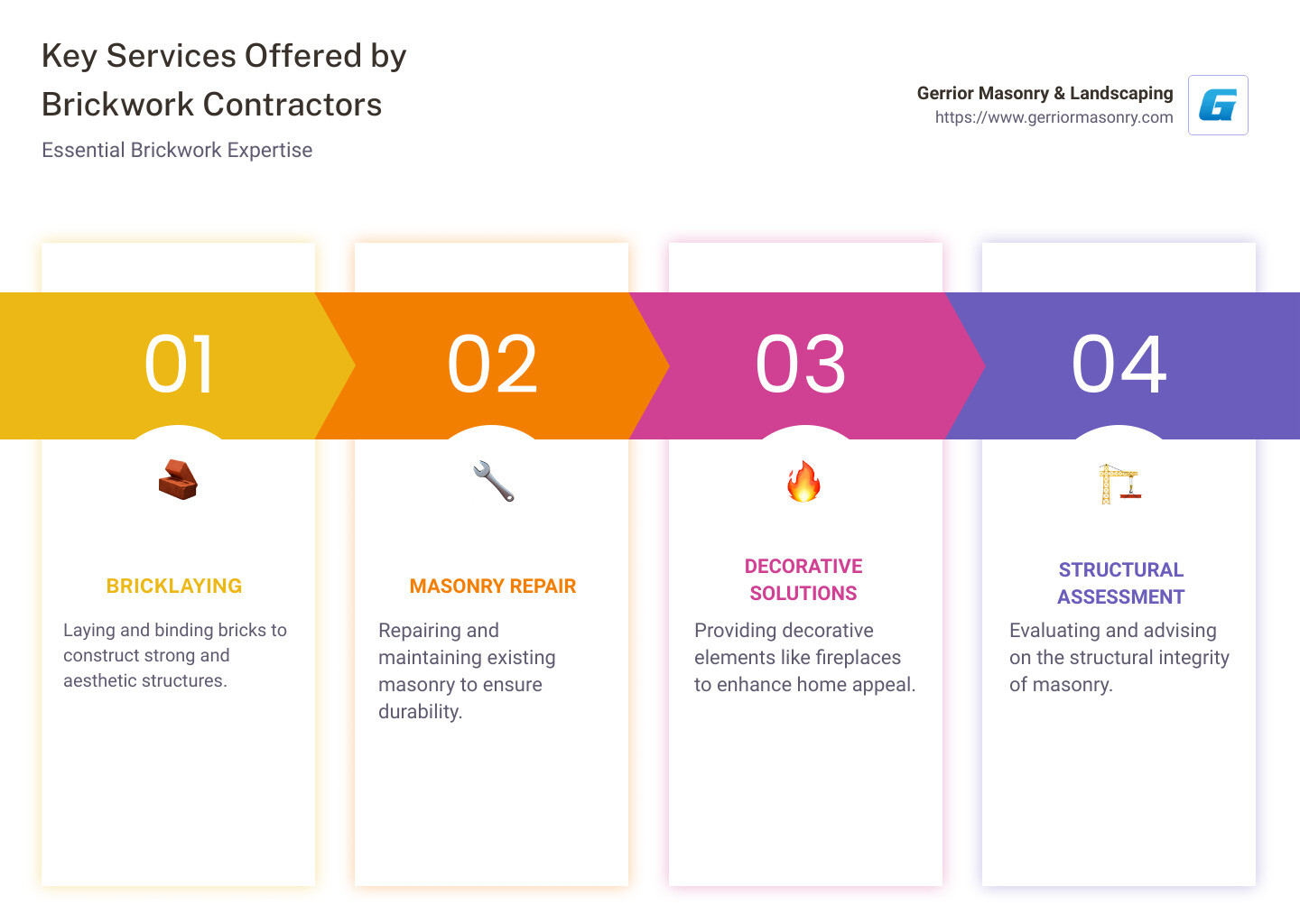
What do brickwork contractors do?
Lay and bind bricks for structures
Repair and maintain existing masonry
Provide decorative and functional solutions for homes
When you need to blend beauty and strength, brickwork contractors are essential, offering specialized skills in using various materials and techniques to achieve outstanding results. With their craft, they not only ensure that the structures are strong and durable but also aesthetically pleasing.
I’m Joe Gerrior, owner of Gerrior Masonry & Landscaping, and for over 34 years, I have been dedicated to delivering high-quality masonry services. Our team specializes in the expertise and creativity required for top-notch brickwork contractors efforts, ensuring your project is both functional and visually appealing.
Understanding Brickwork Construction
Brickwork construction is a timeless craft that combines strength and beauty. At its core, it involves arranging bricks in patterns to create structures that are both sturdy and appealing.
Solid Masonry
Solid masonry is a technique where bricks are laid without any cavities, resulting in thick walls that offer excellent thermal mass and insulation. This method is ideal for creating robust and energy-efficient buildings. The solid structure not only supports the weight of the building but also provides soundproofing and fire resistance.
Double Brick
Double brick construction is a popular choice for its durability and thermal efficiency. This method involves two layers of bricks with a gap in between, which can be filled with insulation materials. The gap acts as a barrier against moisture and temperature changes, making double brick walls particularly effective in maintaining a comfortable indoor climate.
Mortar
Mortar is the glue that holds brickwork together. It is a mixture of sand, cement, and water that binds bricks and fills the gaps between them. The quality of mortar is crucial for the longevity of the structure. A well-mixed mortar ensures that bricks are securely bonded, providing stability and weather resistance.
In brickwork construction, the choice of materials and techniques is vital. Solid masonry and double brick methods offer different benefits, while mortar plays a key role in holding everything together. Understanding these elements helps in creating structures that are not only functional but also stand the test of time.
The Role of Brickwork Contractors
Brickwork contractors are the backbone of any masonry project. They bring expertise and craftsmanship to the table, ensuring that every brick is laid with precision and care.
Masonry Contractors
Masonry contractors are specialists who manage all aspects of masonry construction. Their role extends beyond just laying bricks; they oversee the entire project from planning to completion. These professionals ensure that the construction adheres to safety standards and building codes. They also coordinate with architects and engineers to bring the design vision to life.
Bricklayers
Bricklayers are the skilled artisans who physically build the structures. Their work requires a keen eye for detail and a steady hand. Bricklayers must understand various brick patterns and techniques, such as Flemish bond or English bond, to create both functional and aesthetically pleasing walls. They are responsible for mixing and applying mortar, ensuring each brick aligns perfectly.
Construction Services
Brickwork contractors offer a wide range of construction services. These include new builds, extensions, and renovations. They work on diverse projects, from residential homes to commercial buildings. Contractors also provide repair and restoration services, maintaining the integrity and appearance of existing structures. Their expertise ensures that every project is completed on time and within budget.
Brickwork contractors play a crucial role in changing architectural plans into reality. They combine technical skills with artistic flair, creating structures that are both durable and beautiful.
Top Brickwork Services Offered
When it comes to brickwork, the services available are as varied as the projects themselves. Here’s a look at some of the top services that brickwork contractors provide, ensuring that every structure stands the test of time.
Tuckpointing
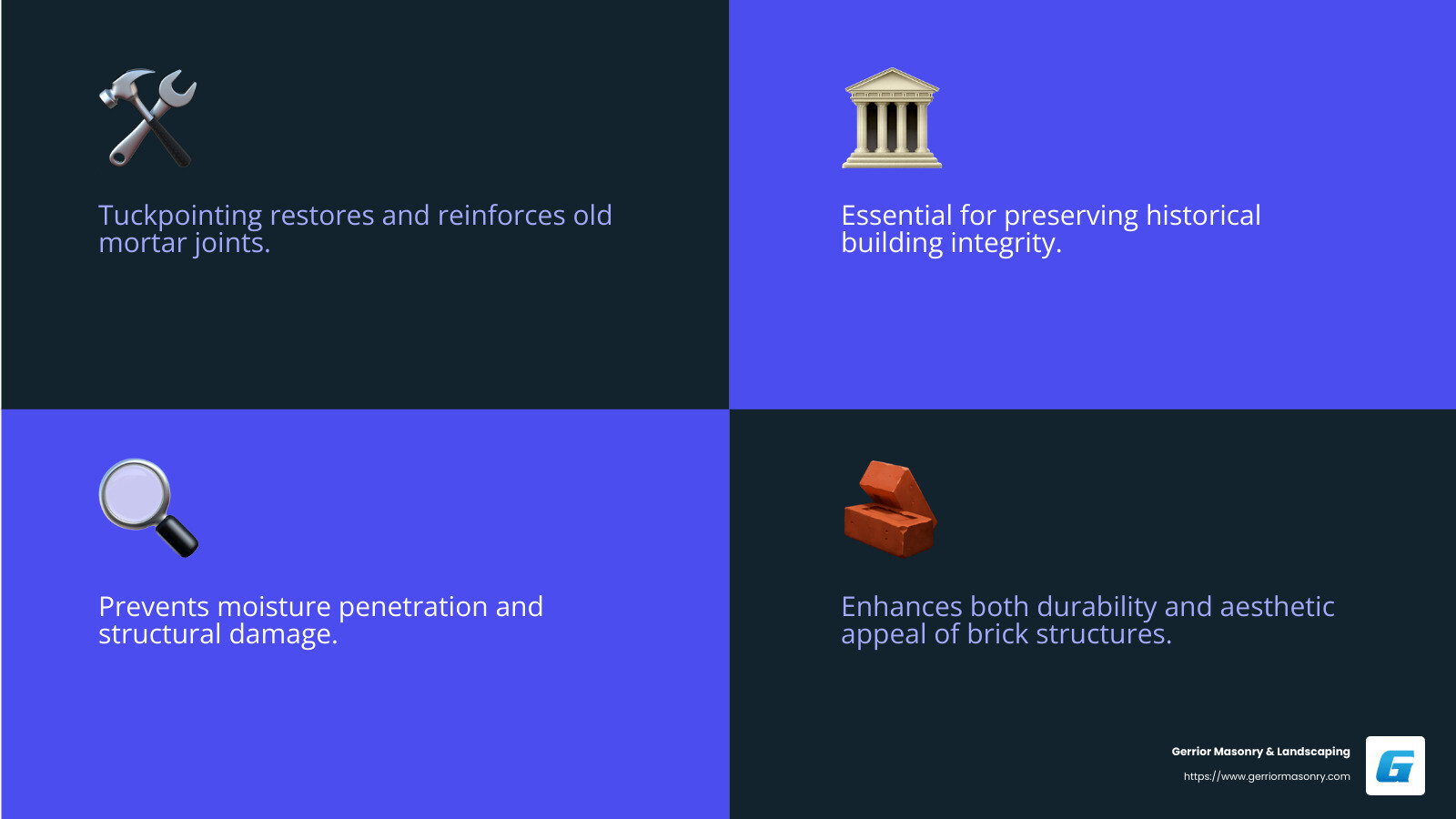
Tuckpointing is a specialized service that involves repairing the mortar joints between bricks. This process not only improves the appearance of brick structures but also strengthens them. Over time, mortar can deteriorate, leading to structural issues. Tuckpointing addresses this by replacing old mortar with new, ensuring the longevity of the building. It’s a crucial service for maintaining historical buildings, where preserving the original look is important.
Foundations
The foundation is the most critical part of any structure. Brickwork contractors are experts in laying solid and reliable foundations. A well-constructed foundation ensures the stability and durability of the entire building. Contractors use high-quality materials and precise techniques to create foundations that can withstand environmental stressors and the passage of time.
Patios
Creating a welcoming outdoor space is easy with a beautifully designed patio. Brickwork contractors design and build patios that blend functionality with aesthetics. Whether it’s a cozy backyard patio for family gatherings or a spacious area for entertaining guests, they ensure that each project meets the client’s vision and needs. Patios can be customized with various brick patterns, adding a unique touch to outdoor living spaces.
Chimneys
Chimneys are not only functional but also add character to a home. Brickwork contractors specialize in building and repairing chimneys, ensuring they are safe and efficient. Proper construction and maintenance of chimneys are essential to prevent issues like smoke leakage or structural damage. Contractors also offer chimney repointing services, which involve renewing the mortar joints to extend the life of the chimney.
Fireplaces
A fireplace adds warmth and charm to any home. Brickwork contractors design and construct fireplaces that are both beautiful and efficient. They work closely with clients to create custom designs that complement the interior décor. Whether it’s a traditional brick fireplace or a modern design, contractors ensure that each project is completed with precision and care.
Each of these services requires a deep understanding of masonry techniques and materials. Brickwork contractors bring their expertise to every project, ensuring high-quality results that meet client expectations.
Benefits of Hiring Professional Brickwork Contractors
Hiring brickwork contractors comes with several key benefits that ensure your construction project is handled with the utmost care and expertise. Here’s why opting for professionals is a wise decision:
Quality Assurance
When you hire professional brickwork contractors, you are guaranteed quality results. These experts have years of experience and know the ins and outs of brickwork, from selecting the right materials to using the best techniques. With extensive experience, companies like Gerrior Masonry & Landscaping ensure that every project is completed to the highest standards. This level of expertise means that your project will not only look great but will also stand the test of time.
Skilled Team
A skilled team is at the heart of any successful brickwork project. Professional contractors employ trained and experienced bricklayers who are adept at handling various aspects of masonry work. This includes everything from laying bricks to performing complex tasks like tuckpointing and chimney construction. A skilled team ensures that each part of the project is executed flawlessly, reducing the risk of errors and costly repairs down the line.
Project Oversight
Professional brickwork contractors provide comprehensive project oversight. This means they manage every aspect of the construction process, from planning and design to execution and final inspection. Having a dedicated team overseeing the project ensures that it stays on schedule and within budget. Contractors coordinate with other construction professionals and handle any issues that arise, offering peace of mind to clients. This level of oversight is crucial for maintaining the quality and integrity of the project.
In conclusion, hiring brickwork contractors ensures that your project benefits from quality assurance, a skilled team, and thorough project oversight. These professionals bring a wealth of knowledge and experience to the table, making them an invaluable asset to any construction endeavor.
Frequently Asked Questions about Brickwork Contractors
Is brickwork expensive?
Brickwork costs can vary based on several factors. The price you pay depends on the materials used, the complexity of the design, and the labor rate in your area. High-quality bricks and skilled labor might increase the expense, but they ensure durability and aesthetic appeal. According to the Bureau of Labor Statistics, the median annual wage for masonry workers was $53,010 in May 2023, reflecting the skill and precision required in this trade.
What is brick wall construction called?
Brick wall construction primarily falls under two categories: solid masonry and double brick. Solid masonry involves constructing walls with bricks laid in a single, continuous pattern, often used for its strength and insulation properties. Double brick, on the other hand, consists of two layers of bricks with a cavity in between, providing improved insulation and soundproofing.
What is brickwork in construction?
Brickwork in construction refers to the use of masonry materials like bricks and mortar to create structures. Mortar, a mixture of sand, water, and cement, binds the bricks together, ensuring stability and strength. Brickwork is a versatile method used in building walls, chimneys, fireplaces, and more. It combines both functional and aesthetic elements, offering a timeless appeal to any construction project.
Conclusion
At Gerrior Masonry & Landscaping, we pride ourselves on delivering quality results in every project we undertake. Our skilled team ensures that each task is completed with precision and care, from the smallest repairs to the most extensive installations. With over 30 years of experience in the masonry and hardscaping industry, we bring expertise and dedication to our work.
Our commitment to excellence is evident in the meticulous oversight provided by our owner, Joseph Gerrior, who takes a personal interest in every project. This hands-on approach guarantees that all work meets our high standards and exceeds client expectations.
Whether you’re looking to improve your home with a new patio, repair a chimney, or undertake a complex brickwork project, our team is ready to assist. We understand the importance of quality craftsmanship and strive to deliver results that stand the test of time.
For those in Woburn, MA, and surrounding areas, choosing Gerrior Masonry & Landscaping means choosing a partner dedicated to your satisfaction and the success of your project. Explore our masonry services to learn more about how we can transform your space with our expert skills and attention to detail.
By trusting us with your masonry needs, you ensure a project completed with care, precision, and a commitment to lasting quality.