
Drainage System Around the House: Top 5 Vital Benefits
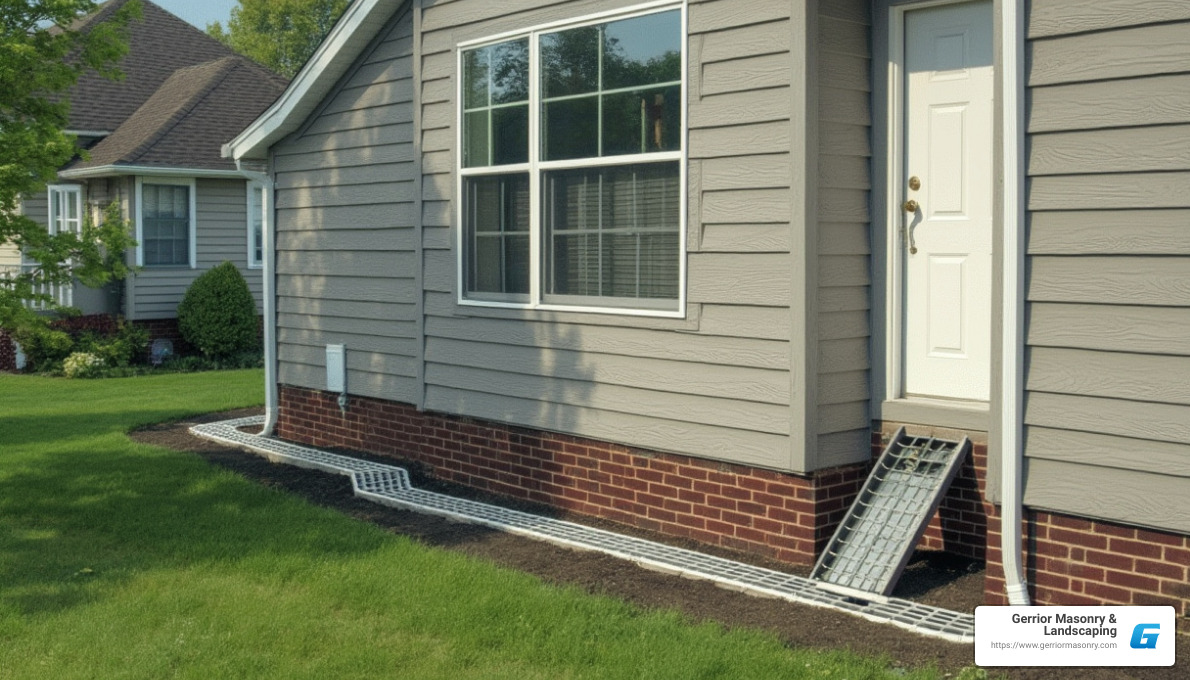
Drainage system around the house is essential for safeguarding your home from potential water damage. A well-designed system protects your foundation, ensures efficient water management, and prevents issues like soil erosion or basement flooding.
Key points to consider include:
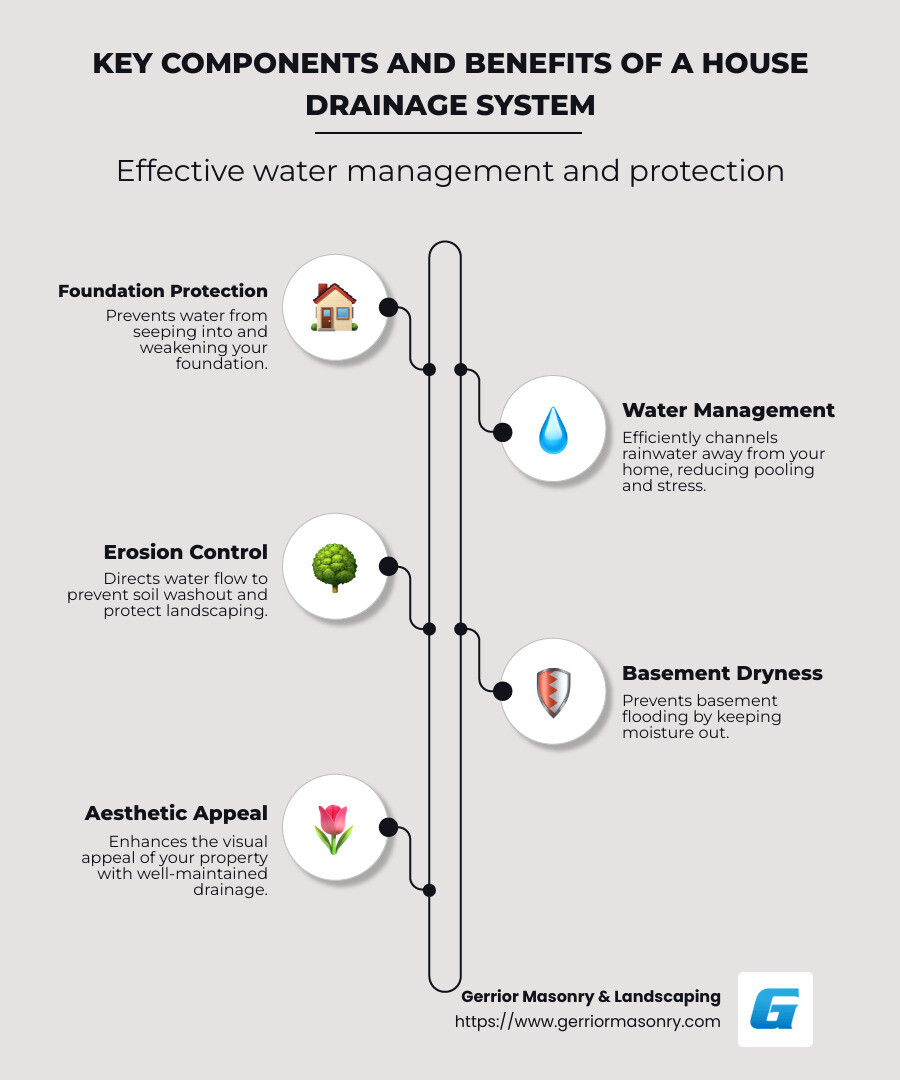
- Foundation Protection: Prevents water from seeping into and weakening your foundation.
- Water Management: Efficiently channels rainwater away from your home, reducing pooling and stress on the structure.
- Prevention of Erosion: Protects your landscaping by directing water flow and preventing soil washout.
With over 34 years of experience, I, Joe Gerrior, have dedicated my career to optimizing the drainage system around the house. My company, Gerrior Masonry & Landscaping, ensures your property is both beautiful and resilient through expertly planned drainage solutions.
Types of Drainage Systems Around the House
When it comes to keeping your home safe and dry, choosing the right drainage system around the house is crucial. Here’s a look at some of the most effective types:
Surface Drains
Surface drains are like the front line of defense against water pooling in your yard. These systems collect water at the ground level and direct it away from your home using PVC pipes. They’re great for areas that experience heavy rainfall or where water tends to accumulate quickly.
Pros:
– Quick water removal
– Simple installation
Cons:
– Visible grates can be less aesthetically pleasing
French Drains
French drains are a popular choice for homeowners dealing with excess groundwater. They consist of a trench filled with gravel and a perforated pipe that redirects water away from trouble spots.
Pros:
– Versatile for various yard settings
– Blends seamlessly with landscaping
Cons:
– Requires excavation, which can be disruptive
Trench Drains
Trench drains are ideal for areas prone to flooding. They feature a linear design with a wide opening, allowing for high water flow capacity. These drains can be improved with decorative covers to match your landscape.
Pros:
– High flow capacity
– Customizable appearance
Cons:
– Regular maintenance to prevent clogs
Dry Wells
Dry wells are subsurface structures designed to collect and disperse water underground. They help manage excess water from sources like roof runoff and sump pump discharge.
Pros:
– Space-efficient
– Promotes groundwater recharge
Cons:
– Installation can be more complex
Bioswales
Bioswales, or swales, are shallow, vegetated channels that manage water flow naturally. They slow down water runoff, allowing it to infiltrate the ground while reducing soil erosion.
Pros:
– Natural appearance
– Supports biodiversity
Cons:
– Requires space for installation
Catch Basins
Catch basins, also known as yard drains, collect surface water and direct it into a drainage pipe system. They’re essential for areas with high foot traffic or where water pooling is a concern.
Pros:
– Efficient water collection
– Reduces flooding risk
Cons:
– Needs periodic cleaning to remove debris
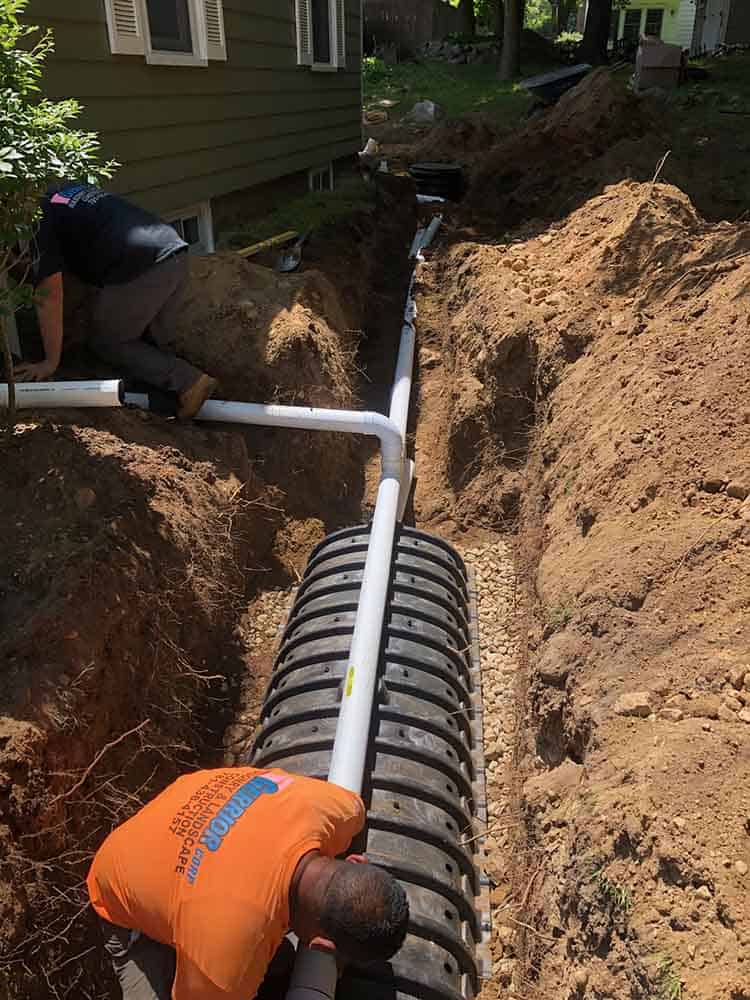
Choosing the right system depends on your specific needs and property conditions. At Gerrior Masonry & Landscaping, we specialize in custom solutions to ensure your drainage system around the house is both effective and aesthetically pleasing.
Next, let’s explore the benefits of proper drainage systems and how they can protect your home and improve its beauty.
Benefits of Proper Drainage Systems
Implementing a drainage system around the house is not just about managing water—it’s about protecting your home and enhancing your living environment. Let’s explore the key benefits:
Foundation Protection
A robust drainage system is your home’s first line of defense against water damage. By directing water away from the foundation, systems like French drains and trench drains help prevent costly issues like foundation cracks and basement flooding. This protection is crucial in areas prone to heavy rainfall, ensuring your home remains structurally sound for years to come.
Did you know? Insurance companies often ask about your foundation’s condition, as a cracked foundation can lead to serious water damage and mold issues. Regularly maintaining your drainage system could save you from hefty repair bills.
Erosion Control
Proper drainage systems play a crucial role in preventing soil erosion. By managing water flow effectively, systems like bioswales and surface drains reduce the risk of soil being washed away during heavy rains. This not only preserves the integrity of your landscaping but also prevents unsightly gullies and uneven ground surfaces.
Safety and Health
Standing water around your home is more than just an inconvenience—it can be a breeding ground for pests and a hazard for slips and falls. Catch basins and dry wells ensure that water is efficiently collected and dispersed, reducing the risk of accidents and minimizing the presence of mosquitoes and other pests.
Aesthetic Appeal
A well-designed drainage system can also improve the visual appeal of your property. With options like decorative trench drain covers and natural-looking bioswales, you can integrate drainage solutions seamlessly into your landscape design. This not only maintains the beauty of your outdoor space but also adds value to your property.
Tip: Consider integrating native plants into your bioswales to promote biodiversity and create a natural look that complements your landscape.
By investing in a proper drainage system around the house, you’re taking proactive steps to safeguard your home, improve its safety, and improve its aesthetic appeal. In the next section, we’ll explore installation and maintenance tips to ensure your drainage system remains effective and efficient.
Installation and Maintenance Tips
Installing a drainage system around the house can seem daunting, but it doesn’t have to be. With the right approach and knowledge, you can ensure your system is both effective and easy to maintain. Here’s how:
Easy Installation
For a straightforward installation, consider pre-assembled systems like the trench drains from LandScape Drains. These come pre-sloped and ready to install, making the process much simpler. If you’re tackling the project yourself, start by assessing your yard’s natural slope and identify areas where water tends to pool. This will help you determine the best locations for your drains.
- Plan: Map out where water naturally flows and where it accumulates.
- Prepare: Clear the area of debris and vegetation.
- Install: Follow the manufacturer’s instructions for your chosen drainage system.
Low Maintenance
Once your drainage system is in place, keeping it in good shape is relatively easy. Here are a few tips:
- Regular Inspections: Check your system periodically for clogs or damage. A quick look after heavy rains can prevent bigger problems.
- Clean-Out Access: Install clean-out ports to easily flush the system with a garden hose, as suggested by Mike Sutton of French Drain Man Canada.
- Minimal Upkeep: Systems like bioswales, which use native plants, require less water and maintenance once established.
Professional Installation
If DIY isn’t your style, hiring a professional like Gerrior Masonry & Landscaping ensures the job is done right. Professionals have the expertise to:
- Assess Proper Grading: Ensure your yard slopes correctly to prevent water from running toward your home.
- Select the Right Materials: Use quality materials like non-woven geotextile fabric to prevent clogging and improve durability.
- Customize Solutions: Tailor the drainage system to fit your specific landscape and needs.
Cost Considerations
The cost of installing a drainage system can vary widely. Factors include the type of system, materials used, and the complexity of the installation. Here’s a rough estimate:
- Perimeter Drains: Expect to pay around $65-$80 per linear foot, including labor and materials.
- French Drains: Costs can vary based on the length and depth required.
While the initial investment may seem high, a well-installed drainage system can prevent costly damage to your home and landscape. Investing now can save you from expensive repairs down the line.
By focusing on easy installation, low maintenance, and considering professional installation and cost factors, you can ensure your drainage system is both effective and manageable. Up next, we’ll address some common questions about drainage systems to further guide you in making informed decisions.
Frequently Asked Questions about Drainage Systems
What is the best drainage system around a house foundation?
The best drainage system around the house foundation often depends on your specific needs and landscape. However, French drains are a popular choice. They consist of perforated pipes buried in a trench filled with gravel. As water seeps through the gravel, it’s collected by the pipe and directed away from the foundation. This system is excellent for reducing water pressure against your foundation and preventing leaks.
Grading drainage is another effective method. This involves reshaping the landscape to ensure water slopes away from the house. Proper grading can significantly reduce water accumulation around the foundation, minimizing potential damage.
How much does it cost to install a drainage system around a house?
The cost of installing a drainage system varies based on several factors, including the type of system and the complexity of the installation. For instance:
- Perimeter drains: Approximately $65-$80 per linear foot, covering labor, materials, and soil removal.
- French drains: Costs can fluctuate depending on the length and depth required.
While these costs might seem steep initially, consider them an investment in protecting your home from water damage. Professional installation can ensure the system is effective and long-lasting, which can save money on repairs in the future.
What is the proper drainage around a house?
Proper drainage around a house involves several components working together:
- Gutters and Downspouts: These are crucial for directing rainwater from the roof away from the foundation. Ensure they are clean and well-maintained to function effectively.
- Grading: Your yard should slope away from the house to naturally direct water away from the foundation. If your yard slopes towards the house, consider regrading to prevent water damage.
- Sump Pumps: In areas prone to heavy rainfall or high water tables, a sump pump can provide an additional layer of protection by removing accumulated water from the basement.
Combining these elements ensures comprehensive protection against water damage. Regular maintenance and inspections can keep these systems running smoothly and prevent costly repairs.
Conclusion
In conclusion, a well-designed drainage system around the house is not just a luxury—it’s a necessity. At Gerrior Masonry & Landscaping, we understand the importance of protecting your home from water damage. With over 30 years of experience, our team is committed to providing high-quality drainage solutions that safeguard your property for the long term.
Implementing a proper drainage system offers numerous long-term benefits. It protects your foundation, prevents soil erosion, and improves the safety and health of your home environment. Moreover, a well-maintained drainage system can boost the overall aesthetic appeal of your property, blending seamlessly with your landscape.
For homeowners, professional advice and installation are key to ensuring the effectiveness and longevity of your drainage system. Our skilled team at Gerrior Masonry & Landscaping is here to guide you every step of the way. From assessing your property to designing and installing a custom drainage solution, we ensure your home is well-protected against water-related issues.
Investing in a reliable drainage system now can save you from costly repairs and potential damage in the future. For more information on how we can help you with your drainage needs, please visit our Drainage Systems and Dry Wells page.
Protecting your home starts with a solid drainage plan. Let us help you maintain the beauty, safety, and integrity of your property with our expert services.
