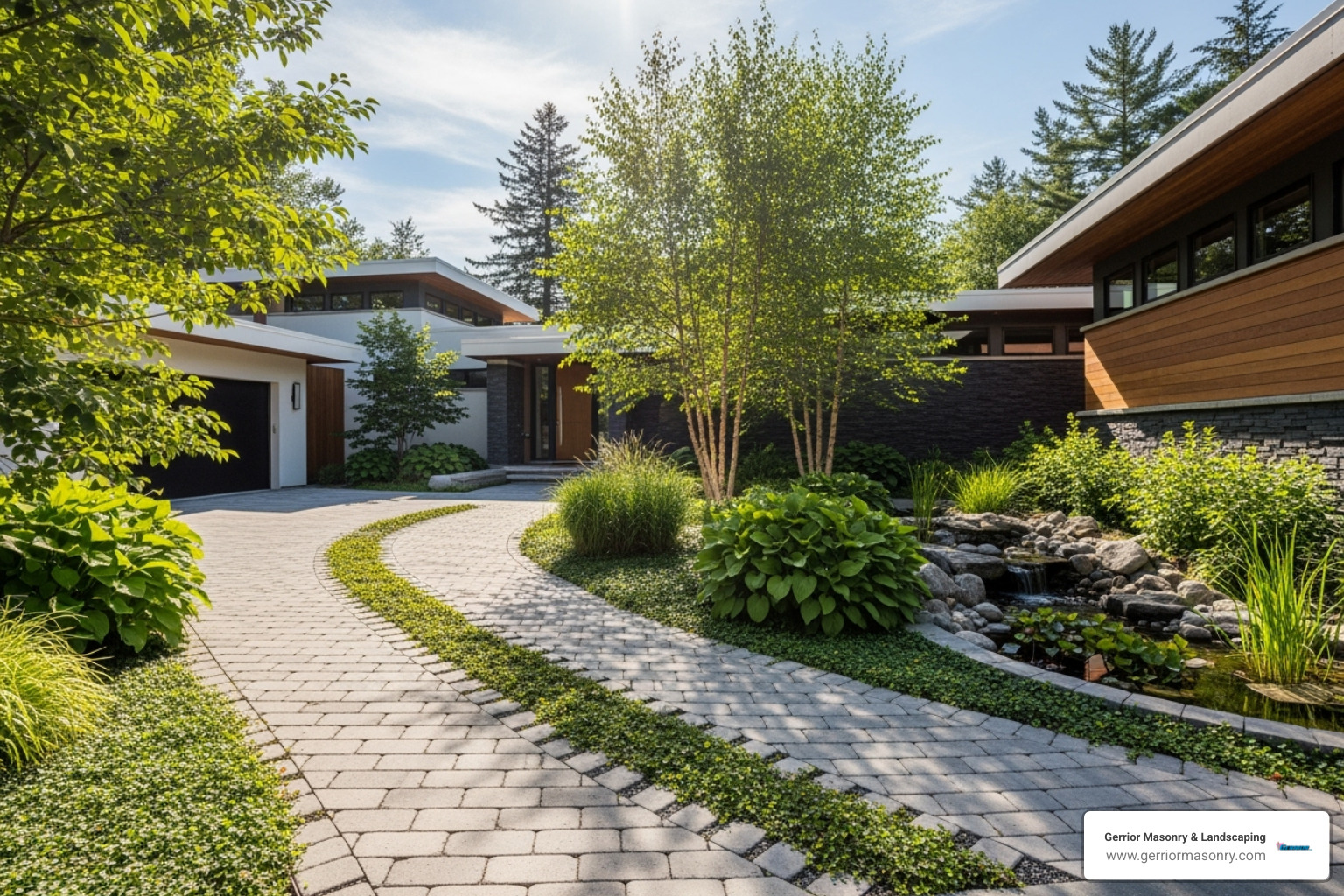
Sidewalk drainage solutions are essential systems designed to prevent water from pooling on walkways and pedestrian paths. Whether you’re dealing with standing water after a rainstorm or icy patches in winter, the right drainage system protects both your property and the people who use it.
Quick Overview of Common Sidewalk Drainage Solutions:
Solution Type
Best For
Key Benefit
Trench Drains
Driveways and high-traffic areas
Rapid surface water collection
Slot Drains
Modern installations
No grate needed, ADA-compliant options
French Drains
Subsurface water issues
Manages water below the surface
Catch Basins
Large volume runoff
Collects and redirects significant water flow
Channel Drains
Along building foundations
Prevents water from reaching structures
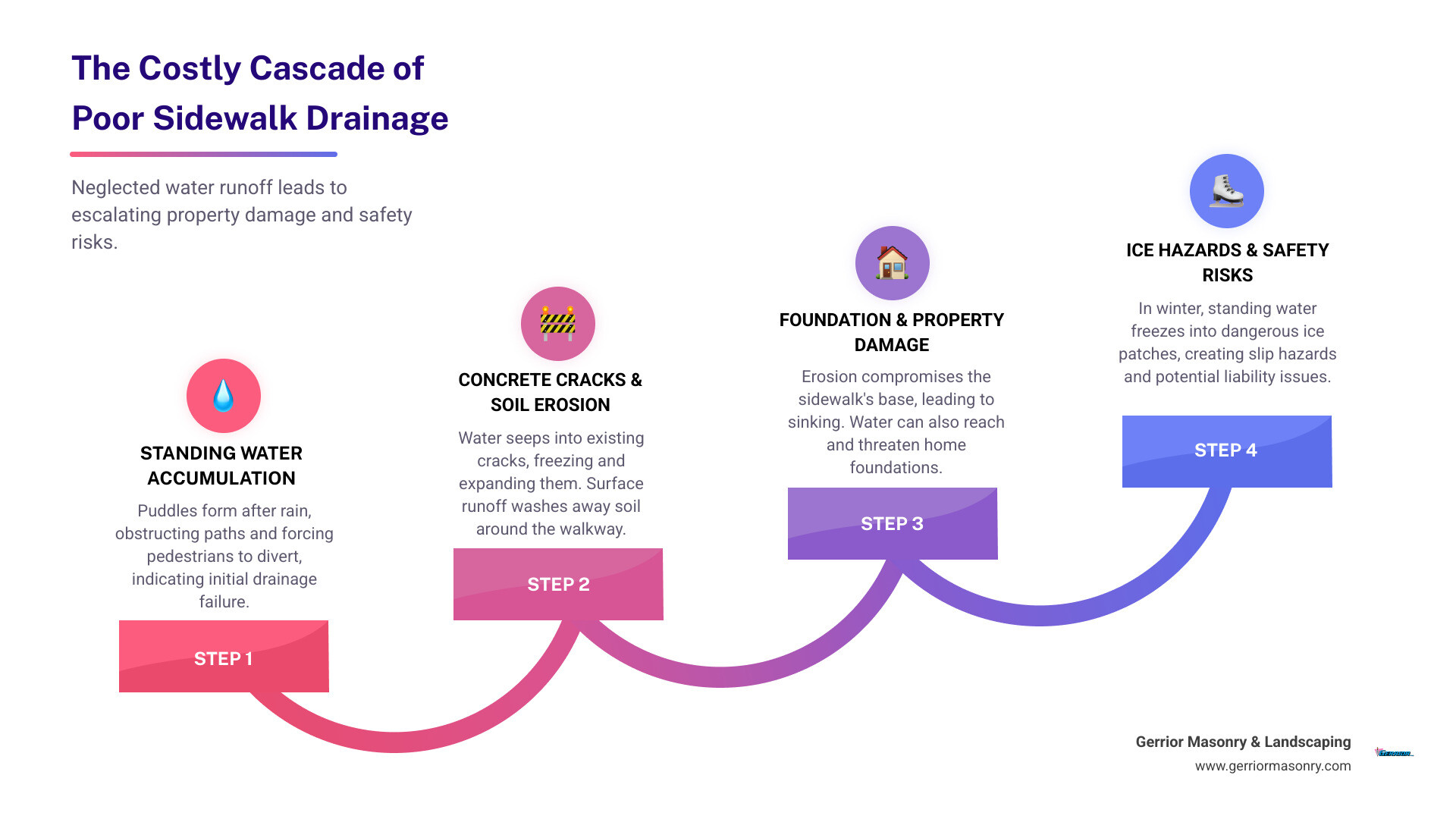
Without proper drainage, sidewalks become hazards. Standing water creates slip-and-fall risks, especially for children and the elderly, and can obscure uneven surfaces. In winter, this water freezes into treacherous ice patches. Puddles may also force pedestrians into the street, creating a dangerous workaround.
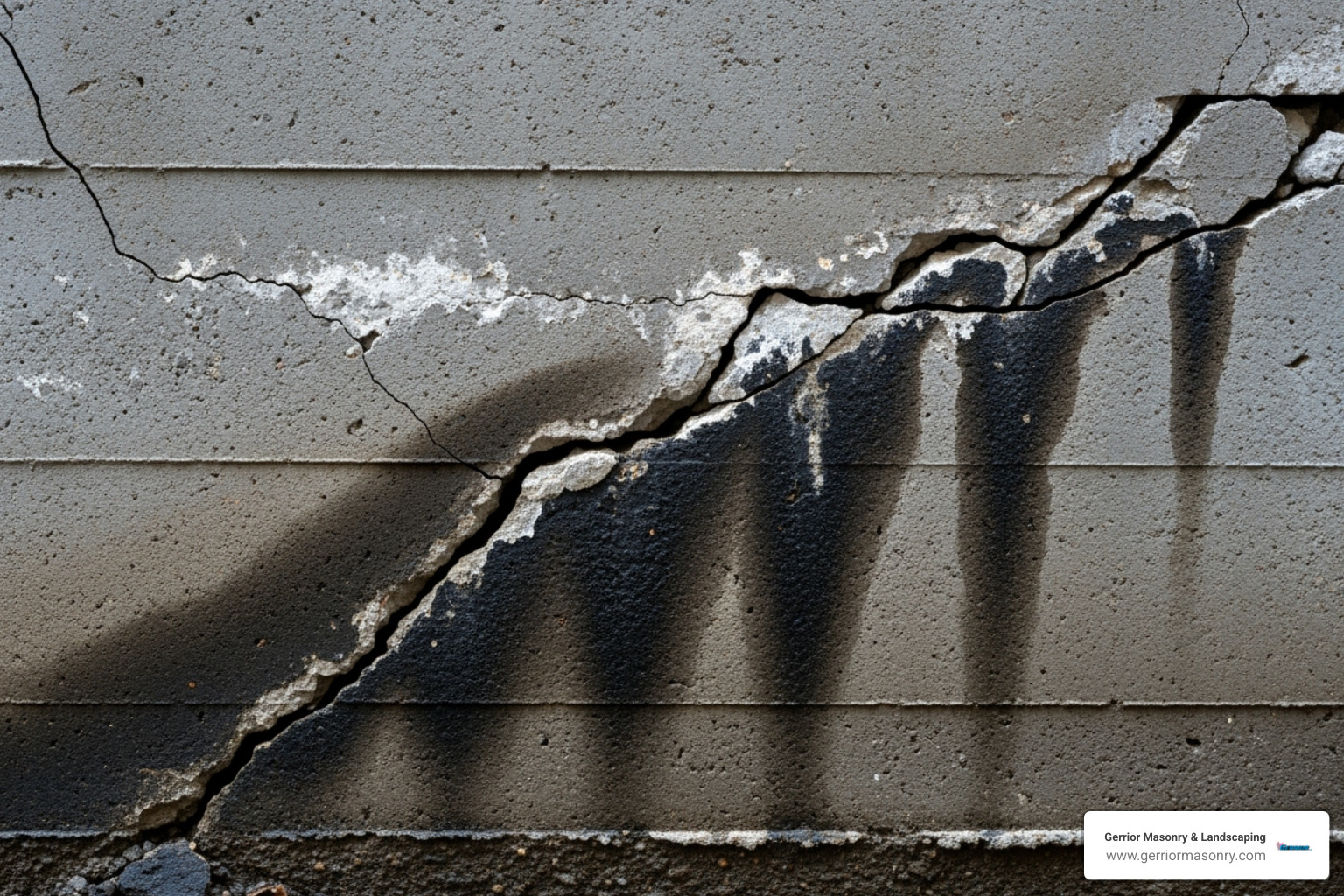
Beyond safety, poor drainage causes significant property damage. Water seeps into concrete cracks, expanding them as it freezes and thaws, leading to potholes and accelerated deterioration. This moisture can undermine the sidewalk’s foundation, causing it to sink or crack. If water pools around the walkway, it can erode surrounding soil, damaging landscaping and, more critically, penetrating your home’s foundation. This can lead to a wet basement, mold growth, and costly structural repairs.
I’m Joe Gerrior, owner of Gerrior Masonry & Landscape Construction Corp. With over 34 years of experience, I’ve helped hundreds of Massachusetts homeowners implement effective sidewalk drainage solutions. This guide will walk you through the best options to keep your walkways dry and protect your property.
By implementing effective sidewalk drainage solutions, we safeguard pedestrian safety, preserve property value, and prevent expensive structural damage. It’s an investment in the longevity and functionality of our outdoor spaces.
A Deep Dive into Sidewalk Drainage Solutions
Water pooling on your sidewalk is a sign that you need a better drainage strategy. The good news is there are several proven methods to keep your walkways dry and safe. Let’s explore the most effective drainage options based on our three decades of experience.
Common Types of Drains and Their Components
Trench drains are the workhorses of surface drainage. These long, grated channels are installed flush with the surface to collect large volumes of water quickly, making them ideal for driveways and high-traffic areas. The grates come in various materials, from plastic to decorative cast iron, but they require regular cleaning to prevent clogs from leaves and debris.
Grate materials range from plastic and galvanized steel for residential use to heavy-duty cast iron or ductile iron for areas with vehicle traffic. It’s crucial to select a grate with the appropriate load class (e.g., Class A for pedestrian-only areas, Class B or C for driveways) to ensure safety and durability. They are particularly effective when installed across a driveway in front of a garage or along the edge of a patio.
Slot drains offer a modern, minimalist alternative. Instead of a wide grate, they use a narrow, discreet slot that is nearly invisible once installed. This design prevents large debris from entering and is popular for patios and architectural landscapes. Many models are ADA-compliant and can handle high water volumes, but their installation requires precision.
The narrow opening, often just 1/2 to 1 inch wide, makes them exceptionally safe for pedestrian traffic and compliant with the Americans with Disabilities Act (ADA), as it eliminates tripping hazards and won’t catch wheelchair casters or cane tips. The internal channel is often sloped or V-shaped to increase water velocity, creating a self-scouring effect that helps keep the drain clear of fine sediment.
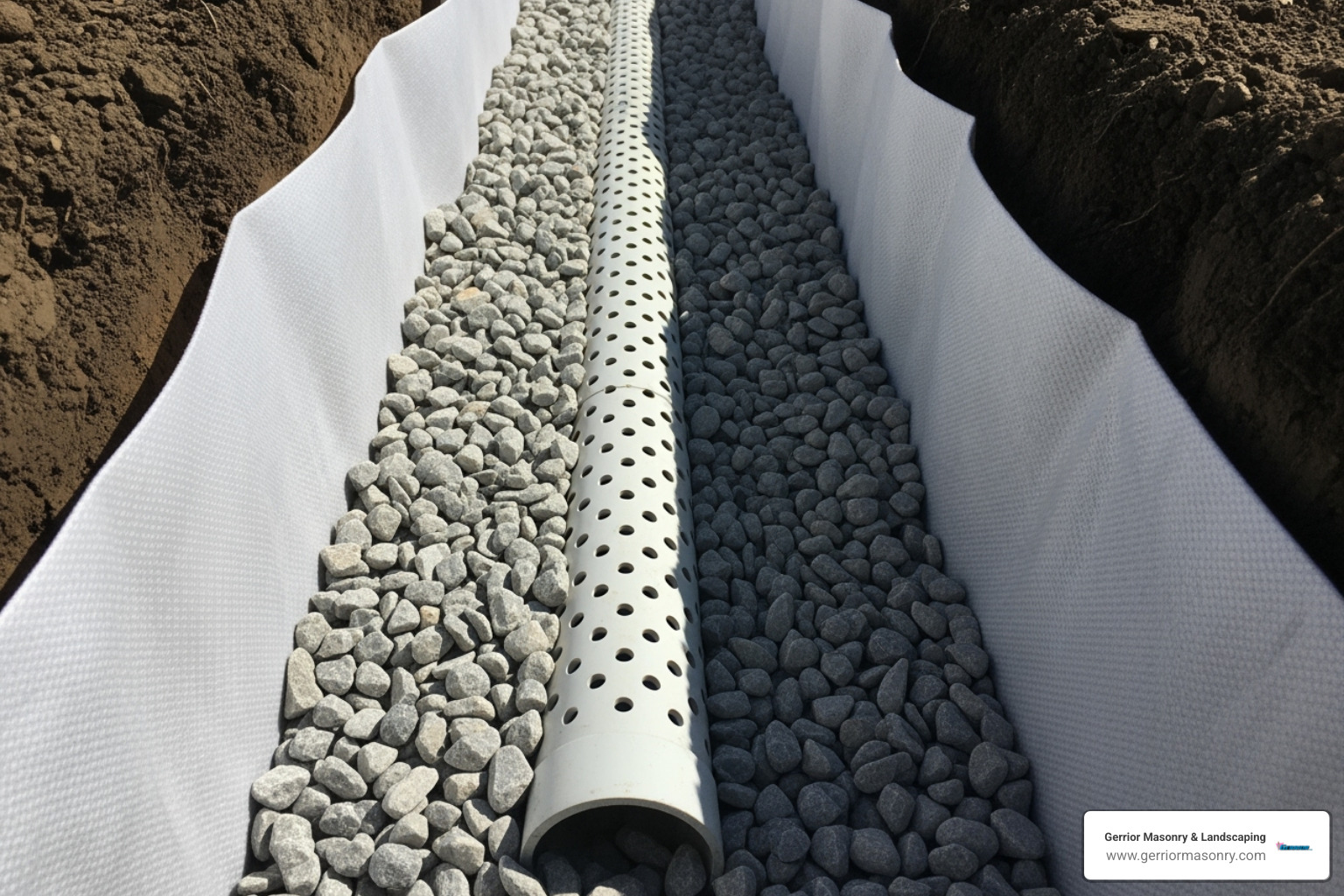
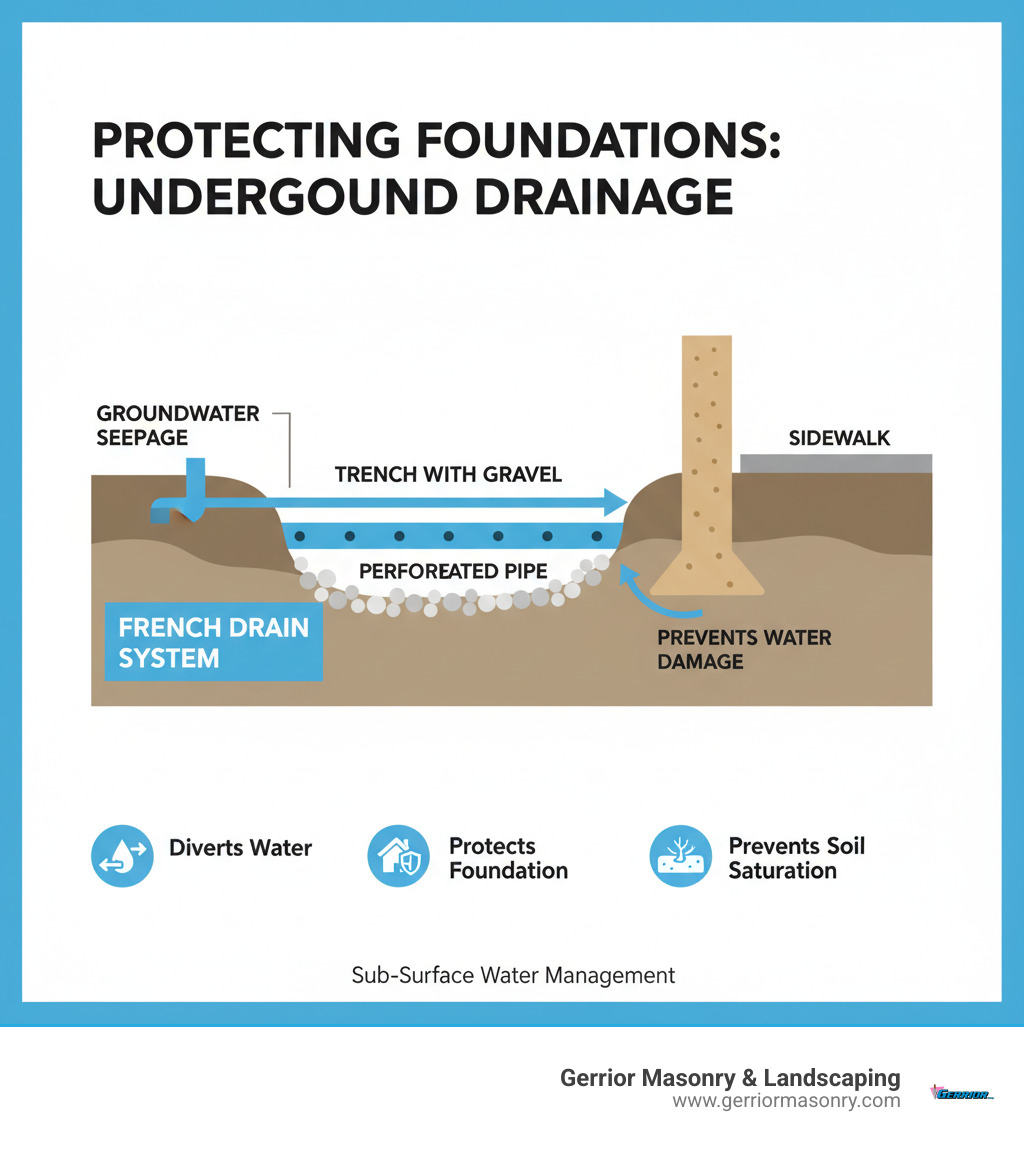
French drains work unseen beneath the surface. This system uses a perforated pipe buried in a gravel-filled trench to collect and channel away subsurface water. It’s highly effective for preventing soggy lawns and protecting foundations. Installation is labor-intensive, and while filter fabric helps, improperly installed systems can eventually clog with roots or sediment. A typical French drain consists of a perforated pipe (rigid PVC is often preferred for its durability over flexible corrugated pipe) laid at the bottom of a trench.
The trench is backfilled with coarse gravel or crushed stone, which allows water to flow freely to the pipe. The entire trench, including the pipe and gravel, is wrapped in a non-woven geotextile filter fabric. This fabric is the system’s most critical component, as it prevents soil, silt, and roots from entering and clogging the gravel and pipe, ensuring long-term functionality. The collected water is then discharged to a suitable location, such as a ‘daylight’ exit on a slope, a dry well, or a municipal storm drain.
Catch basins are box-like structures with a grate on top, placed at low points in your yard to handle large, rapid water accumulation. They contain a sump area that traps sediment, preventing clogs in the main drainage lines. However, this sump needs to be cleaned out periodically to remain effective. These are essentially junction boxes for your drainage system, often used in conjunction with trench or French drains. The sump, a space at the bottom of the basin below the outlet pipe, is designed to collect heavy debris like sand and leaves.
As water flows into the basin, the debris settles in the sump while the cleaner water exits through the outlet pipe. The size of the basin and sump should be chosen based on the amount of runoff and expected debris load. They are available in various materials, including high-density plastic and precast concrete.
Grates are the visible covers for trench drains and catch basins. They must be durable enough for the expected traffic (pedestrian or vehicle) and sit flush with the surface to prevent tripping hazards. They come in many materials and styles but require regular cleaning.
For more information about various hardscaping projects that might require drainage solutions, visit our hardscaping services page.
Feature
Trench Drain
Slot Drain
French Drain
Cost
Moderate to High (installation dependent)
Moderate to High (installation dependent)
Low to Moderate (DIY friendly)
Aesthetics
Visible grate, can be decorative
Highly discreet, minimalist slot
Invisible (subsurface)
Maintenance
Grate cleaning, channel flushing
Slot cleaning, channel flushing
Outlet/inlet cleaning, potential for clogs
Effectiveness
Excellent for surface runoff, high flow rate
Excellent for surface runoff, discreet
Excellent for subsurface water, prevents pooling
Primary Use
Large paved areas, commercial zones
Architectural landscapes, high-end residential
Soggy lawns, foundation protection
Choosing the Right Sidewalk Drainage Solution
Picking the right sidewalk drainage solution depends on your property’s layout, soil, and local weather. Here’s what to consider:
Property Assessment: Start by identifying where water pools. Observe your property during a rainstorm to see how water flows. The ideal grading directs water away from your home’s foundation and toward a designated drainage point.
Water Volume and Sources: Your system must handle runoff from all sources, including downspouts, driveways, and large roof areas. For areas with rapid water accumulation, trench or channel drains are effective. Slot drains also handle high flow rates with a sleeker look.
Soil Type: Dense clay soil drains much slower than sandy soil. This impacts whether a subsurface solution like a French drain will be effective. Coarse-grained soil is often a better backfill for chronically wet areas.
Budget and Aesthetics: Costs vary widely. While many DIY methods are budget-friendly, professional installation ensures long-term reliability. For aesthetics, discreet slot drains or decorative trench drain grates can blend seamlessly into your landscape. As a general reference, professional French drain installation might range from $10 to $100 per linear foot, while channel drains could be $30 to $150 per linear foot. These are average costs based on internet data and not actual costs for Gerrior Masonry services.
Installation Factors: Consider accessibility needs, like ADA-compliant options, and traffic loads. Drains must be rated for expected use (pedestrian vs. vehicle) and may need to connect to municipal storm drain systems.
When planning new walkway and stair construction, a professional assessment can ensure your drainage system is integrated correctly from the start.
DIY vs. Professional Installation
Some drainage fixes are simple weekend projects, while others require professional expertise.
DIY-friendly solutions for minor issues include caulking cracks with concrete caulk to stop water seepage, regrading small areas to improve slope, and managing gutter downspouts to direct water away from the foundation. A simple DIY French drain can also be effective if you’re prepared to dig a trench and ensure at least a one percent slope.
Call professionals for complex grading issues, installing underground systems like trench or slot drains, or if drainage issues threaten your home’s foundation. Professionals have the specialized equipment for proper excavation and leveling. They also handle necessary permits for connecting to municipal systems and can diagnose persistent water problems that temporary fixes won’t solve. Poor drainage can lead to expensive foundation repair, making a professional installation a wise investment.
System Maintenance and Longevity
Installing a sidewalk drainage solution is just the first step. Regular maintenance is key to its longevity and effectiveness.
Regular Cleaning: Clear grates, inlets, and catch basin sumps of leaves, dirt, and sediment. This is especially important after storms.
Flushing: Periodically flush trench and slot drain channels with a hose to clear out fine sediment that builds up over time.
Visual Inspections: A few times a year, walk your property to check for standing water near drains, visible damage, or blockages at inlet and outlet points.
Professional Inspections: An annual professional inspection can catch issues like developing clogs or wear and tear before they become major problems. A well-designed system accounts for lifetime maintenance, and consistent care will prolong its life.
By following a regular maintenance schedule, your drainage system will continue to protect your property for years. For help with maintenance or upgrading your drainage systems and dry wells, our team is ready to assist.
Secure Your Property with Expert Drainage Solutions
Now that you understand the risks of poor drainage and the available solutions, it’s time to take action. While some fixes are DIY-friendly, a professional assessment is the best way to ensure a lasting solution custom to your property’s unique slopes, soil, and water flow.
At Gerrior Masonry & Landscaping, we bring over 30 years of experience to Massachusetts drainage challenges. What sets us apart is owner oversight on every project. We create custom solutions that address current problems and prevent future issues, from discreet slot drains to complex French drain systems. Our focus is on getting the job right the first time to protect your sidewalks, foundation, and landscaping, giving you peace of mind every time it rains.
Based in Woburn, MA, we proudly serve residential and commercial clients throughout Middlesex and Essex County, Massachusetts. If you’re ready to protect your property with a drainage solution that stands the test of time, contact us for your drainage solution needs. Let’s work together to keep your property safe, dry, and beautiful.
Why Installing a French Drain Under Your Sidewalk Solves Persistent Water Problems
A french drain under sidewalk is a subsurface drainage system that intercepts and redirects groundwater before it can pool on your walkway or damage your foundation. If you’re tired of soggy lawns, icy winter walkways, or water seeping toward your home, this is a permanent solution.
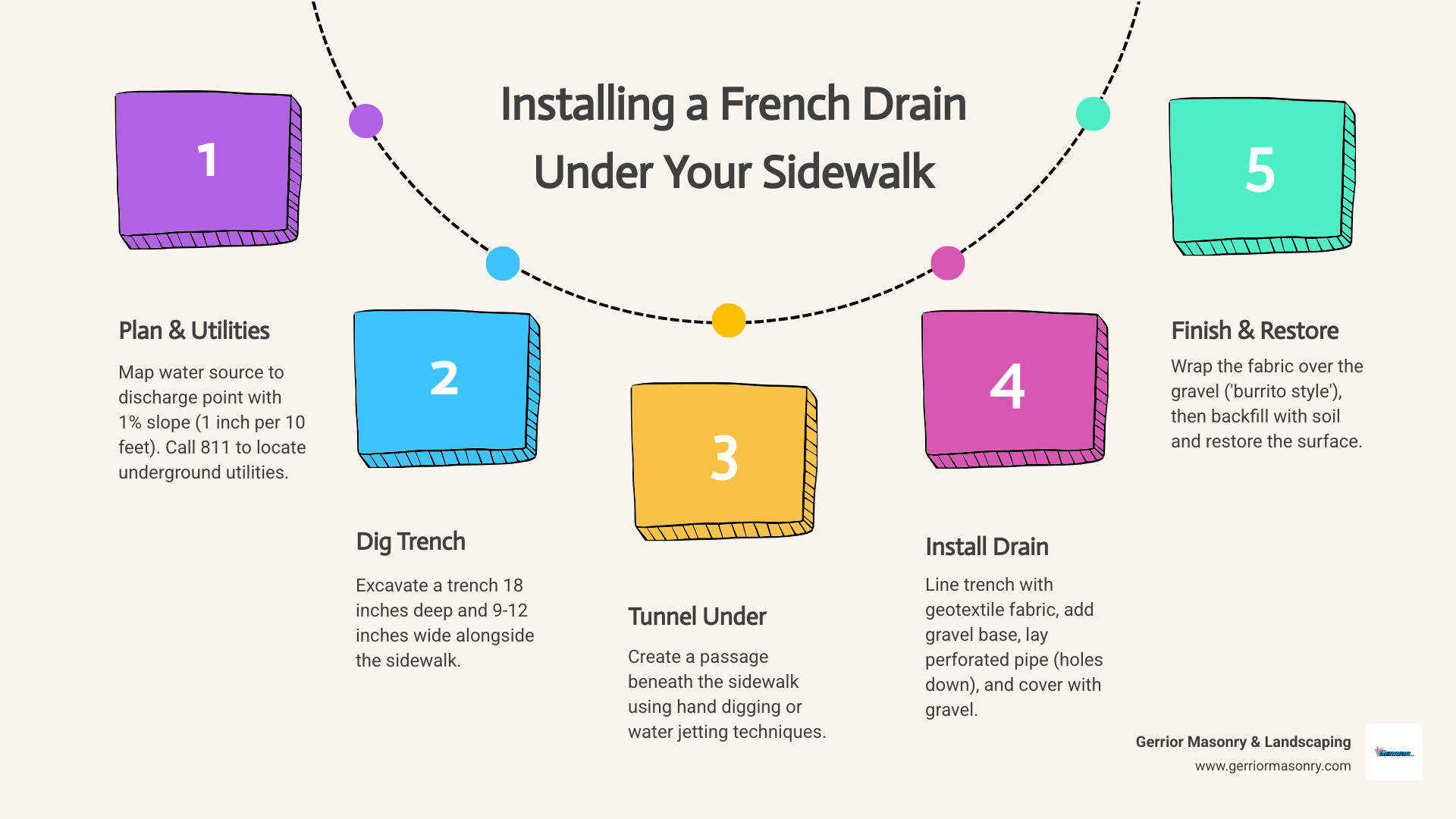
Key Steps to Install a French Drain Under a Sidewalk:
Plan the route – Map the water source to a discharge point with a 1% slope (1 inch per 10 feet).
Call 811 – Locate underground utilities before digging.
Dig the trench – Aim for 18 inches deep and 9-12 inches wide on both sides of the sidewalk.
Tunnel under sidewalk – Use water jetting or hand digging to create a passage.
Install drainage system – Line the trench with geotextile fabric, add gravel, lay perforated pipe (holes down), cover with more gravel, and wrap the fabric over the top.
Backfill and finish – Cover with topsoil and restore the surface.
A French drain works by creating an easy path for water. Instead of saturating the soil, water flows into a gravel-filled trench and enters a perforated pipe that carries it away using gravity. The most challenging part for a DIY project is tunneling under the concrete without causing damage.
I’m Joe Gerrior, owner of Gerrior Masonry & Landscape Construction Corp. With over 34 years of experience, I’ve designed and installed hundreds of drainage systems across the region. A properly installed french drain under a sidewalk requires understanding water movement and construction techniques to ensure it functions for decades.
A Homeowner’s Guide to Installing a French Drain Under a Sidewalk
First, Do You Need a French Drain for Your Walkway?
Not every puddle requires a French drain, but persistent water problems are a clear sign. You likely need a drainage solution if you notice:
Pooling Water: Water stands along your walkway for hours or days after rain.
Icy Patches: Your sidewalk becomes a hazard in winter from trapped, freezing water.
Spongy Lawn: The ground next to your walkway feels perpetually waterlogged.
Basement Moisture: You see water stains, smell mustiness, or find mildew in your basement.
The last sign is the most serious. Saturated soil creates immense hydrostatic pressure against your foundation, leading to cracks, leaks, and costly structural repairs. A french drain under sidewalk intercepts this water before it can damage your home or hardscaping. A properly drained property also means more usable outdoor space and fewer mosquitoes. For more on protecting your foundation, see our guide on Drainage Around House Foundation.
Success depends on careful planning. First, observe your property during or after a rainstorm to see where water flows and pools. This will determine the best path for your trench, which should run parallel to the sidewalk to intercept water.
Next, identify a discharge point. The best option is a daylight exit, where the pipe ends at a low point on your property and drains onto the surface, like a wooded area or street gutter (check local regulations). Never drain water onto a neighbor’s property. If a daylight exit isn’t feasible, a dry well or connection to an existing storm drain may be necessary.
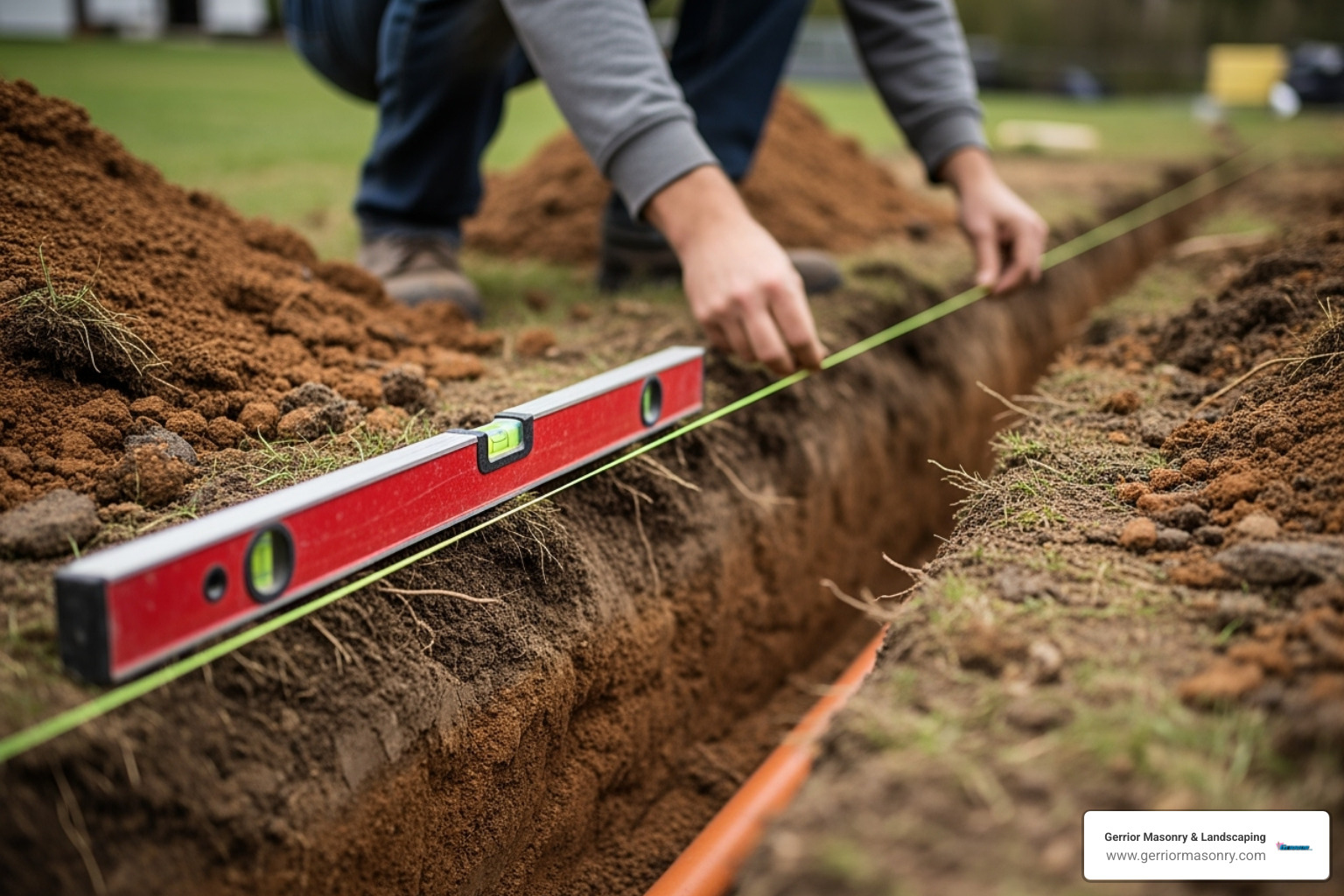
Finally, ensure the correct slope. A French drain relies on gravity, so it must have a minimum 1% grade, meaning it drops at least 1 inch for every 10 feet of length. Use a builder’s level or laser level to maintain this slope consistently along the entire trench.
Before you dig, call 811. This is a mandatory safety step. Utility companies will mark the location of underground gas, electric, and water lines, preventing a dangerous and expensive accident.
The Installation Process: Installing Your French Drain Under the Sidewalk
With your plan in place, it’s time to gather materials and start digging. You’ll need 4-inch perforated PVC pipe, non-woven geotextile filter fabric, and washed 1-inch drainage gravel (#57 stone). For tools, you’ll need a shovel, wheelbarrow, and level. A trenching machine can save significant time and effort on longer runs.
Dig the Trench: Excavate a trench about 18 inches deep and 9-12 inches wide. Continuously check the bottom of the trench with your level to ensure you maintain the 1% slope.
Line the Trench: Lay the geotextile fabric along the bottom and up the sides of the trench, leaving plenty of excess on both sides.
Create a Gravel Base: Add a 3-inch layer of washed gravel on top of the fabric.
Tunnel Under the Sidewalk: This is the trickiest step. You can either hand-dig a tunnel or use a high-pressure water jetting technique. Work carefully to avoid undermining the sidewalk’s support structure. Ensure the tunnel continues the slope from your trench.
Lay the Pipe: Place the perforated pipe in the trench with the holes facing down. This allows water accumulating at the bottom to enter the pipe efficiently.
Cover and Wrap: Fill the trench with gravel to within a few inches of the surface. Then, fold the excess geotextile fabric over the top of the gravel, creating a “burrito” that completely encloses the pipe and gravel. This is crucial for preventing clogs from soil and roots.
Backfill: Cover the wrapped drain with topsoil and replace the sod or reseed the area.
Connecting, Finishing, and Common Challenges
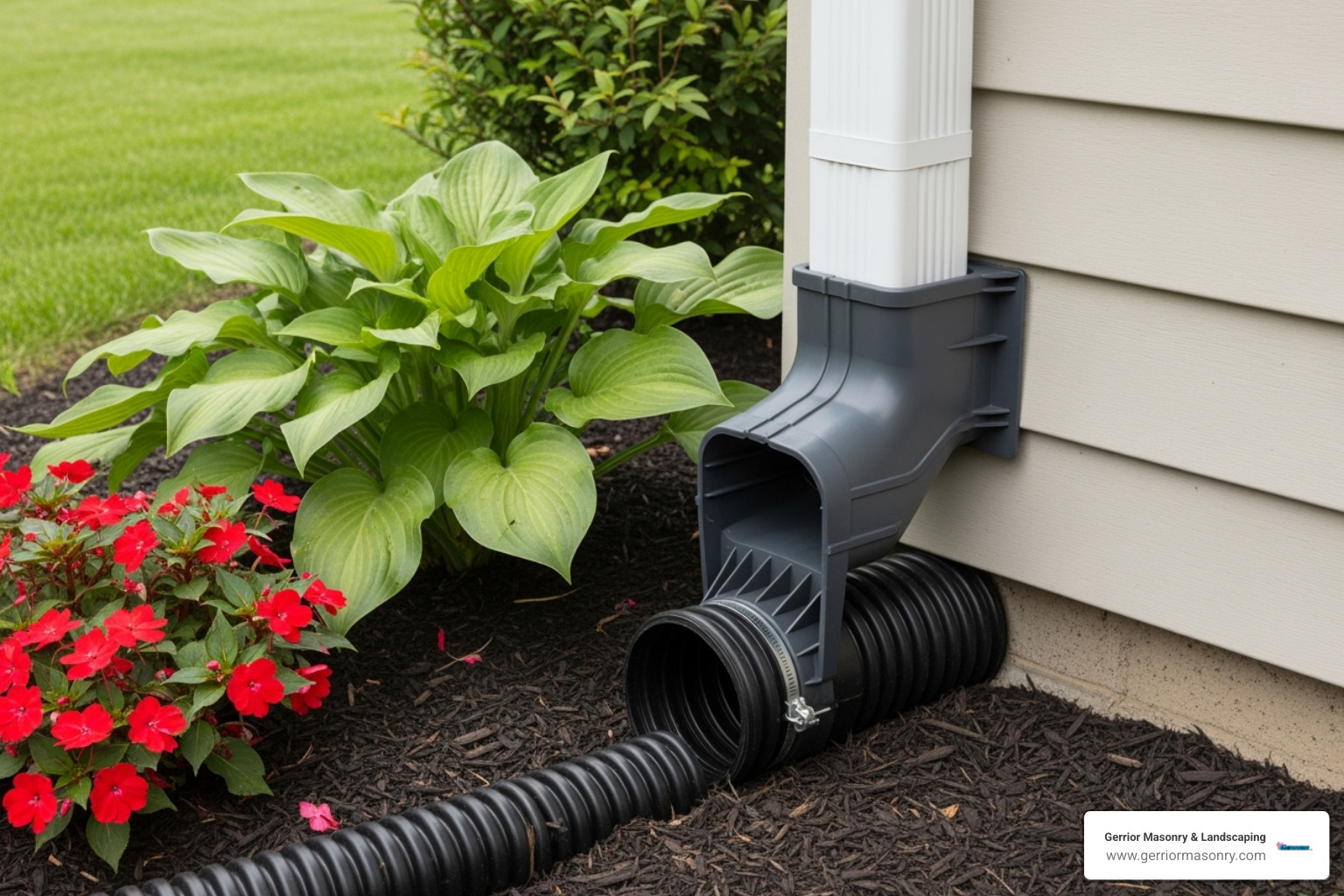
To create a comprehensive solution, consider connecting your French drain to other water sources. Tying in downspouts with proper adapters is a smart way to manage significant roof runoff. You can also integrate channel drains from driveways or patios using Y-connectors, directing all water to a single discharge point. Ensure all connections are secure to prevent underground leaks.
Be aware of potential challenges. Even after calling 811, dig carefully to avoid hitting mismarked utility lines. In loose or sandy soil, the tunnel under the sidewalk can collapse. The biggest risk is undermining the sidewalk, which can cause it to crack or settle. If you’re unsure, this is a good time to call a professional. For more on solving water issues, see our guide on Fixing Pooling Water in Yard.
French Drain Solutions for Walkways: What to Consider
A french drain under sidewalk is essentially an underground gutter. It excels at intercepting subsurface groundwater—water moving through the soil—and is completely invisible once installed. This makes it an ideal aesthetic choice for protecting foundations and drying out soggy areas.
However, it’s not a solution for all problems. For heavy surface runoff, a channel drain (a grate-covered trench) may be more effective. Sometimes, simply regrading the yard or installing a dry well is a better fit. The right solution depends on your soil, water volume, and landscape. You can learn more about options here: Dry Well vs. French Drain.
Long-Term Maintenance and Drainage Best Practices
A well-built french drain under sidewalk is very low-maintenance and can last for 30 years or more. The key is the geotextile fabric wrap, which prevents clogging. To ensure longevity:
Inspect the discharge point a few times a year to ensure it’s clear of leaves and debris.
Keep gutters clean and ensure downspouts direct water at least 6 feet from the foundation, or connect them directly to your drain system.
Maintain a positive grade of at least 2% sloping away from your house foundation.
While a simple French drain in an open yard can be a DIY project, installing one under a sidewalk adds significant complexity and risk. Before you start digging, consider when it’s best to call in professionals.
Why Hire a Pro for This Project?
Avoiding Sidewalk Damage: Tunneling under concrete is a delicate process. One mistake can undermine the sidewalk’s support, leading to cracks, settling, and expensive masonry repairs.
Ensuring Proper Function: A French drain only works if the slope is perfect. We use laser levels to guarantee a consistent 1% grade, ensuring water flows out instead of sitting in the pipe and creating a clog. An improperly sloped drain is a failed drain.
Safety and Utility Lines: Even with 811 markings, digging near gas, water, and electrical lines is risky. Our experienced crews know how to excavate safely, preventing dangerous and costly accidents.
Experience and Efficiency: With over 30 years of experience in Middlesex and Essex County, we understand the local soil conditions and how to design a system that will last. Our skilled team and owner oversight on projects ensure your drainage problem is solved correctly the first time.
For a comprehensive and lasting solution to your water problems, trust our team of experts to design and install the perfect drainage system. We’ll ensure your french drain under sidewalk is installed efficiently and built to last for decades.
Gerrior Masonry & Landscape Construction is based in Woburn, MA, and proudly serves the communities of Middlesex and Essex County, Massachusetts.
Why Driveway Drainage Problems Need Professional Solutions
Heavy rain can turn a beautiful driveway into a miniature lake, causing water damage to your landscape, foundation, and local waterways. Traditional asphalt and concrete surfaces are impermeable, forcing rainwater to run off, carrying pollutants with it. Driveway drainage pavers offer a modern, eco-friendly solution to this common problem.
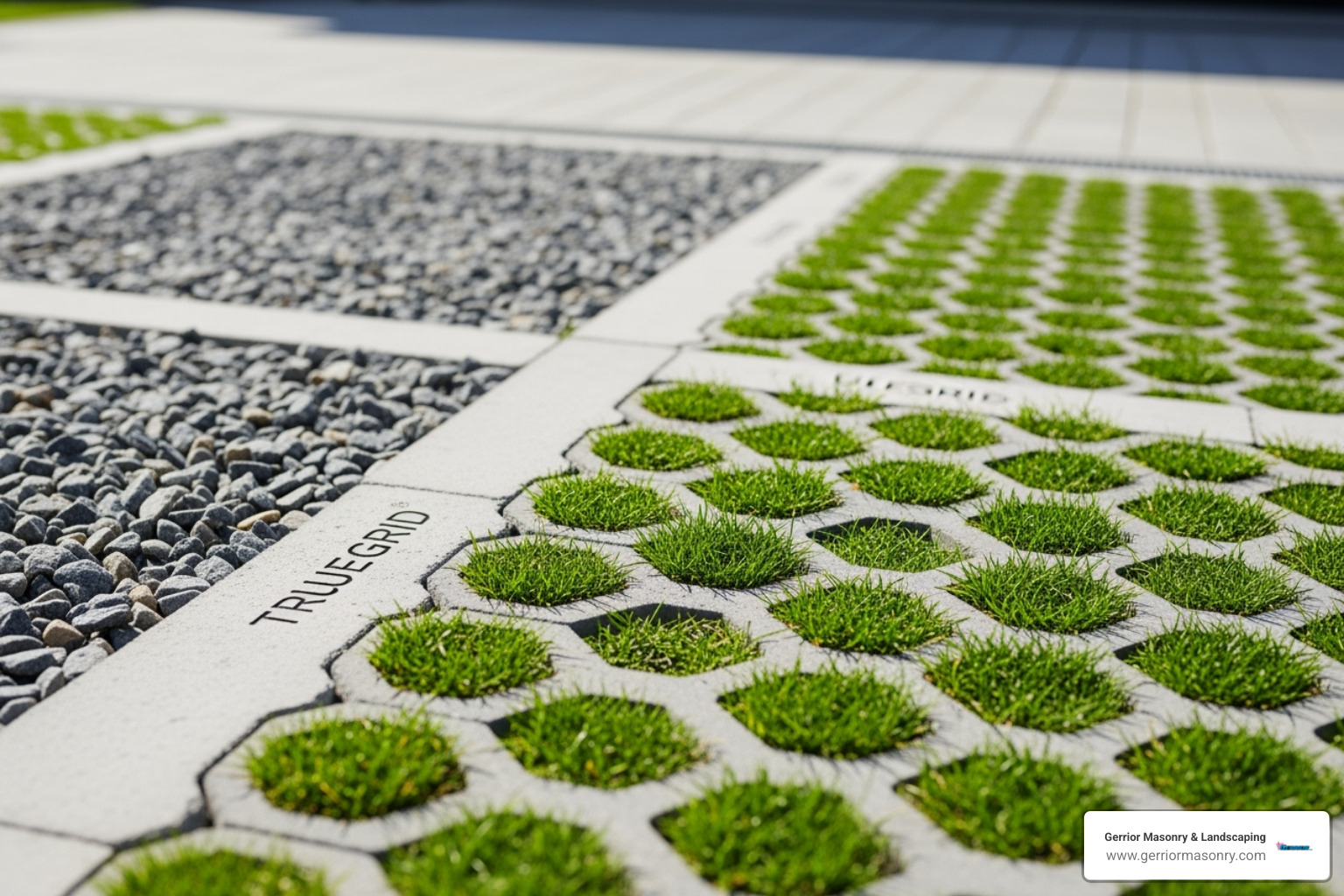
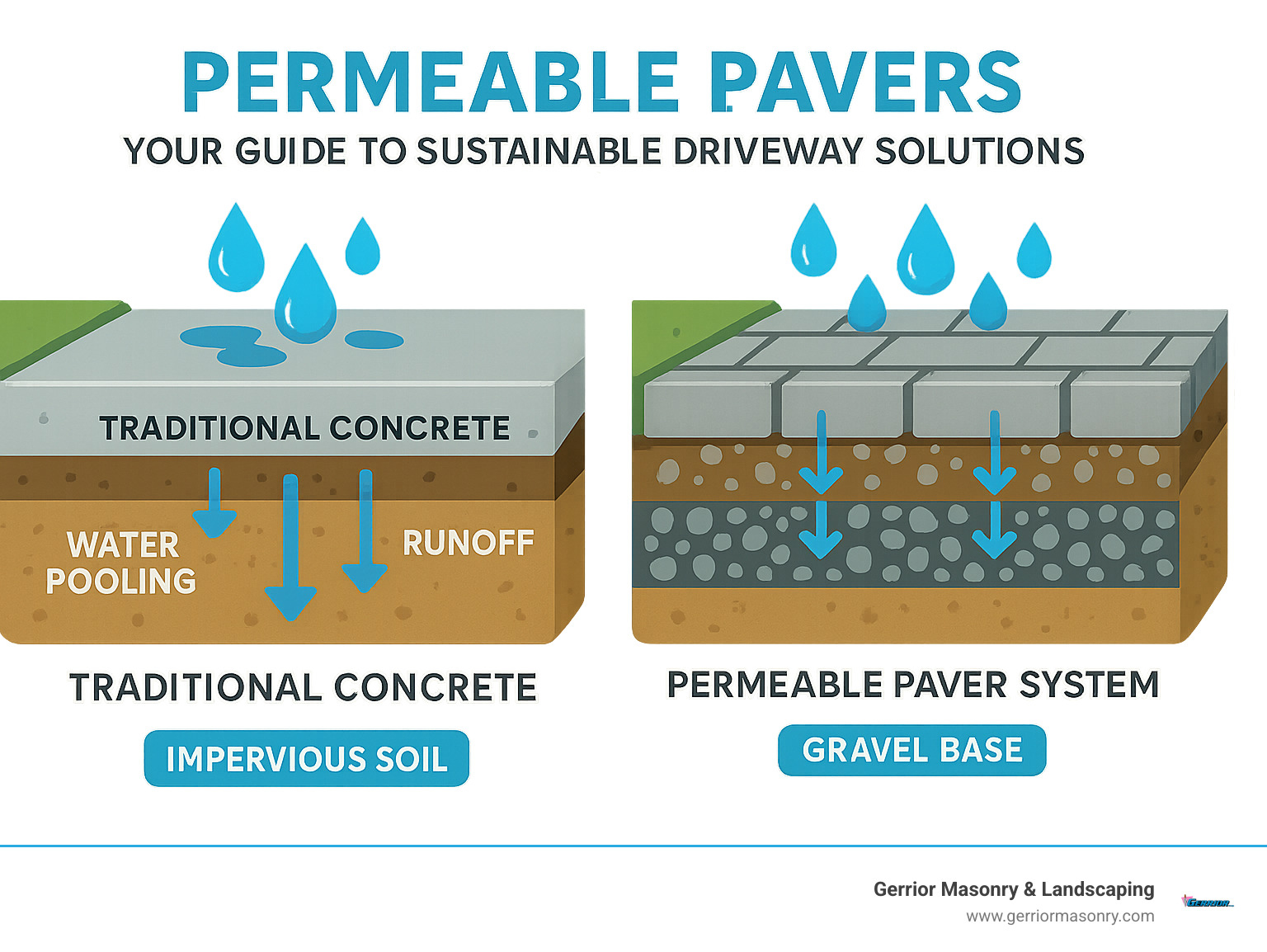
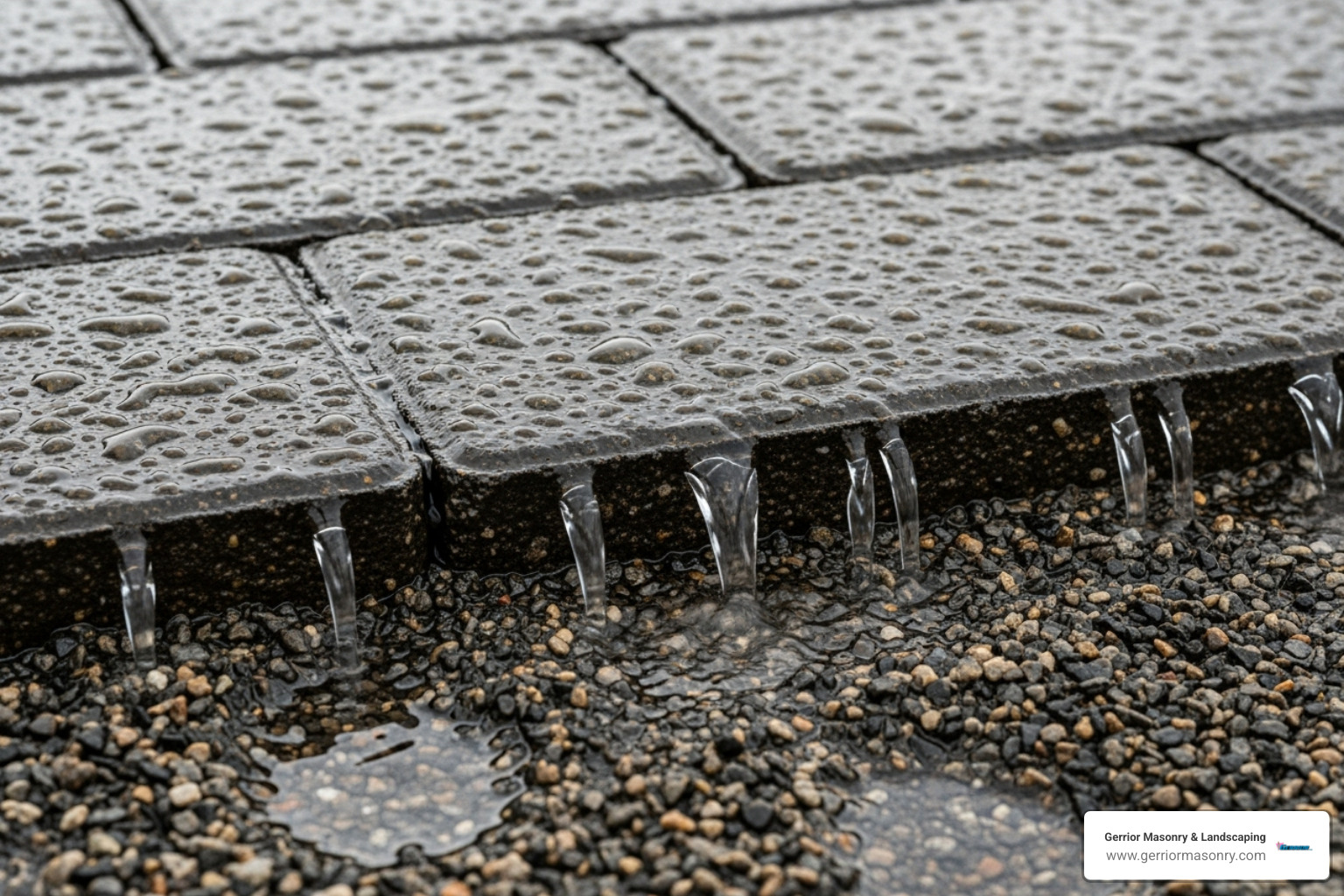
Permeable paver systems, like those from TRUEGRID, are designed to allow water to pass through the surface and into the ground below, mimicking natural filtration. This innovative approach not only prevents flooding and erosion but also helps recharge groundwater supplies. Key benefits include:
Superior Drainage: Prevents standing water and ice formation.
Environmental Protection: Filters pollutants and reduces strain on storm drains.
Durability: Built to withstand heavy vehicle traffic and harsh weather.
Aesthetic Appeal: Available in various styles, including gravel and grass-filled options.
At Gerrior Masonry & Landscape Construction, we have over 30 years of experience installing high-performance drainage solutions for homeowners throughout Massachusetts. We specialize in creating driveways that are not only beautiful but also functional and sustainable.
What Are Permeable Pavers and How Do They Work?
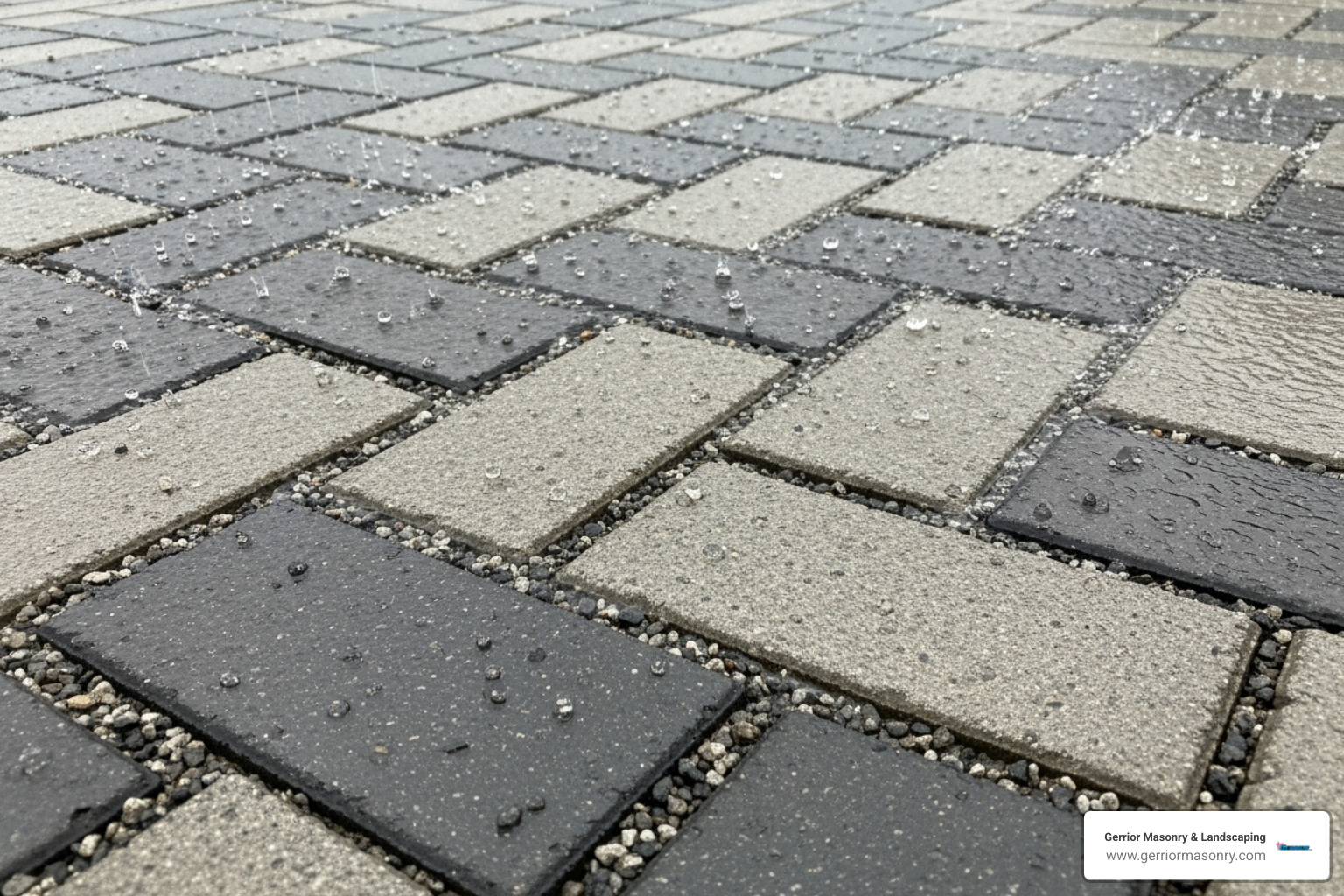
Unlike traditional solid surfaces, permeable pavers feature wider joints filled with a special aggregate. This design allows rainwater to flow directly through the surface instead of pooling or running off. Beneath the pavers, a carefully engineered base of various-sized stones acts as a natural filtration system. This sub-base cleans the water as it seeps back into the ground, replenishing the water table and preventing pollutants from entering our waterways.
Systems like TRUEGRID permeable pavers are so efficient they can handle over 1,000 inches of rain per hour, virtually eliminating runoff from your property. This not only protects your home and landscape but also contributes to a healthier local environment. Our expert installation ensures this system functions flawlessly, providing a durable and beautiful driveway for decades.
The Complete Guide to Driveway Drainage Pavers
Key Benefits of Using Driveway Drainage Pavers
Choosing driveway drainage pavers offers significant advantages for your property and the environment. These systems are a smart, long-term investment in managing water effectively.
Flood and Puddle Prevention: By allowing rainwater to drain directly into the ground, permeable pavers prevent water from pooling on your driveway. This not only protects your home’s foundation from the constant threat of water damage and hydrostatic pressure but also eliminates unsightly, hazardous puddles that can be slipping risks or breeding grounds for mosquitoes.
Erosion Control: Uncontrolled stormwater runoff can wash away topsoil and damage your landscaping. By capturing rainfall where it lands, these systems prevent topsoil and landscape mulch from being washed into storm drains, which protects local streams and ponds from sediment pollution that harms aquatic life.
Reduced Strain on Storm Drains: Many municipal storm drains are overwhelmed during heavy rain, leading to local flooding and water pollution. Permeable systems reduce the volume of water entering these drains, which is a key principle of modern stormwater management.
Improved Water Quality: The aggregate layers beneath permeable pavers act as a natural filter, trapping oil, gasoline, antifreeze, heavy metals from brake dust, and other pollutants from vehicles before they can reach groundwater or local streams. This helps protect our natural water resources.
Reduced Ice Buildup: In cold climates like Massachusetts, standing water on driveways quickly turns to ice. Because permeable pavers drain so efficiently, there is less surface water to freeze, creating a safer surface during winter and reducing damage from the destructive freeze-thaw cycles that cause cracks, heaving, and potholes in traditional asphalt and concrete surfaces. For more information on how we handle water issues, explore our drainage system solutions.
Enhanced Curb Appeal and Property Value: A professionally installed permeable paver driveway is a high-end feature that significantly boosts curb appeal. Its combination of sophisticated aesthetics, eco-friendly functionality, and long-term durability makes it an attractive selling point that can increase your overall property value.
Types, Materials, and Design Options
Gone are the days when a functional driveway had to be boring. Modern driveway drainage pavers offer a wide array of styles to match any home’s aesthetic.
The most popular systems are Permeable Interlocking Concrete Pavements (PICP) and plastic grid systems. PICP systems use solid concrete pavers manufactured with built-in spacer bars that create wide, uniform joints. These joints are then filled with small, clean aggregate to allow for drainage. Alternatively, innovative systems like TRUEGRID use high-strength grids made from 100% recycled plastic. These grids provide the structure, and the entire surface—the grid cells themselves—is filled with a permeable material, offering exceptional durability and environmental benefits.
These grid systems can be filled with different materials to achieve your desired look:
Gravel Fill: For a classic, clean appearance, the grids are filled with angular gravel. This creates a stable, highly permeable surface that stays put and looks great.
Grass Fill: For a greener, more natural aesthetic, grass can be grown within the paver cells. This creates a living driveway that supports vehicle weight while blending seamlessly with your lawn.
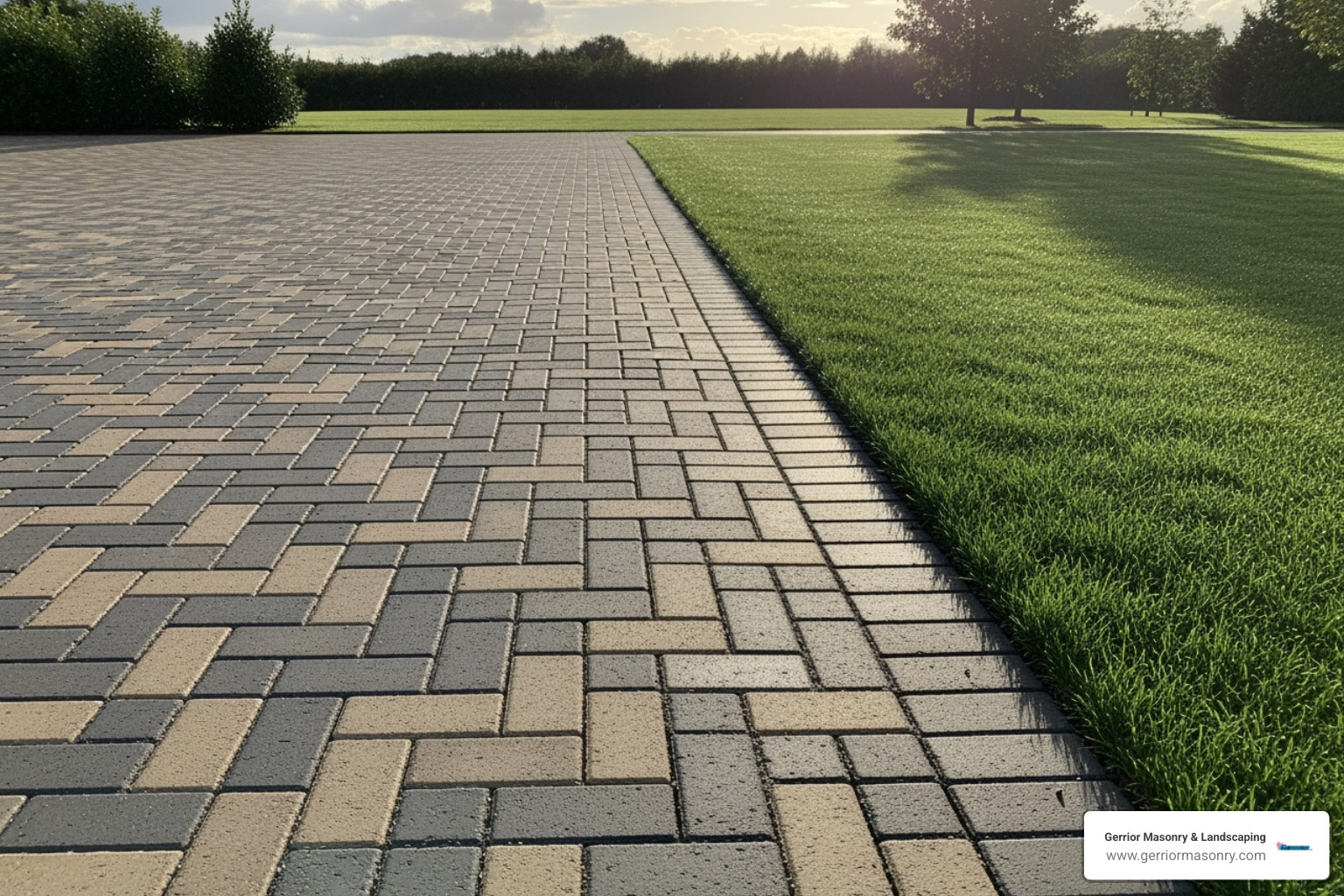
With so many colors, textures, and patterns—such as classic running bond, elegant herringbone, or intricate basketweave—available, we can help you design a custom driveway. Adding contrasting paver borders or accents can further define the space and create a truly unique look that is both beautiful and highly functional. Explore some of our driveway design work to see the possibilities.
Installation and Maintenance for Driveway Drainage Pavers
A permeable paver system is only as good as its installation. A proper build is crucial for long-term performance and durability.
The Installation Process:
Excavation: We begin by excavating the area to a specific depth, which is carefully calculated based on soil type, local climate, and the expected vehicle load. For clay soils or heavy rainfall areas, a deeper base is required.
Geotextile Fabric: A special non-woven geotextile fabric is laid down to separate the native subgrade soil from the new aggregate base. This is a critical step that prevents mixing and clogging while allowing water to pass through freely.
Aggregate Base: We install and compact multiple layers of open-graded stone. This base typically consists of a thick layer of larger, clean-crushed stone (e.g., ASTM No. 2) for structural support and water storage, followed by a thinner “choker” course of smaller stone (e.g., ASTM No. 57) to create a level bed for the pavers.
Edge Restraints: Before laying the pavers, sturdy edge restraints are installed around the perimeter to lock the system in place and prevent any lateral shifting of the pavers over time.
Paver Installation: The chosen pavers are laid in the desired pattern, and the joints are carefully filled with a small, clean aggregate (e.g., ASTM No. 8 or 9 stone) to allow for maximum water flow.
Professional installation is key to ensuring every layer is correctly graded and compacted. Our experienced team at Gerrior Masonry & Landscaping has the expertise to build a permeable driveway that lasts. Learn more about our hardscaping services.
Long-Term Maintenance:
Permeable pavers are low-maintenance, not no-maintenance. To keep them functioning optimally, simply:
Keep the surface clear of leaves, dirt, and organic debris to prevent the joints from clogging. Regular sweeping or using a leaf blower is usually sufficient.
Remove any occasional weeds that may appear in the joints by hand. Avoid using herbicides that could contaminate the groundwater below.
Periodically, you may need to replenish the joint aggregate if it settles over time. This is a simple process of sweeping new aggregate into the joints.
To maintain permeability, it’s crucial to avoid using sand as a joint filler or applying any surface sealants, as these will block water flow. If the surface becomes heavily clogged with fine sediment over time, professional cleaning with a regenerative air sweeper can restore its function.
With this minimal care, your permeable paver driveway can last for 20-30 years or more.
Cost, Durability, and Limitations
When considering a new driveway, it’s important to weigh the initial investment against the long-term value and performance.
Cost Comparison and ROI:
While the upfront cost of driveway drainage pavers can be higher than traditional options, they provide a significant return on investment over time. Permeable systems often eliminate the need for separate, costly drainage infrastructure like French drains, catch basins, or underground piping, saving thousands on installation. The table below provides a general cost comparison using averages compiled from public internet sources; these figures are not actual prices for Gerrior Masonry & Landscape Construction. For an accurate estimate, contact us for a consultation.
Typical internet-reported averages (your project may differ): permeable grid systems (e.g., TRUEGRID) ~ $15/sq ft; traditional concrete ~ $10/sq ft; asphalt ~ $5/sq ft. To reflect project complexity and upgrades, the ranges below extend to at least 3x those averages.
Paving Type
Average Cost per Square Foot*
TRUEGRID Permeable Pavers
$8 – $50+
Traditional Concrete
$5 – $35+
Asphalt
$2 – $20+
These are broad average ranges gathered from internet sources and are not quotes for Gerrior Masonry & Landscape Construction. Actual costs vary based on site conditions, design, base depth, drainage needs, and finishes.
Durability and Lifespan:
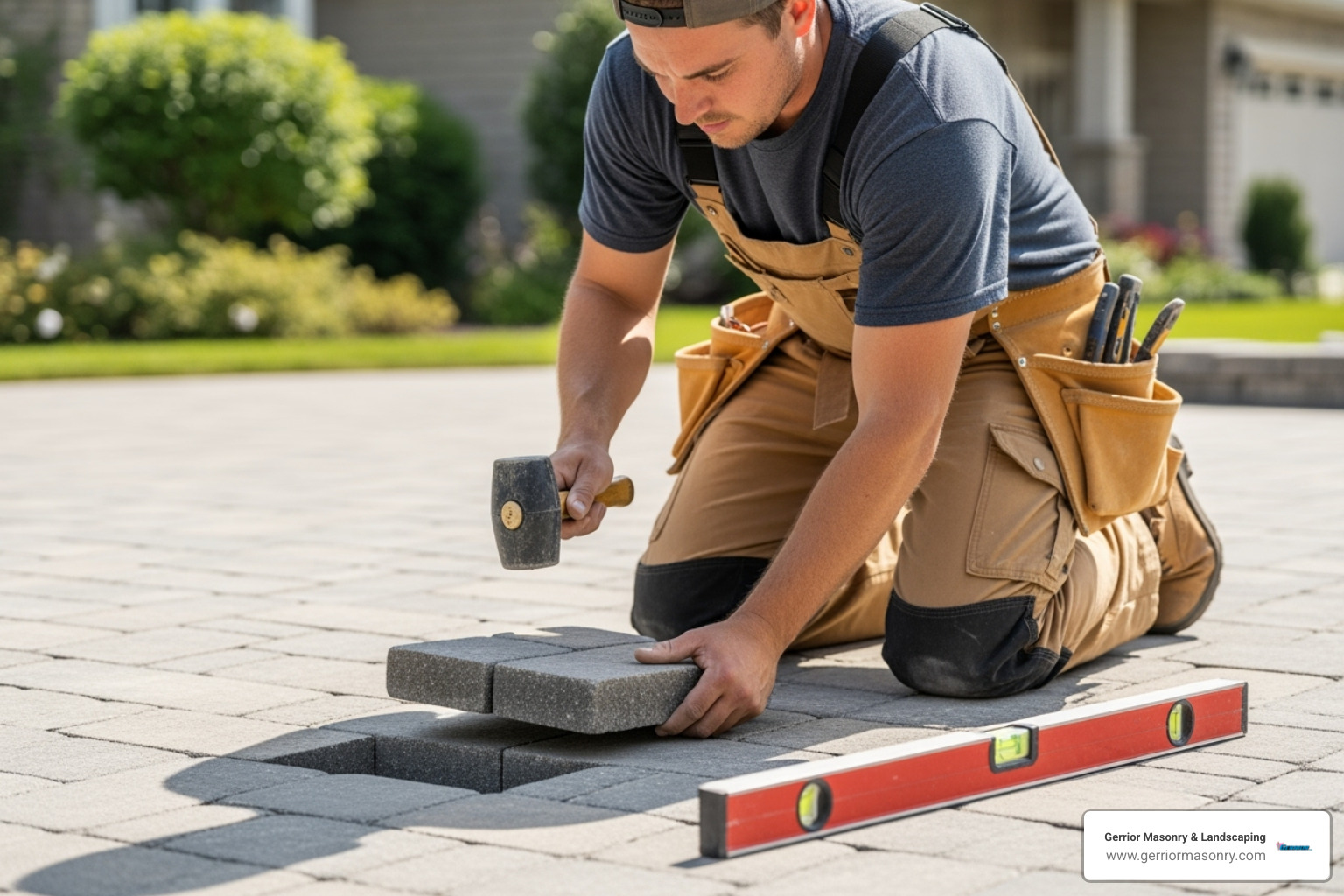
Permeable paver systems are incredibly durable. Unlike monolithic concrete slabs that are prone to cracking under stress, the interlocking nature of pavers allows them to flex with ground movement and temperature changes. This prevents the large, unsightly cracks that plague traditional driveways. Furthermore, if a paver is ever stained or damaged, it can be individually replaced, a far simpler and more cost-effective repair than patching asphalt or resurfacing an entire concrete driveway. With a typical lifespan of 20-30 years or more, they are a long-lasting investment that can prevent far more expensive problems, such as water damage to your home’s foundation. If you’re already facing such issues, we also offer expert foundation repair services.
Limitations and Considerations:
Soil Type: In areas with heavy, poorly-draining clay soil, the system design must be more robust, potentially requiring a deeper base or an underdrain system to help manage and discharge excess water. A percolation test of the soil is often recommended during the planning phase.
Slope: Permeable paver systems perform best on relatively flat surfaces or gentle slopes (typically under 5%). For steeper driveways, special engineering techniques like terracing or check dams within the base layer are required to slow water flow and prevent erosion of the sub-base.
Clogging: Over time, fine sediment can accumulate in the joints if the driveway is not maintained. Regular sweeping helps prevent this, and a professional cleaning can restore permeability if needed.
Regulations: Many towns in Massachusetts are encouraging or even mandating permeable surfaces to manage stormwater. Check with your local municipality, as you may be eligible for incentives, tax credits, or rebates for choosing an eco-friendly option.
Gerrior Masonry & Landscape Construction is based in Woburn, MA, and services Middlesex and Essex County, Massachusetts.
Why Paver Driveway Installation Creates Lasting Value
A paver driveway installation transforms one of your home’s most visible features, delivering decades of durability and curb appeal. This comprehensive process involves careful planning, excavation, base preparation, and precise paver placement to create a surface that can handle New England’s harsh winters and heavy traffic.
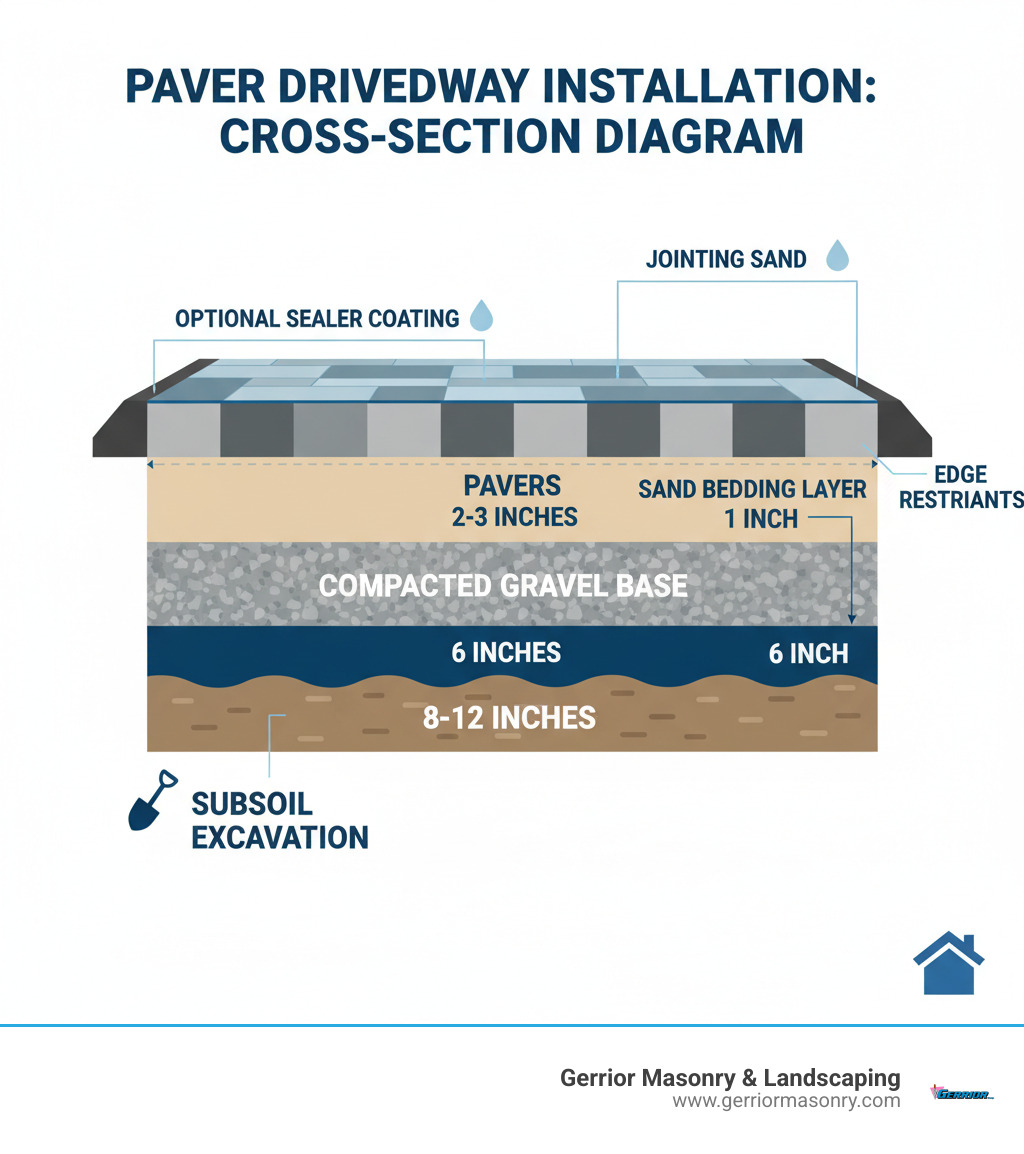
Excavation – Dig 8-12 inches deep, grade for drainage
Base Preparation – Layer and compact crushed stone foundation
Sand Bedding – Level 1-inch sand layer for paver placement
Paver Installation – Lay pavers with proper spacing and alignment
Finishing – Install edge restraints, fill joints, compact surface
Sealing – Apply protective sealant for longevity
The installation process typically takes 3+ days with a professional crew and costs between $10-$70 per square foot based on materials and complexity. A properly installed paver driveway can last up to 30 years with minimal maintenance.
“Installing pavers requires patience, planning, and elbow grease,” but the results speak for themselves. Unlike concrete or asphalt, individual pavers can be replaced if damaged, and the interlocking design distributes weight evenly to prevent cracking.
I’m Joe Gerrior, owner of Gerrior Masonry & Landscape Construction Corp., and I’ve been perfecting paver driveway installation techniques for over 34 years throughout Massachusetts. My team has transformed countless driveways using proven methods that ensure both beauty and structural integrity.
Related content about paver driveway installation:
Changing your home with a beautiful and durable paver driveway is a significant undertaking, but one that offers immense rewards. This section will walk you through everything from planning to completion, ensuring a durable and beautiful result.
Why Choose Pavers? Benefits & Costs
Choosing pavers over traditional asphalt or concrete is a smart investment in your home’s value and curb appeal. Key benefits include:
Durability and Longevity: Pavers handle heavy traffic and harsh weather, flexing with the ground to resist cracking from New England’s freeze-thaw cycles. A properly installed paver driveway can last 30 years or more.
Easy Repairs: Unlike large slabs of concrete or asphalt, damaged individual pavers can be lifted and replaced, keeping long-term maintenance costs low.
Design Flexibility: With endless shapes, colors, and textures, pavers allow for custom designs that match your home’s style and significantly boost curb appeal.
Superior Drainage: Permeable paver systems allow water to drain through the joints, reducing runoff and puddling.
While the initial investment is higher than asphalt, the long-term benefits are substantial. These are average costs based on internet data and not actual costs for Gerrior Masonry services, but you can expect to pay between $10 to $70 per square foot installed. For a typical driveway, this can range from $4,800 to $19,200. The durability, ease of repair, and boost in property value make it an investment that pays dividends.
For more detailed information on the financial aspects, explore our page on the Cost of Paver Driveways.
Planning Your Paver Driveway Installation: Materials, Tools, and Paver Choice
Meticulous planning is essential for a successful paver driveway installation.
Essential Tools and Materials
A professional installation requires specialized equipment, but a DIY project needs at least:
Key materials include your chosen pavers, crushed stone base, bedding sand (coarse ASTM C33 sand or 1/8″ chip stone), edge restraints, and jointing sand (polymeric sand is recommended). Geotextile fabric is also advised for clay soils to separate the base from the subsoil.
Choosing Your Pavers: Style Meets Function
Your paver choice impacts the look and performance of your driveway.
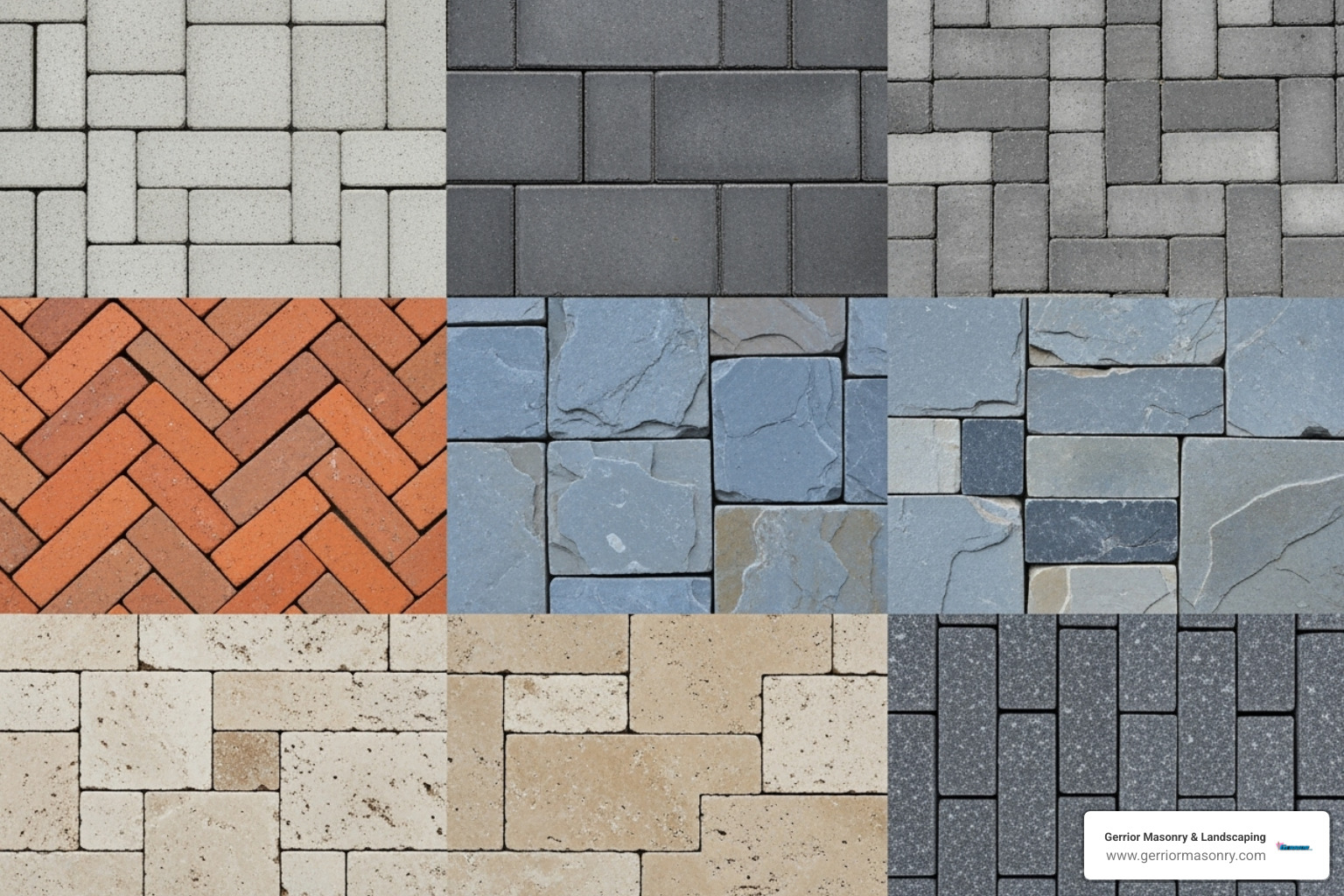
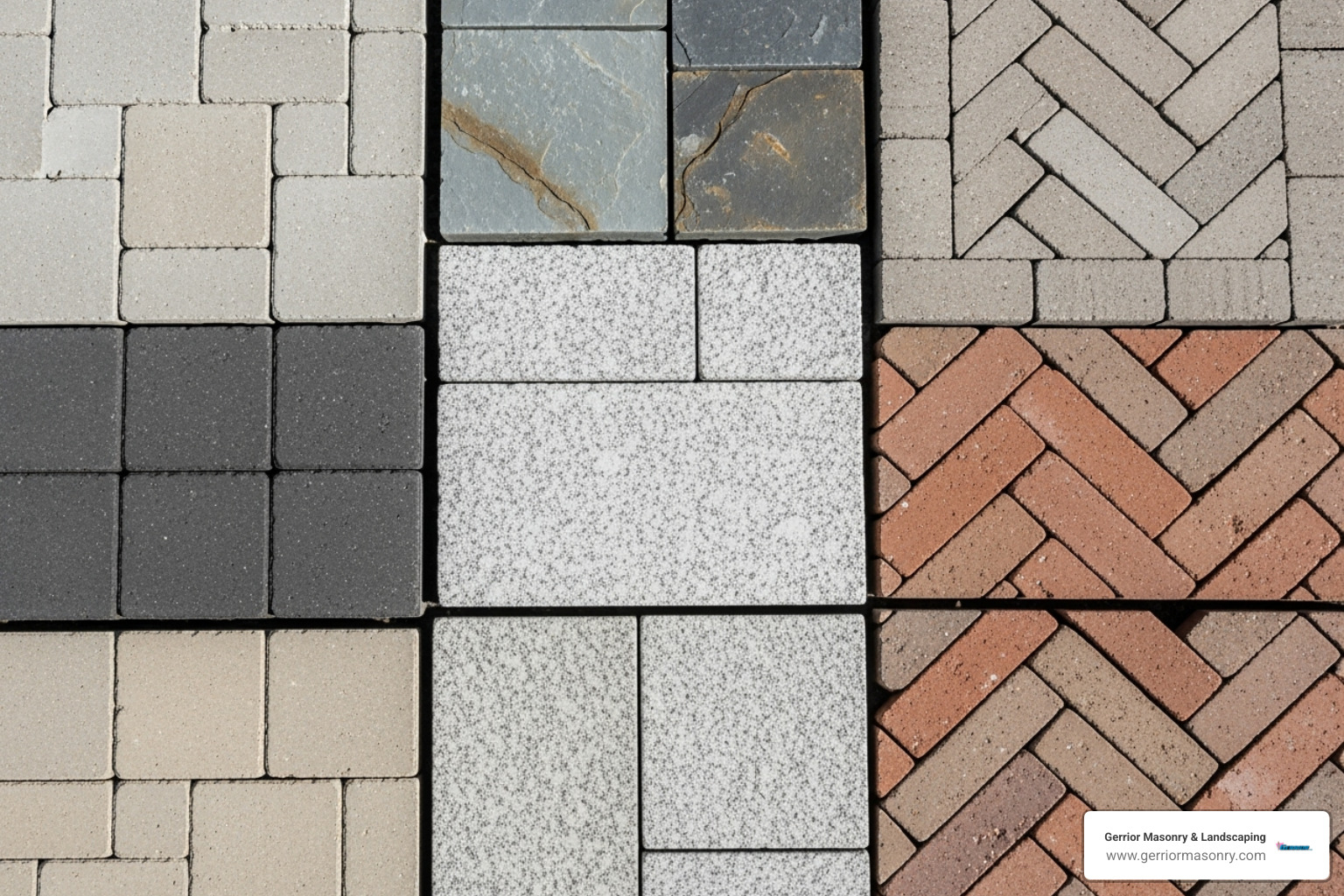
Concrete Pavers: Versatile, durable, and cost-effective. The most common choice.
Brick Pavers: Offer a classic, timeless aesthetic with enduring charm.
Natural Stone Pavers: Granite, bluestone, or cobblestones provide unique elegance but are typically more expensive.
Porcelain Pavers: A sleek, contemporary option, but ensure they are rated for vehicular traffic.
When choosing, consider your home’s style, color, and the load-bearing needs of a driveway—pavers should be at least 2.5 to 3 inches thick. For a deeper dive into the options, visit our guide on Types of Pavers for Driveways.
Preparing the Foundation: The Most Critical Step
The foundation is the most critical part of your paver driveway. A paver driveway is only as good as its foundation.
Site Preparation and Excavation
Call 811 Before You Dig! This free, mandatory service marks underground utility lines to prevent dangerous and costly accidents. Visit Call 811 before you dig.
Mark the Area: Use stakes and string to outline the driveway. The base should extend 6-12 inches beyond the paved edge.
Excavate: Dig to a depth of 8 to 12 inches for a standard driveway to allow for a proper base. For permeable systems, excavate to a minimum of 15 inches. Remove all grass and roots.
Creating Proper Drainage
Properly managing water is essential. Ensure your driveway slopes away from your home’s foundation.
Slope: A slope of 1% to 2% (about 1/8 inch drop per linear foot) is required for effective drainage. Use string lines and a level to set this grade.
Drainage Systems: For properties with significant water issues, consider integrating catch basins or French drains. Learn more about these solutions on our Drainage Systems & Dry Wells page.
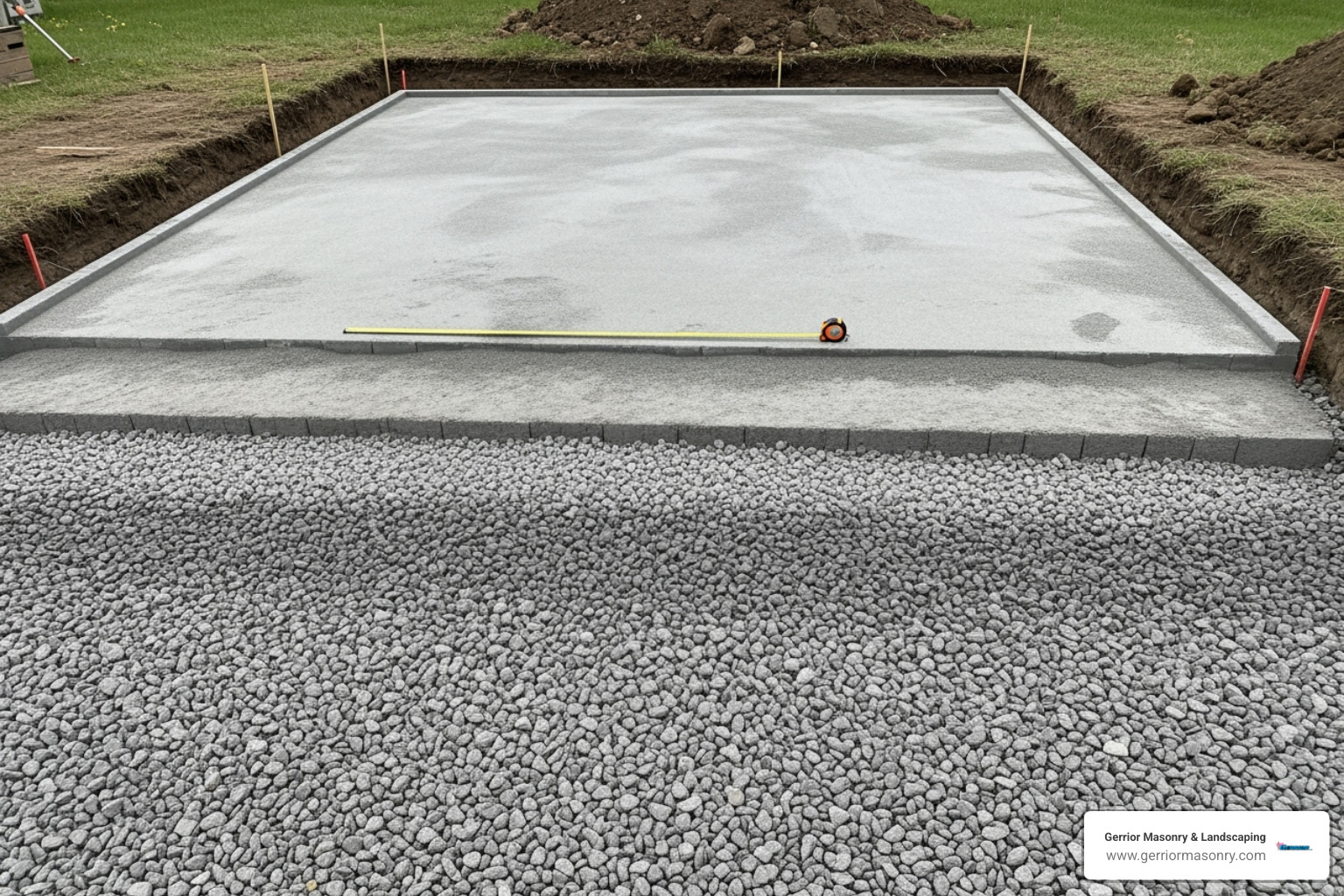
Layering and Compacting the Gravel Base
The gravel base provides structural support.
Lay Base in Lifts: Spread the crushed stone base in layers (lifts) of no more than 3-4 inches at a time.
Compact Each Layer: Use a heavy-duty plate compactor to thoroughly compact each lift before adding the next. Lightly misting with water can help.
Total Depth: Continue until you achieve a total compacted base depth of 8 to 12 inches. The goal is a dense, interlocked base. Avoid using plastic sheeting underneath, as it traps water.
The Paver Driveway Installation Process: Laying and Finishing
With a solid base prepared, you can begin laying the pavers.
Laying and Leveling the Bedding Layer
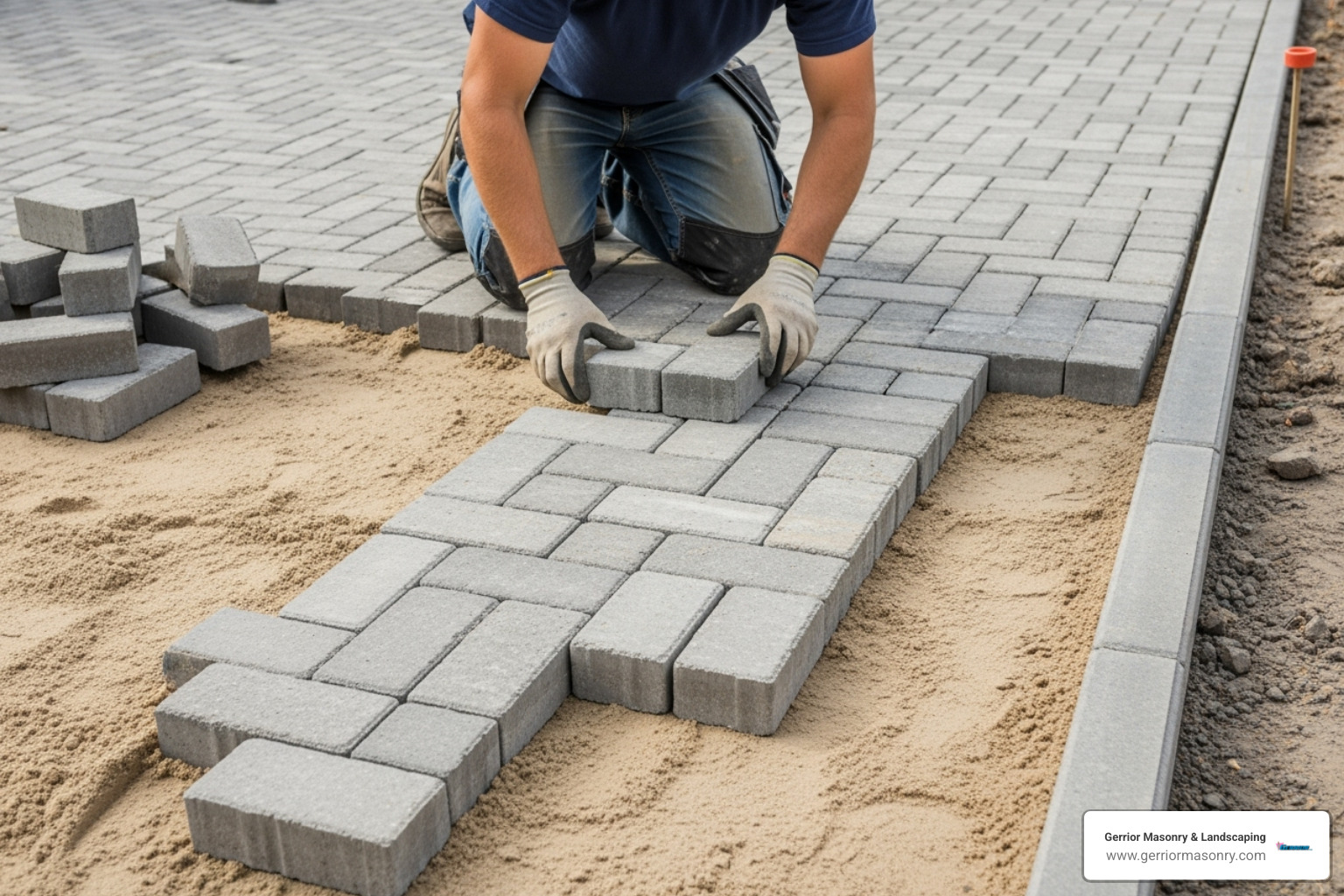
Spread Bedding Material: Apply a 1-inch layer of coarse sand or 1/8″ chip stone over the compacted base.
Screed the Layer: Use screed guides (pipes or 2x4s) and a straight board to pull the material across, creating a perfectly smooth, level surface.
Do NOT Compact: The bedding layer should remain loose to allow the pavers to settle in during final compaction.
Laying the Pavers
Start from a Corner: Begin laying pavers from a corner or a long, straight edge, working outwards. Use string lines to keep rows straight.
Place, Don’t Slide: Set each paver straight down into the bedding sand. Pull from multiple bundles at once to ensure a natural color blend.
Choose a Pattern: Simple, interlocking patterns like herringbone are best for driveways as they distribute weight effectively. For more ideas, see our Paver Driveway Design Ideas.
Edge Restraints, Cutting, and Compaction
Install Edge Restraints: Secure plastic, metal, or concrete restraints around the perimeter on top of the compacted base to prevent pavers from shifting.
Cut Pavers: Use a masonry saw with a diamond blade to cut pavers for edges and curves. Always wear proper safety gear.
Compact the Pavers: Run a plate compactor (with a protective pad) over the entire surface at least 3 times to set the pavers into the bedding sand and create a smooth, level surface.
Joint Filling
Spread Jointing Sand: Cover the surface with coarse sand or polymeric sand.
Sweep into Joints: Use a push broom to sweep the sand into all the gaps until they are completely full.
Final Compaction: Run the compactor over the driveway one last time to settle the sand. If using polymeric sand, follow the manufacturer’s instructions for activation, which typically involves a light mist of water.
Advanced Topics: Permeable Pavers and Maintenance
Consider these advanced options for improved performance and longevity.
Permeable Pavers: A Sustainable Choice
Permeable pavers are an eco-friendly option that allows rainwater to drain through the surface, reducing runoff and replenishing groundwater. The installation differs significantly from standard pavers, requiring a much deeper excavation (15+ inches) and specialized layers of washed, open-graded stone for the base. Due to this complexity, professional installation is highly recommended for permeable driveways.
Maintaining Your Paver Driveway
A little maintenance will keep your driveway looking great for decades.
Routine Cleaning: Regularly sweep or blow off debris. Pressure wash on a low setting every few years.
Weed Control: Pull weeds by hand or use an appropriate herbicide. Keeping joints filled with sand helps prevent growth.
Re-sanding Joints: Every 3-5 years, sweep more jointing sand into the gaps to maintain the interlock.
Sealing: Applying a quality sealer every 3-5 years is recommended to protect against stains and UV fading.
Even with careful work, issues can arise. Here’s what to look for and when to call a pro.
Common Troubleshooting Issues
Sinking or Uneven Pavers: Almost always caused by an inadequate or poorly compacted base.
Weeds in Joints: Occurs in damp, shady areas. Regular cleaning and keeping joints full helps.
Shifting Edges: Indicates that edge restraints have failed and need to be re-installed or reinforced.
Puddling: A sign of improper slope or poor base drainage.
DIY vs. Professional Installation
While a small walkway might be a feasible DIY project, a driveway is a massive undertaking. The heavy excavation, large volume of materials, and need for specialized compaction equipment make it a job best left to professionals. Ensuring the correct base depth (8-12 inches), proper compaction, and a precise drainage slope are details that require an expert eye. A professional crew can complete the job in a few days, whereas it could take a DIYer weeks. For a project of this scale, hiring a professional is a wise investment in your home’s long-term value. For more reasons to consider professional help, see Why Choose Us for Your Paver Driveway.
Transform Your Driveway with Expert Installation
Congratulations! You now have a comprehensive overview of what a paver driveway installation entails. It’s a significant project, but one that delivers incredible returns in curb appeal, durability, and property value.
While a DIY approach is technically possible, the reality is that installing a driveway is a massive undertaking. The heavy excavation, precise grading, and specialized equipment required are often beyond the scope of a weekend project. For a flawless, long-lasting result, professional installation is the wisest investment. You’re not just paying for labor—you’re investing in experience, efficiency, and the peace of mind that comes with a warranty.
For homeowners in Middlesex and Essex County, Massachusetts, Gerrior Masonry & Landscaping has been perfecting the art of paver driveway installation for over 30 years. Our commitment to owner oversight on every project ensures that every detail, from the foundation to the final paver, is perfect. We have the expertise to handle any site condition and bring your vision to life.
Ready to transform your home’s entrance with a stunning paver driveway? Gerrior Masonry & Landscape Construction is based in Woburn, MA, and services Middlesex and Essex County, Massachusetts. Contact us for a professional driveway consultation and let’s build something that lasts.
Hardscaping in Stoneham MA: 30+ Years Expert Service
Introduction to Outdoor Change
Hardscaping in Stoneham MA uses permanent, non-living elements like stone, brick, and pavers to transform ordinary yards into stunning outdoor living spaces. Top services include:
Patios & Outdoor Kitchens – For dining and entertaining.
Walkways & Stairs – To create safe, attractive pathways.
Retaining Walls – For slope management and visual appeal.
Fire Pits & Fireplaces – To create year-round gathering spaces.
Driveways – To boost curb appeal with durable pavers or stone.
While softscaping involves living elements like plants and grass, hardscaping creates the permanent backbone of your landscape. These durable features withstand New England’s harsh winters, providing year-round function and increasing property value. Stoneham homeowners use hardscaping to create functional outdoor living areas that extend their home’s usable space.
I’m Joe Gerrior, owner of Gerrior Masonry & Landscape Construction Corp. For over 34 years, my team has combined artistic vision with meticulous craftsmanship on Hardscaping Stoneham MA projects, improving property functionality and value.
Your Complete Guide to Hardscaping in Stoneham MA
Hardscaping Stoneham MA creates outdoor spaces that are both beautiful and functional. In a town known for its charming New England homes and varied terrain, the right hardscaping provides the permanent structure for your landscape, making your property truly special.
Popular Hardscaping Features and Services
These key features transform a backyard into a space your family will love:
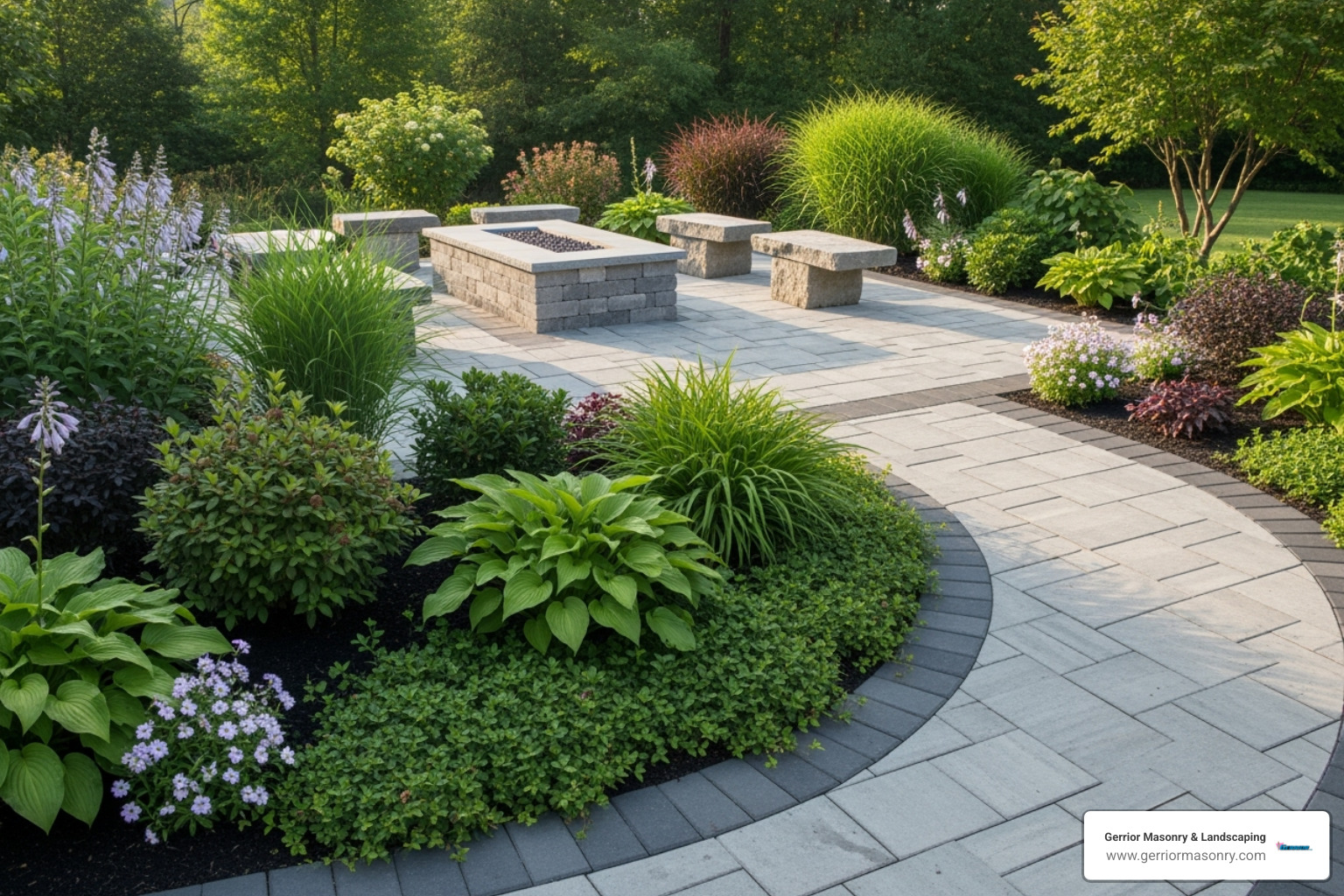
Patios are the heart of outdoor living, extending your home’s functional space into the fresh air. We design and install custom stone, brick, or paver patios that serve as the perfect foundation for everything from quiet mornings with a coffee to lively family barbecues. Whether you envision a sprawling multi-level space for entertaining or a cozy, intimate circle for relaxation, a well-designed patio becomes your go-to outdoor room. More info about patio installation.
Walkways and stairs are the unsung heroes of landscape design, providing safe and elegant navigation through your property. A well-built stone or paver path not only guides visitors to your door but also protects your lawn and gardens from foot traffic. We build everything from charming, curved garden paths that invite exploration to sturdy, grand staircases that safely connect different levels of your yard, all while withstanding New England’s demanding weather. Explore walkway and stair options.
Retaining walls are both a practical necessity and a design opportunity, especially for Stoneham’s rolling terrain. Functionally, they prevent soil erosion and expertly manage slopes. Aesthetically, they create distinct outdoor ‘rooms,’ terraced gardens, or raised planting beds that add depth and dimension to your landscape. We engineer our walls with proper drainage and footing to ensure they stand strong for decades. Learn about retaining walls.
Fire pits and outdoor fireplaces extend your outdoor season, allowing you to enjoy your yard well into the cooler months. A custom fire feature becomes a natural gathering spot for family and friends to share stories and create memories. We can design a rustic, wood-burning fire pit for a classic campfire feel or a sophisticated gas-powered fireplace that serves as a stunning architectural focal point for your patio. See fire pit designs.
Outdoor kitchens represent the ultimate in backyard luxury, letting you cook, dine, and entertain without ever leaving the party. We design and build complete cooking spaces that can include built-in grills, weather-resistant countertops, sinks, outdoor refrigerators, and ample storage. These kitchens are seamlessly integrated with your patio design for a cohesive and highly functional entertainment hub.
Driveways make a great first impression. A beautifully designed paver driveway dramatically boosts curb appeal and adds significant value. Unlike asphalt or poured concrete, paver driveways are exceptionally durable, flexible in freeze-thaw cycles to resist cracking, and can be easily repaired if a unit becomes stained or damaged. They are built to stand up to daily use and harsh New England winters.
Materials and Benefits for New England Homes
Choosing the right materials for Hardscaping Stoneham MA projects is critical for longevity in our climate. We select materials for beauty and their ability to handle New England’s freeze-thaw cycles.
Pavers: Versatile and incredibly durable, interlocking concrete pavers come in a vast array of colors, shapes, and textures. Their key advantage in our climate is their ability to flex with the ground during freeze-thaw cycles, which prevents the large-scale cracking common with solid concrete slabs. If a paver is ever damaged, that single unit can be easily replaced, making maintenance simple and cost-effective.
Natural Stone: Natural stone offers a timeless, organic elegance that improves with age. Materials like New England fieldstone, classic bluestone, and durable granite provide unique character and texture that cannot be replicated. Each stone is unique, creating a one-of-a-kind surface. They handle our harsh winters exceptionally well, making them a beautiful and long-lasting investment for patios, walls, and walkways.
Brick: Brick adds a classic, traditional New England charm that perfectly complements the region’s historic architecture. Strong, durable, and available in various colors, brick pavers can be laid in beautiful patterns like herringbone or basketweave. Over time, brick develops a rich patina, adding to its timeless appeal and character.
Quality hardscaping offers significant benefits:
Increased Property Value: Well-designed outdoor spaces are a top feature for homebuyers.
Durability: We use proper installation techniques and materials chosen to resist cracking and heaving in the Massachusetts climate.
Low Maintenance: Hardscaped areas only require occasional cleaning, giving you more time to relax.
Improved Functionality: Turn unused yard space into functional outdoor rooms for dining, entertaining, or relaxing. More info about driveway materials.
The Design and Installation Process
Our process, refined over 30 years, ensures your vision becomes a reality.
Initial Consultation: We discuss your lifestyle and how you want to use your outdoor space to guide the design.
Site Analysis: We assess your property, noting drainage, soil conditions, and sunlight to create a practical plan.
Custom Design: We create a unique design custom to your property, drawing on decades of experience to maximize your space. More info about landscape design services.
Material Selection: We help you choose materials that fit your style, budget, and the project’s demands.
Site Preparation: This is the most critical step for longevity. Proper site preparation involves excavating to the correct depth, grading for positive drainage away from structures, and installing and compacting a multi-layered aggregate base. This robust foundation is essential in Massachusetts to prevent the shifting, sinking, and heaving caused by our freeze-thaw cycles, ensuring your investment remains stable and beautiful for years to come. Learn about excavation services.
Professional Installation: Our experienced masons, under direct owner supervision, install your project using proven techniques for a flawless finish.
Final Walkthrough: We walk the completed project with you to ensure your total satisfaction and provide maintenance tips.
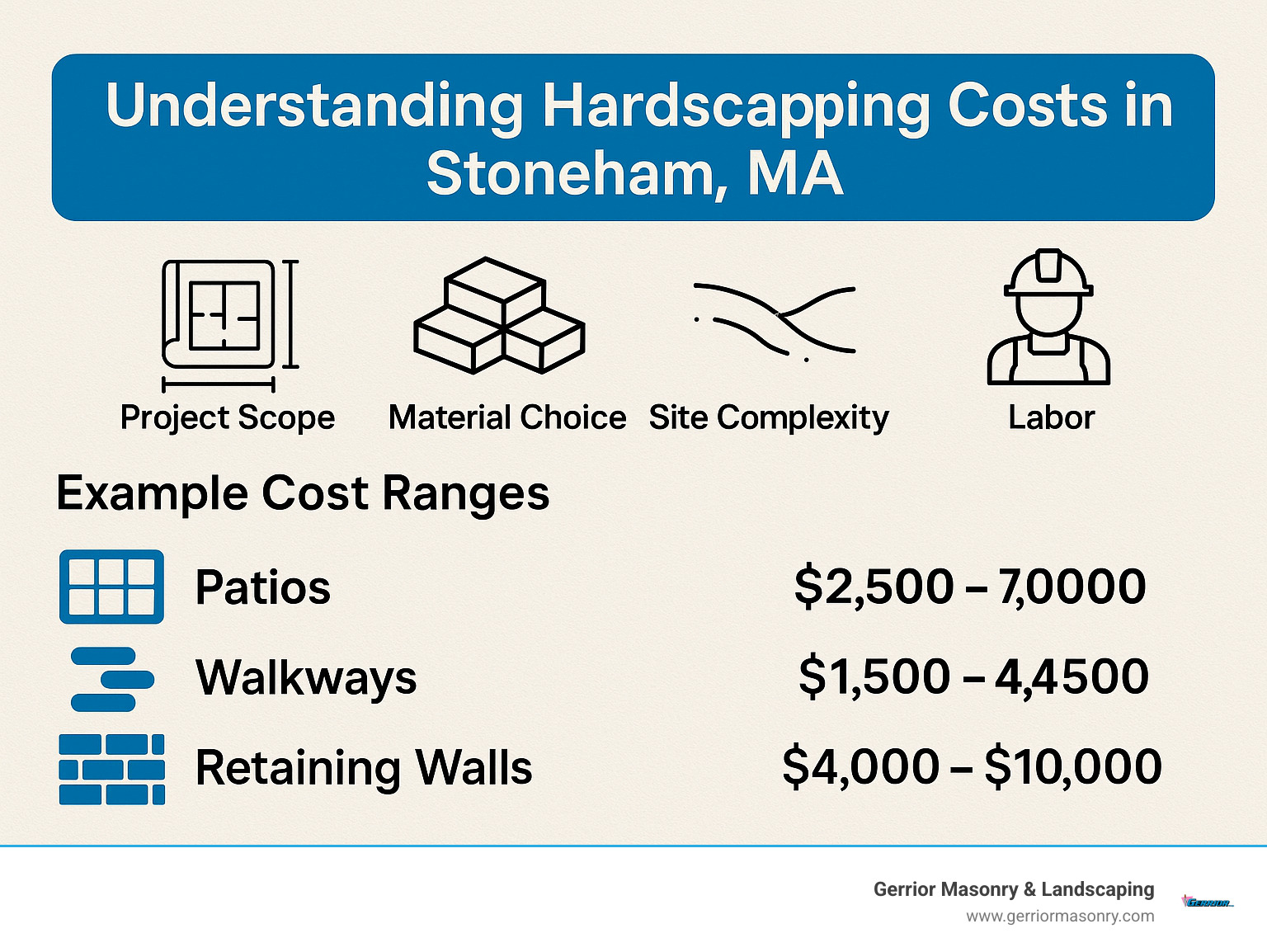
Understanding Hardscaping Costs in Stoneham, MA
Understanding the factors that influence pricing helps you plan your investment. While every project is unique, here’s what to consider.
Important note: The following figures are average costs based on internet data and not actual costs for Gerrior Masonry services. Real pricing varies significantly based on your specific project, current market conditions, and contractor choice. We always provide personalized estimates after evaluating your unique needs.
Project Scope & Size: A larger, more complex project will cost more than a small, simple one.
Material Choice: Costs vary widely, from budget-friendly concrete pavers to premium natural stone.
Site Complexity: Level, accessible sites are less expensive to work on than sloped or tight spaces that require more prep work.
Labor Quality: Skilled, experienced masons cost more but deliver a long-lasting product that saves money on future repairs.
Average cost ranges (based on internet research):
Patios: Typically $15 – $50 per sq. ft. for basic pavers, up to $50 – $150+ per sq. ft. for premium natural stone.
Walkways: Generally $10 – $30 per linear foot for simple designs, rising to $30 – $90+ for custom stone.
Retaining Walls: Basic block walls might cost $30 – $70 per square face foot, while engineered natural stone walls can range from $70 – $200+.
The best way to determine your project’s cost is to schedule a free consultation for a detailed, transparent estimate.
How to Hire the Best Hardscaping Contractor in Stoneham, MA
Choosing the right contractor is crucial. Here’s what to look for:
Check Portfolios: Quality contractors are proud of their work. Look for consistency and attention to detail in their project photos.
Verify Licenses & Insurance: Ask to see current certificates to protect yourself from liability. A legitimate pro will provide them without hesitation.
Read Client Testimonials: Look for patterns in online reviews. Consistent praise for communication, quality, and scheduling is a great sign. Check online reviews for any contractor you consider.
Ask About Experience: Hire a team with specific experience in New England. Decades of practice, like our 30+ years, means they know how to prevent common problems.
Get Detailed Written Estimates: A professional estimate breaks down all costs clearly, protecting you from surprise charges and allowing for fair comparisons.
Long-Term Care and Associated Services
Your new hardscape is low-maintenance, but a little care goes a long way. Regular sweeping, occasional washing, and sealing pavers every few years will keep them looking great. We also offer repair services to address any issues that may arise.
Our masonry expertise extends to other critical home services, ensuring the same level of quality throughout your property:
Commercial Snow Management: We provide professional snow removal to keep commercial properties safe and accessible. Details on commercial snow removal.
Partner with Stoneham’s Hardscaping Experts
Choosing Hardscaping Stoneham MA services is a smart investment in your home. You’re not just adding a patio or walkway; you’re creating lasting value and functional outdoor living space that improves your daily life and boosts your property’s appeal.
At Gerrior Masonry & Landscaping, we’ve been perfecting this craft for over 30 years. Our commitment to owner oversight on every project and high-quality craftsmanship sets us apart. We understand Stoneham’s climate and terrain, ensuring your hardscape is built to last.
Ready to transform your yard into the outdoor oasis you’ve been dreaming of? Let’s discuss your vision.
Gerrior Masonry & Landscape Construction is based in Woburn, MA, and proudly serves homeowners throughout Middlesex and Essex County, Massachusetts. Get a free estimate for your hardscaping project and let’s start creating something beautiful together.
Why Massachusetts Homeowners Are Choosing Sustainable Driveway Solutions
Eco-friendly driveway pavers are revolutionizing how homeowners approach sustainable outdoor design. These innovative paving systems allow water to infiltrate through the surface into the ground below, reducing runoff by up to 95% compared to traditional asphalt or concrete driveways.
Traditional driveways create serious problems. Asphalt and concrete are impervious surfaces that force rainwater to run off into storm drains instead of soaking into the ground naturally. This runoff carries pollutants into water supplies and contributes to flooding, erosion, and groundwater depletion.
The numbers tell the story: soil erosion has reduced crop yields by 29% from 1995 to 2020, with an estimated 30% of farmable land severely degraded. Your driveway choice directly impacts these environmental challenges.
Permeable pavers solve these issues by mimicking natural land absorption. They prevent flooding around your foundation, reduce ice buildup in winter, and help recharge local groundwater supplies. Plus, they’re engineered to support heavy vehicle loads while maintaining their eco-friendly benefits.
As Joe Gerrior, owner of Gerrior Masonry & Landscape Construction Corp., I’ve been helping Massachusetts homeowners create sustainable outdoor spaces for over 34 years, specializing in eco-friendly driveway pavers that combine environmental responsibility with lasting beauty. Our expertise in both traditional masonry and innovative sustainable solutions ensures your driveway project delivers maximum value for your property.
Why Eco-Friendly Driveway Pavers are the Smart Choice
After three decades of working with Massachusetts homeowners, I’ve seen how the right driveway choice can transform both your property and the environment around it. Eco-friendly driveway pavers aren’t just a trend – they’re a smart solution to some serious problems that traditional driveways create.
The Problem with Traditional Driveways: Runoff, Heat, and Erosion
Your typical asphalt or concrete driveway is an impervious surface, meaning rainwater has nowhere to go but run off. This stormwater runoff picks up pollutants like oil, road salt, and fertilizers, carrying them directly into local waterways like the Charles and Mystic Rivers. This process contributes to several major environmental issues. It leads to groundwater depletion because water can’t soak into the ground to recharge the aquifers we rely on for drinking water.
Dark, impervious surfaces also create an urban heat island effect, making neighborhoods hotter. Furthermore, the force of the runoff causes soil erosion, washing away valuable topsoil. The impact is significant: Scientific research shows soil erosion has drastically reduced crop yields and degraded farmland. I’ve seen this erosion damage foundations and landscaping, which is why we often recommend comprehensive drainage systems and dry wells to manage water effectively.
How Permeable Pavers Benefit Your Home and Community
Here’s where eco-friendly driveway pavers become the hero of the story. These systems work with nature, allowing rainwater to soak into the ground and delivering numerous benefits for your home and community.
Flood prevention is the most immediate advantage you’ll notice. Water filters through the pavers instead of pooling near your foundation, which also reduces stress on municipal storm drains. This process naturally facilitates groundwater recharge, replenishing the local water table that feeds our wells. With no rushing water, erosion control is automatic, supporting overall soil health. A surprising winter bonus is reduced winter slip spots; because water drains away, less ice forms on the surface. On a larger scale, permeable pavers mimic natural land absorption, supporting community stormwater management by easing the burden on aging infrastructure.
Exploring Your Eco-Friendly Driveway Paver Options
The variety of sustainable paving options available today is impressive. Each type offers different benefits, and choosing the right one depends on your specific needs, budget, and aesthetic preferences.
Permeable concrete pavers look like traditional pavers but have wider, aggregate-filled joints for water flow. They are highly durable and come in many styles.
Grass pavers use plastic or concrete grids filled with soil and grass. The grid protects grass roots from vehicle weight, creating a living, drivable lawn.
Gravel stabilization grids use honeycomb-shaped plastic panels, often made from up to 95% recycled materials, to hold loose gravel in place while ensuring excellent drainage.
Recycled material pavers incorporate materials like plastic or rubber tires, diverting waste from landfills. Some contain up to 95% recycled content without sacrificing performance.
For a more traditional look, natural stone pavers and reclaimed brick can be installed with permeable joints, blending classic aesthetics with modern environmental benefits.
Paver Type
Aesthetics
Maintenance
Durability
Permeable Concrete
High
Medium
High
Grass Pavers
High (Natural)
Medium/High
Medium
Gravel Stabilization
Medium
Medium
Medium
Recycled Materials
Medium
Low/Medium
Medium
Natural Stone
High
Medium
High
Proper installation is crucial for these systems to work. We emphasize professional installation and base preparation to ensure long-term performance. Learn more about our sustainable driveway installation services.
Gerrior Masonry & Landscape Construction is based in Woburn, MA, and services Middlesex and Essex County, Massachusetts.
Planning Your Permeable Paver Project
Ready to transform your driveway into an eco-friendly masterpiece? At Gerrior Masonry & Landscaping, we’ve guided hundreds of Massachusetts homeowners through this exciting journey over the past three decades. Let me walk you through what to expect when planning your sustainable driveway project.
Installation and Maintenance for Your Sustainable Driveway
While the DIY spirit is admirable, eco-friendly driveway pavers require professional precision. Our team has over 30 years of experience in permeable installations across Massachusetts, ensuring the job is done right the first time to save you future headaches and costs.
The magic of permeable pavers is underground in the sub-base preparation. We build an engineered foundation of layered stones and gravel that acts as a natural filtration system, a crucial step for managing stormwater runoff effectively. One pleasant surprise for many homeowners is the faster installation time. Advanced grid systems can cut installation time by up to 40% compared to traditional methods. That means less disruption to your daily routine and quicker access to your beautiful new driveway.
Living in Massachusetts means harsh winters, but permeable pavers offer an advantage. Their excellent drainage means less standing water, which leads to less ice formation. While not completely ice-free, you’ll notice fewer slippery spots, improving cold climate performance. Unlike loose gravel, the stable surface of permeable pavers makes snow removal much simpler. For larger properties, our commercial snow removal team knows how to clear snow without damaging the permeable surface.
Maintenance is straightforward. Regular sweeping prevents debris from clogging the joints, and an occasional pressure wash clears out sediment. This routine is often easier than repairing cracks in traditional driveways. For a visual guide on proper installation techniques, check out how to install a gravel driveway.
Cost and Aesthetic Value of eco-friendly driveway pavers
Let’s talk numbers. Based on internet data, eco-friendly driveway pavers typically range from $10 to $40+ per square foot. This is an average and not our pricing. The cost varies based on materials, design, and site conditions. We provide detailed, transparent quotes after assessing your specific project.
The long-term value is significant. You’ll spend less on repairs, as proper drainage prevents the freeze-thaw cycles that crack traditional surfaces. Plus, eco-friendly features are increasingly boosting home values. Permeable pavers also offer incredible design flexibility. They aren’t just functional; they’re beautiful. We can create designs from modern concrete lines to natural grass pavers or even a creative ribbon driveway design. With endless colors, patterns, and textures, we can design a driveway that perfectly complements your home’s style. Our landscape design and installation expertise ensures your new driveway integrates seamlessly with your outdoor space, from rustic stone to modern geometric patterns.
Regulations, Incentives, and Your Next Steps
Massachusetts communities are prioritizing stormwater management. Local building codes increasingly favor or require permeable surfaces, and some municipalities have impervious surface regulations limiting traditional paving. Potential tax credits or rebates may be available in your area. It’s worth checking with your local government, as these incentives recognize the community-wide benefits of your eco-friendly choice.
Project planning begins with understanding your property. Soil conditions, drainage, and local regulations all influence the best approach, which is where our expertise becomes invaluable. With over 30 years of experience in Middlesex and Essex County, Massachusetts, we understand the local challenges. Our skilled team and owner oversight on every project ensures your installation meets the highest standards for performance and aesthetics.
Ready to explore your options? Visit our hardscaping services page to see our sustainable solutions. Whether you need to fix drainage issues or want a beautiful, responsible upgrade, we’re here to help you make the smart choice for your home.
Gerrior Masonry & Landscape Construction is based in Woburn, MA, and services Middlesex and Essex County, Massachusetts.